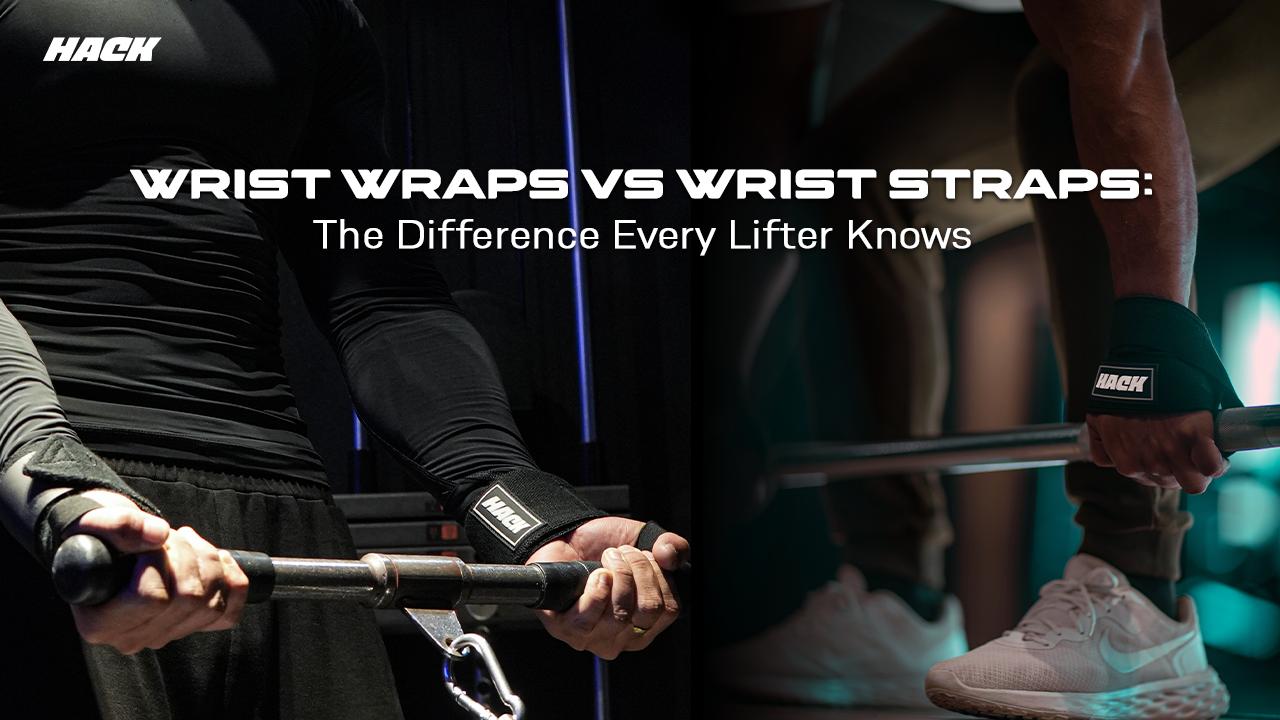








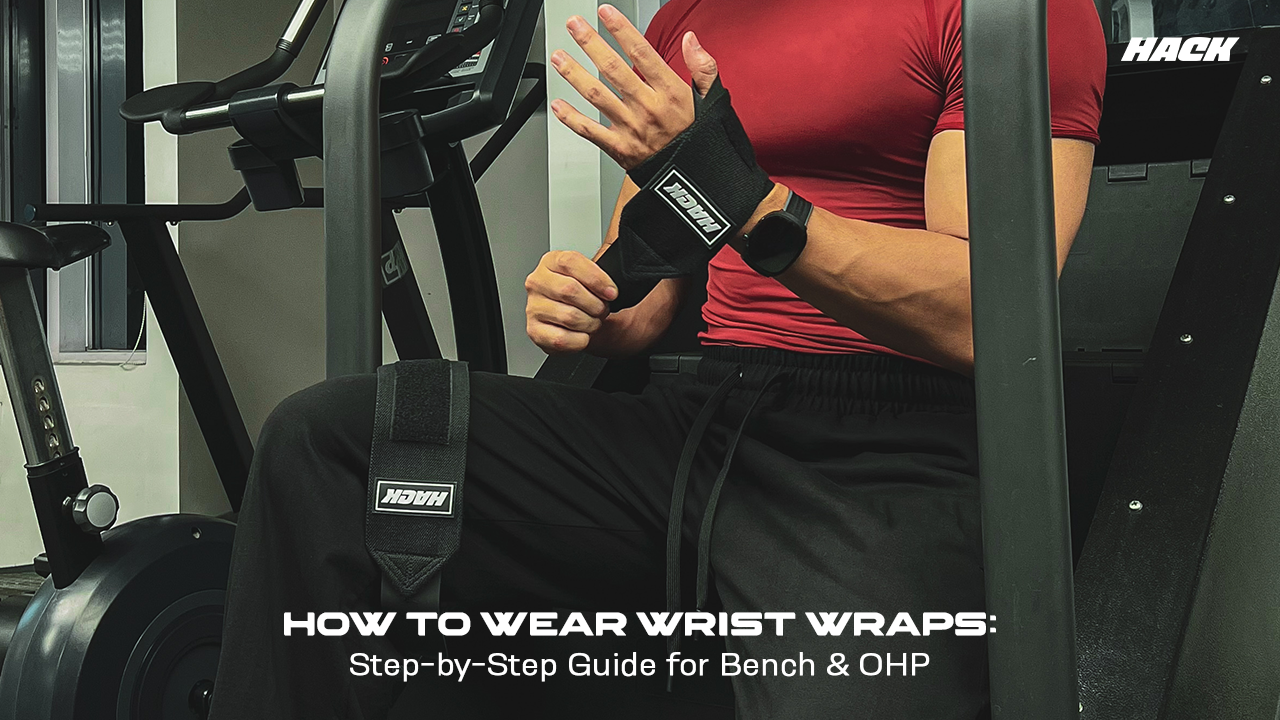
- Wrist wraps provide external support for the wrist joint during pressing, reducing the risk of hyperextension under heavy loads.
- The thumb loop anchors the wrap at the start of the application and should be removed from the thumb before gripping the bar.
- Wraps should cover the wrist joint fully, extending from just below the palm to a few centimetres down the forearm.
- Flexible wraps suit Olympic lifting and mobility-dependent movements. Stiff wraps suit maximal bench press and overhead pressing.
- Reserve wraps for heavy working sets rather than every warm-up to maintain wrist strength development.
- Correct tightness allows full finger sensation. Numbness in the fingers means the wrap is too tight.
- 1. What Wrist Wraps Do and Why They Matter
- 2. How Wrist Wraps Work Mechanically
- 3. Flexible vs Stiff Wrist Wraps Compared
- 4. Which Lifts Benefit From Wrist Wraps
- 5. How to Wear Wrist Wraps: Step-by-Step
- 6. Wrist Wrap Positioning Guide
- 7. Common Wrist Wrap Mistakes
- 8. Care and Maintenance of Wrist Wraps
- 9. Competition Rules and Wrist Wrap Specifications
- 10. Who Uses Wrist Wraps
- 11. Related Reading
- 12. Frequently Asked Questions
Wrist wraps are one of the most used pieces of equipment in any serious lifter's kit, and also one of the most frequently misapplied. The difference between a correctly applied wrap and a sloppily wound one is not cosmetic. It determines whether the joint receives genuine support through the full range of a bench press or whether the wrap simply adds bulk around the wrist without any mechanical function. If you press heavy with any regularity, understanding the correct technique will protect your wrists over a training lifetime. You can explore all Hack Athletics wrist support options once you know exactly what you are looking for.
At Hack Athletics, we design our wrist support products for both competitive powerlifters and everyday gym-goers across India. Our range of flexible and stiff wrist wraps covers the needs of every pressing style, from Olympic weightlifting to raw powerlifting. Learn more about how our products are built on the Hack Athletics about page.
Last reviewed: May 2026
1. What Wrist Wraps Do and Why They Matter
The wrist joint is a complex structure composed of eight carpal bones, held together by an intricate network of ligaments and tendons. During a heavy bench press, the joint is placed in extension as the load transfers through the palm into the bar. The degree of extension depends on grip width, bar position in the hand, and individual anatomy. When extension becomes excessive under a heavy load, the ligaments and tendons on the dorsal side of the wrist experience significant tensile stress.
Wrist wraps limit this extension by providing external resistance. When you brace against a correctly applied wrap, the fabric or elastic resists the tendency of the wrist to collapse backward under the load. The joint is essentially sandwiched in a position closer to neutral, which reduces both the risk of acute injury and the cumulative stress that leads to chronic wrist pain over time.
Joint load context: Research published in journals indexed by the National Institutes of Health's PubMed database indicates that wrist extension beyond 45 degrees under compressive load significantly increases strain on the radiocarpal ligaments. Wrist wraps help keep extension within safer ranges during pressing.
2. How Wrist Wraps Work Mechanically
A wrist wrap functions as an external compression and extension-limiting device. The layers of wrap material, wound in overlapping passes around the joint, create a composite structure that resists deformation in the extension direction. The more layers, the stiffer the structure and the more aggressively it limits extension.
This is why wrap tightness, number of passes, and the coverage zone across the joint all affect performance. A loosely wound wrap provides almost no mechanical restriction, functioning instead as a compression sleeve. A correctly wound, firm wrap creates measurable resistance to wrist extension that allows heavier pressing with less joint stress.
Wrist wraps support the joint externally. They do not strengthen the muscles, tendons, or ligaments around the wrist. Over time, using wraps on every set at every weight can reduce the training stimulus those structures receive. Use them strategically on heavy sets and build wrist resilience with lighter work performed without wraps.
3. Flexible vs Stiff Wrist Wraps Compared
Choosing between flexible and stiff wrist wraps is not a matter of preference alone. The type of movement you are performing dictates which wrap is appropriate.
| Property | Flexible Wrap | Stiff Wrap |
|---|---|---|
| Material stiffness | Lower, more elastic | Higher, less elastic |
| Wrist mobility retained | More mobility | Less mobility |
| Extension restriction | Moderate | High |
| Best for | Olympic lifting, push-ups, functional fitness | Bench press, OHP, heavy pressing movements |
| Hack Athletics product | Wrist Support Flexible | Wrist Support Stiff (3mm thick) |
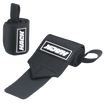
The Hack Athletics Professional 24-inch Stiff Wrist Wrap is a 3mm thick wrap designed to provide maximum extension restriction for heavy pressing. The flexible variant suits lifters who need wrist support without sacrificing the range of motion required for Olympic-style movements or the front rack position in a clean or jerk.
4. Which Lifts Benefit From Wrist Wraps
The Bench Press
The flat barbell bench press is the movement where wrist wraps provide the most direct and measurable benefit. At heavy loads, the bar tends to push the wrist into extension unless the lifter actively resists it by positioning the bar low in the palm. Wrist wraps provide a failsafe: even if bar position drifts slightly under fatigue, the wrap limits the degree of extension the joint can reach.
The Overhead Press
Overhead pressing places the wrist in a loaded extension position for the entire duration of each rep. A stiff wrap used on heavy overhead press sets reduces the compressive stress on the dorsal wrist structures and allows the lifter to maintain a vertical bar path without the distraction of wrist discomfort.
Push Variations and Accessory Work
Dips, push-ups with added weight, and close-grip bench press all benefit from flexible wrist wraps because these movements require slightly more wrist mobility than a standard bench press grip. A stiff wrap can be too restrictive for the range of motion involved in dips, so a flexible wrap is the better choice for these movements.
Common experience among lifters: Most experienced bench pressers report that wrist pain begins to emerge at or above 80 percent of their one-rep maximum. This is also the intensity range where introducing wrist wraps provides the most meaningful benefit per set.
Protect Your Wrists on Every Heavy Press
Hack Athletics stiff and flexible wrist wraps are built for Indian lifters who train with purpose. Free shipping on every order.
Shop Wrist Wraps5. How to Wear Wrist Wraps: Step-by-Step
The following sequence is the standard application method used by competitive powerlifters and is the approach recommended for both the stiff and flexible variants in the Hack Athletics range.
Step 1: Position the Thumb Loop
Hold the wrap in your opposite hand. Slide the thumb of the hand you are wrapping through the thumb loop. The loop should sit on the thumb side of the wrist, with the wrap material hanging down the palm side. This anchors the starting point of the wrap so it does not shift during application.
Step 2: Begin the First Pass Across the Wrist
Bring the wrap from the palm side, across the back of the wrist. The first pass should cover the lower portion of the wrist, just above where the hand meets the forearm. Pull with moderate tension as you go, enough to feel the material tighten but not enough to restrict blood flow.
Step 3: Wind Upward Toward the Forearm
Continue winding in overlapping passes, each new pass sitting roughly halfway over the previous one, moving upward from the wrist crease toward the forearm. Three to four passes is sufficient for most lifters. Competitive bench pressers who use longer wraps may make five to six passes.
Step 4: Secure the Velcro Closure
Press the velcro closure firmly onto the wrap. Smooth it down completely to ensure it will not peel back during the set.
Step 5: Remove the Thumb Loop
Once the wrap is secured, slide your thumb out of the loop. The loop is an anchor during application only, not a structural component during the lift. Gripping the bar with the loop still on the thumb alters the hand position and can cause uneven pressure distribution across the palm.
Step 6: Verify Sensation and Grip
Before approaching the bar, make a fist and verify that you can feel all five fingertips clearly. If any finger is numb, the wrap is too tight. Unwrap and reapply with slightly less tension.
6. Wrist Wrap Positioning Guide
The position of the wrap on the wrist joint determines its effectiveness. Most application errors involve starting the wrap too far down the hand (covering the palm and metacarpals rather than the wrist joint itself) or too far up the forearm (leaving the wrist joint without coverage).
Target Zone
The centre of the wrap coverage should sit directly over the wrist crease, the transverse line where the hand articulates with the forearm. The wrap should extend roughly two to three centimetres below this crease (toward the palm) and four to five centimetres above it (toward the forearm). In this position the carpal bones are fully enclosed within the wrap layers and the joint receives maximum support.
After applying your wrap, flex your wrist gently. You should feel clear, consistent resistance from the wrap through the full range of extension. If the resistance only begins at a large angle of extension, the wrap is too loose or positioned incorrectly. Rewrap before loading the bar.
7. Common Wrist Wrap Mistakes
Wrapping Over the Palm
Winding the wrap across the palm of the hand is one of the most common errors. This wastes wrap material on an area that does not need support and leaves the wrist joint itself without coverage. The palm is not a load-bearing articulating joint and does not benefit from external compression during pressing movements.
Leaving the Thumb in the Loop During the Lift
The thumb loop is an application anchor only. Leaving the thumb in the loop during a pressing movement applies lateral tension to the thumb, alters grip symmetry, and can cause discomfort or skin abrasion under heavy loads. Always remove the thumb from the loop after the velcro is secured.
Never apply wrist wraps with so much tension that blood flow is visibly restricted. Bluish fingernails, white fingertips, or numbness after thirty seconds are signs of excessive tightness. Over-tight wraps can cause tingling and temporary nerve compression during long sets or rest periods.
Wrapping Asymmetrically
Applying a different number of passes on each wrist, or using different tightness on each side, creates an asymmetric loading experience during the press. The wrist with less support will reach its end range of extension sooner, causing subtle bar path deviation. Apply both wraps with the same number of passes and the same tension on every session.
8. Care and Maintenance of Wrist Wraps
Wrist wraps absorb sweat, skin oils, and chalk dust during every session. Without regular cleaning, the velcro will clog with debris and lose grip strength, the elastic will degrade, and the material will develop an odour that affects wrap longevity.
Washing
Close the velcro fastening before washing to prevent it from collecting fibres from the wash drum. Hand wash in cool water with mild detergent or use a delicate machine cycle inside a mesh laundry bag. Do not tumble dry. Lay flat to dry at room temperature. Avoid direct sunlight during drying as UV exposure degrades elastic fibres over time.
Storage
Store wraps loosely rolled rather than folded flat. Folding creates creases in the material that can cause uneven tension during application after storage. Rolling loosely allows the wrap to maintain its even tension profile.
9. Competition Rules and Wrist Wrap Specifications
For lifters who compete in sanctioned powerlifting or weightlifting events in India, wrap specifications matter. The International Powerlifting Federation technical rules specify that wrist wraps must not exceed one metre in length and eight centimetres in width. Velcro closure is permitted. The wrap must not extend beyond the middle of the hand toward the fingers, and it must not extend more than ten centimetres above the wrist joint.
The International Weightlifting Federation also permits wrist wraps in competition and specifies maximum dimensions. The Hack Athletics Professional Wrist Wrap at 24 inches falls within the IPF length allowance when correctly applied.
Equipment check note: At most powerlifting meets, wrist wraps are inspected by a referee before you begin warming up. They check that the wrap length and width are within specification and that no rigid materials or metal inserts are present. Standard fabric or elastic wraps from reputable brands pass inspection without issues.
For lifters competing under USAPL rules or local Indian federation rules that mirror IPF standards, it is always advisable to confirm specifications with your meet director before the competition date.
10. Who Uses Wrist Wraps
Wrist wraps are used across a range of athletes at every level, from beginners experiencing wrist discomfort on their first heavy bench sessions to elite powerlifters pressing four times their bodyweight in competition.
- Wrist wraps limit wrist extension under load by providing external compression around the joint, reducing stress on the dorsal ligaments.
- The thumb loop is an application anchor only. Remove it before gripping the bar.
- Cover the wrist crease fully. The wrap should extend a few centimetres above and below the joint, not across the palm or exclusively up the forearm.
- Stiff wraps suit heavy bench press and OHP. Flexible wraps suit Olympic lifting and functional fitness movements.
- Reserve wraps for sets at or above 80 percent of maximum to maintain wrist structural strength on lighter work.
- Wash wraps regularly with velcro closed to maintain grip strength and material integrity.
- Competition lifters must verify that wrap dimensions meet federation specifications before the meet.
11. Related Reading
12. Frequently Asked Questions
Should wrist wraps cover the wrist joint completely?
Yes, the wrap should cover the wrist joint fully. Start the wrap just below the palm and extend it down the forearm far enough so the joint is sandwiched between the wrap layers. Leaving the joint partially exposed reduces the support benefit significantly.
How tight should wrist wraps be for bench press?
Wrist wraps for bench press should be firm enough to limit wrist extension under load but not so tight that you lose feeling in your fingers. A useful test: grip the bar after wrapping and verify that you still feel the texture of the knurling. If your fingers are numb, the wrap is too tight. Stiff wraps are generally worn tighter than flexible wraps.
What is the difference between flexible and stiff wrist wraps?
Flexible wrist wraps allow a small range of wrist movement and are better suited to Olympic lifting and movements that require wrist mobility, such as the front rack position in a clean. Stiff wrist wraps are thicker and more rigid, restricting wrist extension more aggressively and providing more support for maximal pressing movements like the bench press.
Should I use wrist wraps for every pressing set?
Reserve wrist wraps for your heaviest sets at or above 80 percent of your maximum, or for sets where wrist pain has been an issue in the past. Wearing wraps on every warm-up and accessory set reduces the wrist flexor and extensor strength development you gain from lighter pressing without support.
Can wrist wraps help with wrist pain during bench press?
Wrist wraps can reduce wrist pain during pressing by limiting the degree of wrist extension under load. However, persistent wrist pain during pressing often indicates a bar path or grip width issue that wraps alone will not fix. If pain continues beyond a few sessions, consult a physiotherapist before relying on wraps as the primary solution.
Where does the thumb loop go on a wrist wrap?
Place your thumb through the loop before beginning to wrap. The loop anchors the wrap at the starting position on the thumb side of the wrist. Once you have completed the wrap and secured the velcro closure, remove your thumb from the loop so it is free to grip the bar normally.
Are wrist wraps allowed in powerlifting competitions?
Yes, wrist wraps are permitted in most powerlifting federations including the IPF. The IPF specifies a maximum wrap length of 1 metre and maximum width of 8 centimetres. Always check the specific equipment rules of your federation before competition as specifications can vary.
How long should wrist wraps be?
The most common lengths for wrist wraps are 18 inches and 24 inches. Shorter 18-inch wraps are lighter and better for movements requiring mobility. Longer 24-inch wraps provide more coverage and more aggressive support, which is why competitive powerlifters generally prefer 24-inch or longer options for bench press. The Hack Athletics Stiff Wrist Wrap is 24 inches and meets IPF length requirements.