

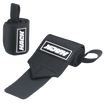





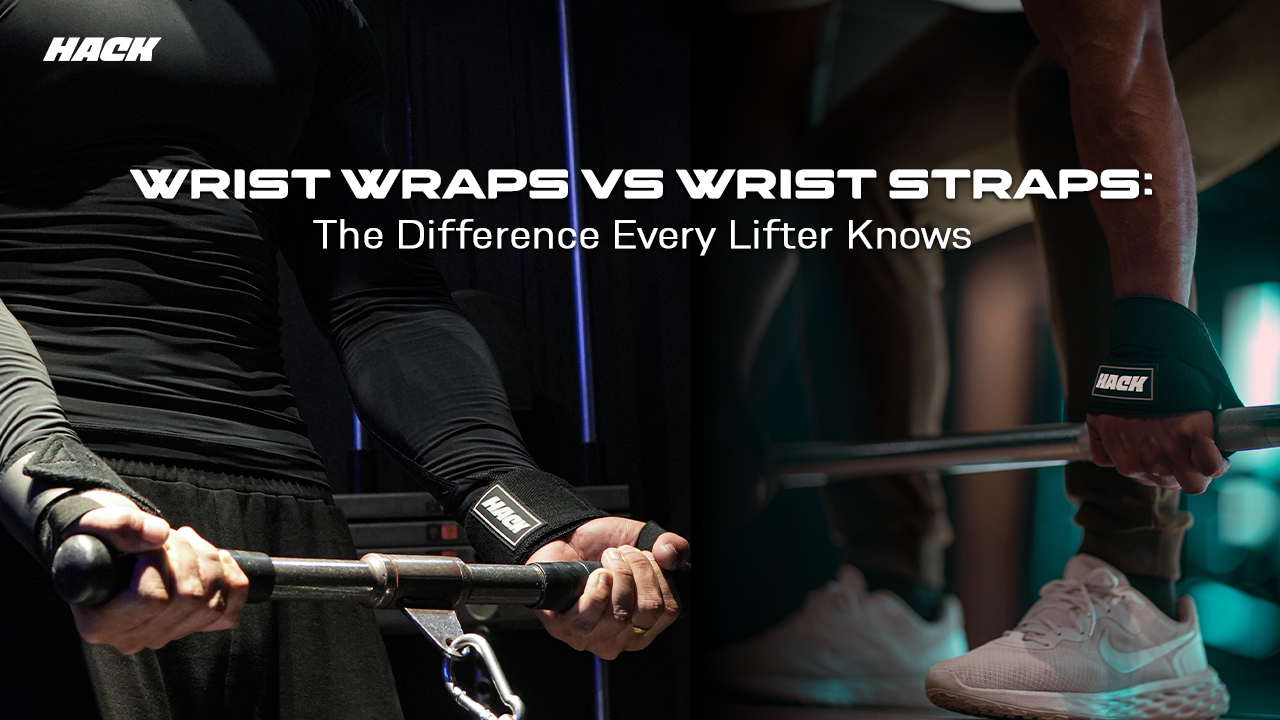
- Wrist wraps support the wrist joint during pressing by limiting extension. Wrist straps augment grip during pulling by attaching the wrist to the bar.
- These are two entirely different accessories for two entirely different problems. Using one in place of the other is incorrect and potentially unsafe.
- Wrist wraps are used on bench press, overhead press, and push variations. Wrist straps are used on deadlift, barbell row, lat pulldown, and heavy pulling movements.
- Wrist straps are not permitted in most sanctioned powerlifting competitions. Wrist wraps are permitted within specified dimensions.
- Figure-8 straps provide the most aggressive bar connection for maximal deadlift singles. Standard loop straps are more versatile across pulling variations.
- Both accessories should be used strategically on heavy sets, not as a crutch on every warm-up.
- 1. Defining Wrist Wraps and Wrist Straps
- 2. How Each Accessory Works Mechanically
- 3. Wrist Wraps vs Wrist Straps: Full Comparison
- 4. When to Use Wrist Wraps
- 5. When to Use Wrist Straps
- 6. How to Choose the Right Option for Your Training
- 7. Common Mistakes When Using Both Accessories
- 8. Grip Training: Building the Strength Beneath the Strap
- 9. Competition Rules and Equipment Compliance
- 10. Who Uses Wrist Wraps vs Wrist Straps
- 11. Related Reading
- 12. Frequently Asked Questions
Ask any beginner in an Indian gym the difference between wrist wraps and wrist straps and the most common answer is a shrug. The two accessories look superficially similar, both involve fabric wrapped around the wrist area, but they solve completely different problems, work through different mechanisms, and are used on completely different exercises. Using one where you should use the other is at best ineffective and at worst unsafe. This guide draws a clear, definitive line between the two. You can explore the full range of Hack Athletics wrist support and lifting accessories once you understand which category suits your training need.
Hack Athletics has designed both wrist support and lifting strap products for the Indian training environment, where lifters often face the challenge of identifying quality equipment without access to specialist retail. Everything about how our products are built and why is available on the Hack Athletics about page.
Last reviewed: May 2026
1. Defining Wrist Wraps and Wrist Straps
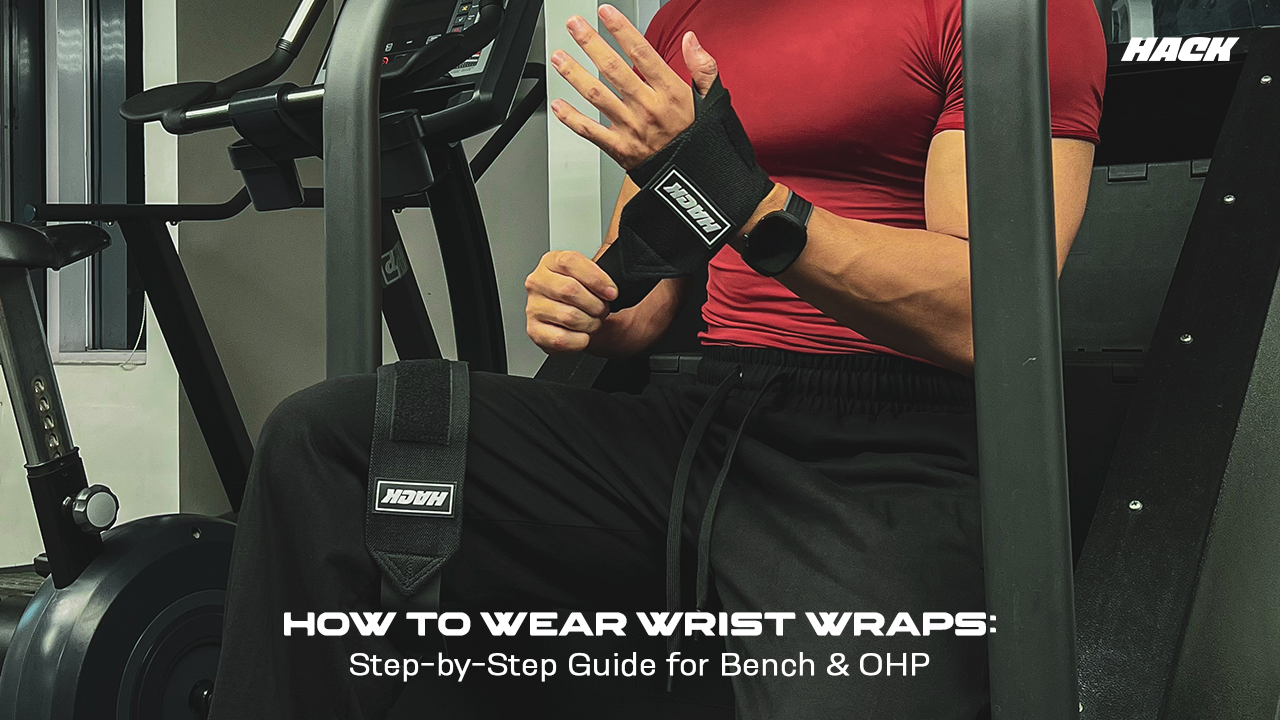
A wrist wrap is a strip of stiff or semi-elastic fabric that winds around the wrist joint to limit extension and provide external compression during pressing movements. It does not attach to the bar. It functions on the joint itself.
A wrist strap, also called a lifting strap, is a loop of fabric that attaches one end to the wrist and wraps the other end around the barbell or dumbbell to supplement the grip. It extends the amount of load you can hold before grip failure occurs. It does not provide wrist joint support or limit wrist extension in any meaningful way.
The core distinction: Wrist wraps protect the joint. Lifting straps protect the grip. They are complementary tools addressing different performance limiters. Many experienced lifters use both in the same training session on different movements.
2. How Each Accessory Works Mechanically
How Wrist Wraps Work
When you brace against a correctly applied wrist wrap during a bench press, the layers of fabric resist the tendency of the wrist to extend backward under the bar. The wrap acts as a circumferential support structure around the joint, limiting range of motion in the extension direction without eliminating it entirely. The stiffer the wrap material, the more aggressively it limits extension.
How Lifting Straps Work
A lifting strap forms a connection between the wrist and the bar. When you pull, the strap tightens against the bar as the load increases. The friction and tension of the strap against the bar surface hold the weight even when the fingers and forearm flexors have reached their endurance limit. The bar is, in effect, attached to your arm via the strap rather than held solely by the fingers and thumb.
Lifting straps remove grip as the limiting factor on pulling movements. This allows you to train the back, hamstrings, and glutes to a higher effective intensity on deadlifts and rows than your grip would otherwise permit. But straps also reduce the training stimulus on grip-specific structures. Build grip alongside strap use.
3. Wrist Wraps vs Wrist Straps: Full Comparison
| Attribute | Wrist Wraps | Lifting Straps |
|---|---|---|
| Primary function | Limit wrist extension, support the joint | Supplement grip, attach wrist to bar |
| Attaches to the bar | No | Yes |
| Used for pressing | Yes | No |
| Used for pulling | Rarely | Yes |
| Permitted in IPF competition | Yes (within spec) | No |
| Solves | Wrist joint instability under pressing load | Grip fatigue before target muscles fatigue |
| Application method | Wound around wrist, velcro closure | Loop over wrist, tail wraps around bar |
| Types available | Flexible, stiff | Loop strap, figure-8 strap |
4. When to Use Wrist Wraps
Wrist wraps belong on pressing movements where wrist extension under load is the limiting factor or a source of discomfort. The most common use cases are the barbell bench press and the overhead press, though close-grip bench, dumbbell pressing variations, and push-ups with added resistance also benefit at heavier loads.
The trigger for introducing wrist wraps is usually one of two things: wrist pain beginning at heavy loads during pressing, or noticeable wrist extension increasing as fatigue sets in across a set. Once either of these patterns appears consistently, wraps are the appropriate intervention. Browse the Hack Athletics Stiff Wrist Wrap for maximum pressing support or the flexible variant for more mobility-dependent movements.
5. When to Use Wrist Straps
Lifting straps are for pulling movements where grip failure occurs before the target muscles have been adequately trained. This is the classic grip bottleneck: you can feel your back has more capacity on the fourth set of heavy deadlifts, but your forearm flexors are burning and your fingers are starting to slip. The strap bridges that gap.
Standard Loop Straps
The most versatile strap option. Loop straps work for deadlifts, barbell rows, dumbbell rows, rack pulls, lat pulldowns, and shrugs. The Hack Athletics Lifting Straps in this format offer good coverage across all pulling variations.
Figure-8 Straps
A figure-8 strap forms a closed loop connecting the wrist to the bar without requiring the lifter to grip the tail. It is used almost exclusively for maximal deadlift singles and doubles where the goal is to move maximum load with zero grip limitation. Because it locks onto the bar, it is not recommended for beginners or for any pulling movement where you may need to release the bar quickly. The Hack Athletics Figure-8 Lifting Straps are designed for experienced lifters who have already developed pulling technique and want to exceed their grip ceiling on maximal lifts.
Get Both. Train Smarter.
Wrist wraps for pressing. Lifting straps for pulling. Hack Athletics has you covered across both movement patterns, with free shipping across India.
Shop All Lifting Accessories6. How to Choose the Right Option for Your Training
If Your Problem is Wrist Pain During Bench or OHP
The answer is wrist wraps, specifically stiff wrist wraps. The pain during pressing is a signal that your wrist is extending beyond its comfortable range under the load. Wraps create external resistance against that extension. Lifting straps will not address this problem at all because they do not function on pressing movements.
If Your Problem is Grip Failing Before Your Back or Legs
The answer is lifting straps. If you complete a heavy deadlift set and your lower back, hamstrings, and glutes feel like they had more in them but your grip failed, straps are the appropriate solution. Wrist wraps will not help you hold the bar on a deadlift.
If You Are Building a Starter Kit
For a lifter who trains full-body or follows a strength programme with both pressing and pulling movements, having both a pair of wrist wraps and a pair of lifting straps is the complete solution. Each covers a different movement pattern and a different problem. Combine them with a Hack Athletics weightlifting belt and you have comprehensive joint and grip support for every major compound movement.
When ordering your first set of lifting accessories from Hack Athletics, measure your wrist circumference and check the sizing guide before selecting wraps. Belt sizing is separate and based on your midsection measurement, not your wrist.
7. Common Mistakes When Using Both Accessories
Using Straps on Pressing Movements
Attaching a lifting strap to a barbell during bench press is not only mechanically ineffective at providing wrist joint support, it creates a potentially dangerous situation. If you need to bail a bench press, the strap creates a connection between your wrist and the bar that complicates a safe exit. Never use lifting straps on pressing movements. Use wrist wraps instead.
Using Wraps to Solve a Grip Problem
Wrist wraps do not improve your ability to hold the bar on a deadlift. They wind around the joint and provide compression, but they do not form any connection to the bar. A lifter who uses wrist wraps on their deadlifts hoping for grip assistance is wasting time and money. Lifting straps are the correct tool for that problem.
Keep your wrist wraps and lifting straps in separate compartments of your gym bag to avoid reaching for the wrong accessory under fatigue. A simple habit like colour coding or labelling the pockets eliminates mid-session confusion.
Using Either Accessory on Every Set
Both wraps and straps reduce the training stimulus on the structures they support. Using lifting straps on every pulling set across an entire training cycle will result in grip strength falling behind pulling strength. Reserve both accessories for your heavy working sets and build structural capacity with lighter work performed without them.
8. Grip Training: Building the Strength Beneath the Strap
Lifting straps are a tool for exceeding your grip ceiling temporarily. They are not a substitute for developing grip strength. Research from the National Strength and Conditioning Association consistently identifies grip strength as a meaningful predictor of general upper body strength and a key component of lifting longevity.
Effective Grip Training Methods
Farmers carries performed with heavy dumbbells or a trap bar are one of the most effective grip training methods available. Dead hangs from a pull-up bar, plate pinches (holding weight plates between the thumb and fingers), and towel pull-ups all develop different aspects of grip capacity. Including one to two dedicated grip exercises per week in your programme will allow your grip to keep pace with your pulling strength over a training career.
Practical benchmark: A useful test is to attempt your working-weight deadlift sets without straps every four to six weeks. If grip fails significantly before your target rep count, add a dedicated grip training block to your programme. If grip holds up for your working weight, your strap use is appropriate and your natural grip is developing in parallel.
The Journal of Strength and Conditioning Research has published several studies indicating that grip strength training improves performance across compound pulling movements when incorporated consistently over eight to twelve weeks. Building the capacity underneath the strap is what allows you to lift without them in situations where straps are not available or not permitted.
9. Competition Rules and Equipment Compliance
For competitive lifters, equipment selection is not a matter of preference alone. Wrist straps are prohibited in all IPF-affiliated powerlifting competitions. The IPF technical rules allow wrist wraps up to one metre in length and eight centimetres in width. Hack Athletics wrist wraps are designed to meet these specifications.
The IPF technical rules also specify where on the wrist the wrap may sit and prohibit any rigid materials or additional padding beyond the standard wrap material. Standard fabric or elastic wraps from reputable manufacturers pass these requirements.
If you train with lifting straps regularly and compete under IPF rules, it is important to include strapless pulling training in the final twelve weeks before competition. Discovering your grip cannot handle competition loads in the weeks before a meet is a correctable problem that becomes much harder to fix under a tight timeline.
10. Who Uses Wrist Wraps vs Wrist Straps
- Wrist wraps support the joint during pressing. Lifting straps supplement grip during pulling. They are different tools for different problems.
- Never use lifting straps on pressing movements. They provide no joint support and create an unsafe bar connection.
- Wrist wraps are permitted in IPF competition. Lifting straps are not.
- Figure-8 straps are the most aggressive grip augmentation available and are best reserved for maximal deadlift singles by experienced lifters.
- Reserve both accessories for heavy working sets to preserve the training stimulus on grip and wrist-stabilising structures.
- Build grip strength alongside strap use through farmers carries, dead hangs, and plate pinches.
- If you compete, train strapless on a portion of your pulling volume throughout the training cycle.
11. Related Reading
12. Frequently Asked Questions
Can I use wrist straps for bench press?
Wrist straps are not designed for bench press and should not be used for it. Straps loop around the bar and are intended to augment grip during pulling movements. On a bench press, straps do not provide wrist joint support and can create an unsafe connection to the bar if you need to bail out. Use wrist wraps for pressing movements.
Do lifting straps reduce grip strength over time?
Using straps on every pulling set reduces the training stimulus on grip-specific structures. To build grip strength alongside using straps, reserve straps for your heaviest sets and perform lighter pulling work, dead hangs, and farmers carries without straps to maintain and develop grip capacity.
Are wrist straps allowed in powerlifting competitions?
Wrist straps are not permitted in most sanctioned powerlifting competitions, including IPF-affiliated meets. Wrist wraps are permitted. Always verify equipment rules with your specific federation before your meet. If you train with straps but compete without them, train beltless and strapless on a portion of your pulling volume to maintain competition-specific grip strength.
What is a figure-8 lifting strap and when should I use it?
A figure-8 strap forms a loop around both the bar and the wrist, creating a connection that does not require active gripping to maintain. It is used primarily for very heavy deadlift sets where the priority is moving maximum load without any grip limitation. Because the strap locks onto the bar, it cannot be released mid-lift the same way a standard loop strap can, so it is best reserved for experienced lifters performing maximal singles and doubles. Find the Hack Athletics Figure-8 Lifting Straps in our lifting accessories range.
Can I use both wrist wraps and lifting straps in the same session?
Yes. Wrist wraps and lifting straps serve different functions and can be used in the same session on different movements. Use wrist wraps on bench press and overhead press sets. Use lifting straps on heavy pulling movements such as deadlifts, barbell rows, and lat pulldowns. They are complementary accessories, not alternatives to each other.
Which is better for beginners, wrist wraps or lifting straps?
For beginners, neither is immediately necessary if loads are manageable and technique is sound. Wrist wraps become useful when pressing loads become heavy enough to cause wrist discomfort. Lifting straps become useful when grip is genuinely failing before back and leg muscles fatigue on pulling movements. Build baseline grip strength and wrist stability before relying on either accessory.
How do I loop a lifting strap around the bar correctly?
Thread the free end of the strap through the loop end to form a lasso around your wrist. Place your wrist through the loop and tighten so the strap sits snugly just below the wrist crease. Then pass the free tail of the strap under the bar and wind it around the bar in the direction you are gripping. The tension of the lift tightens the strap against the bar automatically as you pull.
When should I stop using straps and train grip instead?
A useful benchmark is to regularly test your beltless, strapless grip strength on moderate loads. If your grip fails on sets you could otherwise complete comfortably with your back and leg strength, grip training is the priority. Include farmers carries, dead hangs, and plate pinches in your accessory work. Straps are a useful tool but should not be the only solution to a grip deficit.