








- The defining difference is hole count: indoor balls have 26 larger holes, outdoor balls have 40 smaller holes.
- Hole count is not cosmetic; it is aerodynamics. Fewer, larger holes suit still indoor air, while more, smaller holes cut through wind outdoors.
- Indoor balls use softer, lighter plastic for control on gym floors; outdoor balls use harder, heavier plastic for concrete and wind.
- Both must meet the same USA Pickleball specs, so either is legal, but performance suffers on the wrong court.
- For most hard courts, a 40-hole outdoor ball is the smarter single buy even if you sometimes play inside.
- Match your ball to your paddle and court, and carry the right gear to every game.
- Indoor vs Outdoor Pickleball Balls at a Glance
- Why Hole Count Is the Whole Design
- Indoor Pickleball Balls: 26 Holes Explained
- Outdoor Pickleball Balls: 40 Holes Explained
- Beyond Holes: Weight, Plastic, Bounce and Durability
- Official USA Pickleball Specifications
- Indoor vs Outdoor: Side by Side
- Which Ball Should You Buy?
- Caring for Your Pickleballs and Gear
- Who Plays Where?
- Related Reading
- Frequently Asked Questions
Pick up two pickleballs and they look almost identical. Put them on the wrong court, though, and you will feel the difference within a few rallies: shots sailing long, bounces that sit too high or too low, and a ball that either floats in the breeze or pings off a gym floor like a rubber bullet. The secret is in the holes. Indoor and outdoor pickleballs are engineered for completely different conditions, and hole count is the clearest sign of which is which.
This guide explains exactly what separates a 26-hole indoor ball from a 40-hole outdoor ball, how those holes change weight, bounce, wind resistance and durability, and which ball you should buy for where you play. If you are kitting out, Hack Athletics offers pickleball paddles and a 40-hole outdoor pickleball, and you can browse the full pickleball collection or read more about us.
1. Indoor vs Outdoor Pickleball Balls at a Glance
The short version: the biggest difference between indoor and outdoor pickleballs is the number and size of the holes, and that single design choice cascades into everything else. Indoor balls have 26 larger holes and softer plastic built for gym floors, while outdoor balls have 40 smaller holes and harder plastic engineered to cut through wind on asphalt courts (Pickleball US).
They are not interchangeable, and it is not a marketing gimmick. It is an engineering response to different physical demands: still, climate-controlled indoor air versus unpredictable wind and abrasive surfaces outdoors. Understanding why leads directly to buying the right ball.
Quick rule: 26 holes means indoor, 40 holes means outdoor. Count the holes and you instantly know which court a ball was built for.
2. Why Hole Count Is the Whole Design
Holes are how a pickleball manages air. The number and size of the holes decide how much drag the ball creates and how it behaves in flight, which is why they differ so much between environments.
An indoor ball has fewer, bigger holes, so air passes through with less drag and the ball stays light and slow, giving a soft, controllable flight in still air. An outdoor ball has more, smaller holes, which adds weight and helps the ball hold a straighter line when the wind picks up (The Sports Rise). The smaller hole pattern on outdoor balls reduces wind interference and helps the ball travel a more predictable arc, while indoor balls prioritise a controlled feel because they never have to fight the wind (Spinwave).
The physics in one line: big holes let air through for a light, slow indoor ball; many small holes add weight and stability so an outdoor ball can beat the wind.
3. Indoor Pickleball Balls: 26 Holes Explained
Indoor pickleballs are designed for controlled, climate-regulated spaces like gymnasiums and hardwood courts, where there is no wind to fight.
The 26-hole design
A defining feature of indoor balls is their 26 larger holes, each roughly 40 percent larger in diameter than outdoor holes (Olaben). Because those holes move more air, the ball feels lighter and easier to control.
How they play
Indoor balls are made from softer plastic that compresses slightly on the paddle, giving longer dwell time, more control on dinks and a quieter sound, which matters in an already-noisy gym. The result is a slower pace and a more controlled, predictable bounce, which many new players and seniors find friendlier. The trade-off is that soft indoor balls eventually go mushy rather than crack.
4. Outdoor Pickleball Balls: 40 Holes Explained
Outdoor pickleballs are built for the harsher world of concrete and asphalt courts and open-air conditions.
The 40-hole design
Outdoor balls have 40 smaller holes carefully positioned to minimise the impact of wind, providing more stable, consistent flight paths in unpredictable conditions. The smaller holes create more drag control, so the ball resists floating and drifting on a breezy day.
How they play
Outdoor balls use harder, heavier plastic, so they hit harder, drop faster and stand up to abrasive surfaces. Since outdoor courts are typically harder and more abrasive, the ball must be more durable and resistant to cracking to perform consistently over extended play. The trade-off is that hard plastic can crack and warp over time, and cold weather makes both indoor and outdoor balls more brittle. Pair an outdoor ball with a durable paddle like the Raptor Pro Carbon paddle for hard-court play.
Gear Up for Any Court
From a 40-hole outdoor ball to carbon and power-core paddles, kit yourself out for wherever you play, indoors or out.
Shop Pickleball Gear5. Beyond Holes: Weight, Plastic, Bounce and Durability
Hole count is the headline, but it drives four other differences you will feel on court.
Weight
Indoor balls are lighter, often around 22 grams, because their larger holes mean less material, while outdoor balls run heavier, around 25 to 26 grams, so they hit harder and drop faster (The Sports Rise).
Plastic hardness
Indoor balls use a softer plastic for control and a softer bounce; outdoor balls use a harder plastic for durability and wind resistance. This is why an outdoor ball can feel harsh and lively on a smooth indoor floor.
Bounce and feel
Softer indoor plastic gives a more controlled, slightly higher and predictable bounce on gym floors, while harder outdoor balls play faster and lower. The feel off the paddle is noticeably different between the two.
Durability
Outdoor balls resist abrasion better but crack over time; indoor balls do not crack as readily but go soft and lose their shape. Neither lasts forever, they just fail in different ways (PlayPickleball).
6. Official USA Pickleball Specifications
Both ball types must meet the same official standard to be approved for sanctioned play, which is why either is technically legal in a casual game.
According to USA Pickleball, a tournament-approved ball must have between 26 and 40 circular holes, a diameter between 2.87 and 2.97 inches, a weight between 0.78 and 0.935 ounces, and a firmness rating between 40 and 50 on the Durometer D scale, and it must fly straight and consistently under normal conditions (Olaben). If a ball has fewer than 26 or more than 40 holes, it cannot be officially approved. Within those bounds, manufacturers tune hole count, hole size, plastic type and wall thickness to suit each environment.
Note: the 26-for-indoor and 40-for-outdoor split is a convention that emerged because it works, not a rule written by USA Pickleball. The official rule only sets the 26 to 40 hole range.
7. Indoor vs Outdoor: Side by Side
Here is the full comparison at a glance.
| Feature | Indoor Ball | Outdoor Ball |
|---|---|---|
| Hole count | 26 larger holes | 40 smaller holes |
| Plastic | Softer | Harder |
| Weight | Lighter (around 22 g) | Heavier (around 25 to 26 g) |
| Feel and pace | Softer, slower, more control | Harder, faster, lower |
| Wind resistance | Poor, drifts easily | Strong, holds a line |
| Best surface | Gym floors, hardwood | Concrete, asphalt |
| Durability | Goes soft over time | Resists abrasion, can crack |
| Noise | Quieter | Louder |
8. Which Ball Should You Buy?
The right choice comes down to where you actually play. Here is how to decide.
If you play mostly outdoors or on hard courts
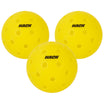
Buy an outdoor 40-hole ball. On most hard surfaces, an outdoor ball is the smarter single buy even when you sometimes play inside, because it survives concrete, holds a line in wind, and fits nearly every hard court. The Hack Athletics Rapid Pro 40-hole pickleball is built for exactly these conditions.
If you play mostly indoors
Choose a 26-hole indoor ball for the control and softer bounce that suit gym floors. If you play in a league on wood or sport-court surfaces, the indoor ball will feel far more natural.
If you play both
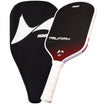
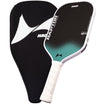
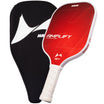
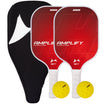
Keep a set of each and match the ball to the court that day. A paddle set that includes balls is a convenient way to start; the Amplify Pro paddle set comes with two paddles, a cover and two balls, and pairs well with the Triumph Power Core or Amplify Pro paddles.
The simple call: hard court or outdoors, go 40-hole outdoor. Gym or wood floor, go 26-hole indoor. Play both regularly, own both.
9. Caring for Your Pickleballs and Gear
Pickleballs are consumables, but good habits make them and your kit last longer.
Extend ball life
Avoid playing with balls in very cold weather when the plastic is most brittle, rotate a few balls through a session rather than hammering one, and retire a ball once it cracks or goes soft, since a warped ball plays inconsistently. Store balls out of direct heat and sun, which degrade the plastic.
Carry and hydrate
Keep balls, paddles and covers together in a 30L duffle bag or a backpack from the bags collection. Pickleball is active, so stay hydrated with a Hydra water bottle, the warm-toned Hydra in beige, or a compact Aqua bottle from the Aqua range, and see our guide on daily hydration for athletes. Browse the wider water bottles range for more.
Refuel after a session
After a long, sweaty session, a protein or electrolyte shake helps recovery. Mix it in a pro blend shaker from the shaker bottles range and keep it in your bag ready to go.
- Hole count is the fastest way to identify a ball: 26 larger holes for indoor, 40 smaller holes for outdoor.
- Indoor balls are softer, lighter and slower for gym floors; outdoor balls are harder, heavier and wind-resistant for concrete.
- Both meet the same USA Pickleball specs, so either is legal, but each plays best on its intended surface.
- For most hard-court players, a 40-hole outdoor ball is the smartest single purchase.
- Retire cracked or mushy balls, store them out of heat, and carry your gear in a proper bag.
10. Who Plays Where?
Different players gravitate to different courts and balls. Here is how to match your setup, with the gear that fits.
11. Related Reading
Keep building your pickleball setup with these guides and gear from Hack Athletics.
12. Frequently Asked Questions
What is the difference between indoor and outdoor pickleball balls?
Indoor balls have 26 larger holes and softer, lighter plastic for a controlled feel on gym floors. Outdoor balls have 40 smaller holes and harder, heavier plastic to cut through wind and survive concrete. The hole count and plastic hardness change weight, bounce, wind resistance and durability.
How many holes does an indoor pickleball have?
Indoor pickleballs typically have 26 holes, and those holes are larger, roughly 40 percent bigger in diameter than outdoor holes. The larger holes move more air with less drag, keeping the ball lighter, slower and easier to control indoors where there is no wind.
How many holes does an outdoor pickleball have?
Outdoor pickleballs typically have 40 smaller holes. The extra, smaller holes reduce wind interference and help the ball hold a straighter, more predictable line outdoors, while the harder plastic stands up to abrasive concrete and asphalt courts.
Can I use an outdoor ball indoors or an indoor ball outdoors?
You can in a casual game, since both meet the same official specifications, but performance suffers. An indoor ball outdoors gets pushed around by wind, while an outdoor ball indoors can feel hard and bounce high on smooth floors. For the best play, match the ball to the court.
Are indoor or outdoor pickleballs more durable?
Outdoor balls are more durable against abrasion because of their harder plastic, but that same hardness makes them crack over time, especially in cold weather. Softer indoor balls do not crack as easily but eventually go soft and lose their shape. Both wear out; they just fail in different ways.
Which pickleball should I buy if I play on hard courts?
For most hard surfaces, an outdoor 40-hole ball is the smarter single buy, even if you sometimes play inside. It survives concrete, holds a line in wind, and fits nearly every hard court. Hack Athletics offers a 40-hole outdoor pickleball suited to these conditions.
Do indoor and outdoor pickleballs weigh the same?
No. Indoor balls are lighter, often around 22 grams, because their larger holes mean less material, while outdoor balls are heavier, around 25 to 26 grams, so they hit harder and drop faster. Both still fall within the official weight range of roughly 0.78 to 0.935 ounces.
What makes a pickleball official?
To be approved for tournament play, a pickleball must have between 26 and 40 circular holes, a diameter between 2.87 and 2.97 inches, a weight between 0.78 and 0.935 ounces, and a firmness rating between 40 and 50 on the Durometer D scale, and it must fly straight and consistently.
