









- The mixing mechanism is the single most important feature of a protein shaker, more than colour, size or brand.
- Wire whisk balls bounce freely and break up clumps well; agitators and fixed grids build in and create less foam.
- Mesh grid mixers handle thick mass gainers better, while electric shakers spin a vortex that mixes any powder perfectly.
- No manual shaker blends solids like banana or oats, so whole-ingredient shakes still need a blender.
- Material matters too: plastic is light and cheap, insulated stainless steel is durable and keeps shakes cold for hours.
- Match the mechanism to your powder, keep it clean, and the right bottle makes hitting your protein target effortless.
- What Makes a Good Protein Shaker Bottle
- Why the Mixing Mechanism Matters Most
- The Wire Whisk Ball
- Blender Ball, Agitator and Paddle Designs
- Fixed Mesh Grid and Screen Mixers
- Electric and Battery-Powered Shakers
- Manual vs Electric Shakers
- Material and Insulation: Plastic vs Stainless Steel
- How to Choose the Right Shaker and Keep It Clean
- Who Needs Which Shaker?
- Related Reading
- Frequently Asked Questions
A grainy, lumpy protein shake is one of the small daily annoyances that puts people off their nutrition. The fix is not shaking harder, it is choosing the right shaker bottle, and specifically the right mixing mechanism. That little ball, grid or blade inside the bottle is what turns clumpy powder into a smooth drink, and it is the feature most buyers overlook while fixating on colour and capacity.
This buying guide focuses on what actually matters: the mixing mechanisms. You will learn how wire whisk balls, agitators, mesh grids and electric shakers each work, which suits your powder, and how material and care factor in. Whether you want a simple pro blend shaker or an insulated steel bottle, the right choice makes every shake better. Browse the full shaker bottles range or read more about us.
1. What Makes a Good Protein Shaker Bottle
A shaker bottle is more than a cup with a lid. Every shaker has a few core parts: the container that holds the liquid and powder, the mixing mechanism that breaks up clumps, a leak-proof lid with a spout, and a secure cap. The standout feature of any shaker is that mixing mechanism, which can be called a whisk ball, shaker ball, mixer ball or agitator (BlenderBottle), and the synergy of all these parts is what turns powder and liquid into a smooth, palatable drink (Swole Spartan).
When you evaluate a shaker, look at the mixing mechanism first, then the material and insulation, then capacity, seal quality and cleaning. Extras like storage compartments and ergonomic grips are nice but secondary. Get the mechanism and material right and the rest is preference.
Buy in this order: mixing mechanism first, then material and insulation, then size, seal and ease of cleaning. The mechanism is what actually makes your shake smooth.
2. Why the Mixing Mechanism Matters Most
Protein powder clumps because dry particles clump together and resist dissolving. Breaking those clusters apart needs agitation, and the faster and more turbulent the agitation, the fewer the lumps.
Speed is the key. A spoon moves slowly, a shaker ball moves faster, an electric whisk faster still, and a blender blade fastest of all, so the faster the mixing, the fewer the lumps (InstaCuppa). A mixing mechanism adds mass and turbulence to your shake, generating swirls and eddies that disperse the powder uniformly. That is why the real differences between shakers come down to how they mix, not how they look.
The clump science: mixing tools add kinetic energy. As the ball or grid collides with clumps and the bottle walls, it shears aggregates apart far more effectively than liquid sloshing alone.
3. The Wire Whisk Ball
The most famous mixing mechanism is the wire whisk ball, a spring-shaped piece of surgical-grade stainless steel that moves freely inside the bottle.
How it works
When you shake, the coiled ball bounces around, and the coil lets liquid pass through it while breaking down stubborn clumps, working much like a kitchen whisk adapted to a bottle's shape. The added mass increases kinetic energy transfer, so it shears apart clumps effectively (PROMiXX).
Pros and cons
Wire balls blend simple powder shakes very well, are cheap, do not rust and fit most bottles. The downsides are that they can rattle noisily, occasionally lodge in a narrow neck, and are the hardest part to clean because protein residue gets trapped in the coil and smells if neglected. For a classic powder-and-liquid shake, a wire ball is a proven choice.
4. Blender Ball, Agitator and Paddle Designs
Beyond the loose wire ball, several bottles build the mixer into the design as a fixed agitator or paddle.
Fixed agitators
A snap-fit agitator is engineered to optimise fluid dynamics inside the bottle for a consistently smooth, lump-free shake, and being fixed in place it cannot rattle loose or get stuck (PROMiXX). Some designs use a solid blender ball rather than a coiled whisk, which is easier to rinse than a wire coil.
What to pick
For most people mixing whey or fine, water-soluble powders, either a loose ball or a fixed agitator is enough. Fixed designs tend to be tidier and quieter, while loose balls mix a touch more aggressively. Hack Athletics pro blend shakers come ready to mix everyday shakes, available across the pro blend shaker and signature shaker ranges.
Find Your Everyday Shaker
From leak-proof blender bottles to insulated steel flasks, choose a shaker with the mixing mechanism that matches your powder and routine.
Shop Shaker Bottles5. Fixed Mesh Grid and Screen Mixers
A different approach skips the loose ball entirely and uses a fixed grid or screen.
How it works
The mesh grid is a perforated disc or insert fixed in the bottle. As you shake, the mix is forced back and forth through the holes, which breaks up clumps as the liquid passes through. It works especially well for thicker powders like mass gainers, and if you use thick powders regularly a grid is a strong choice (InstaCuppa).
Pros and cons
Fixed grid shakers typically create less foam than wire balls, have nothing to rattle or lose, and suit fine water-soluble powders that only need even distribution rather than aggressive mixing (G FUEL). The trade-off is that a fixed grid can be slightly less aggressive on very stubborn clumps than a fast-moving ball, and the grid itself needs cleaning.
6. Electric and Battery-Powered Shakers
At the top end sit electric shakers with a battery-powered motor that spins a small blade or vortex.
How it works
Press a button and the motorised base creates a vortex that mixes any powder type perfectly, eliminating clumps thanks to the spinning action. This is the closest a bottle gets to a blender for powders, and it handles thicker or fibre-rich powders that challenge a manual shaker.
Pros and cons
Electric shakers give effortless, button-press mixing and the smoothest powder shakes, but they need charging, add weight and cost more, which is overkill for casual users mixing simple whey. They also still cannot blend solid foods, and you should avoid dropping ice into the motor mechanism. They are worth it if you value convenience and mix tricky powders often.
Reality check: no manual shaker, ball, agitator or grid, can blend banana, oats or peanut butter. Solids stay as chunks and block the spout. Whole-ingredient shakes need a blender.
7. Manual vs Electric Shakers
Here is how the mixing mechanisms stack up across what matters day to day.
| Mechanism | Best For | Mixing Power | Cleaning | Needs Power |
|---|---|---|---|---|
| Wire Whisk Ball | Whey and fine powders | Good | Hardest (coil traps residue) | No |
| Fixed Agitator | Everyday powder shakes | Good, less foam | Easy | No |
| Mesh Grid | Thick mass gainers | Moderate, low foam | Moderate | No |
| Electric Vortex | Any powder, convenience | Excellent | Moderate, avoid submerging base | Yes |
| Blender (not a shaker) | Solids like fruit and oats | Best | Most parts to clean | Yes |
8. Material and Insulation: Plastic vs Stainless Steel
After the mechanism, material is the next big decision, and it affects durability, odour, taste and temperature.
Plastic shakers
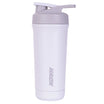
Plastic is the most common option: light, inexpensive and fine for everyday powder-and-water shakes. Choose a quality, food-safe plastic, and note that plastic can hold onto odour and stains over time if not cleaned well. The pro blend shaker in white and black are practical everyday picks.
Stainless steel and insulation
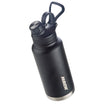
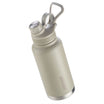
Stainless steel is more durable, resists odour and stains, and when double-walled and insulated it keeps your shake cold for hours, which matters if you pre-make a shake or train in the heat. The insulated steel shakers come in black, white, green and blue. To weigh the options in detail, see our guides on stainless steel vs plastic shakers and single wall vs double wall bottles.
9. How to Choose the Right Shaker and Keep It Clean
Put it together and the decision is straightforward.
Match the mechanism to your powder
For simple whey or fine powders, a wire ball or agitator is perfect. For thick mass gainers, choose a mesh grid. If you want effortless mixing of tricky powders and do not mind charging a device, go electric. If your shakes include fruit or oats, you need a blender, not a shaker.
Pick size and material
A 600 to 750 ml bottle suits a one to two scoop shake, while 900 ml or more suits gainers or double-duty hydration. Choose insulated steel if you pre-make shakes or want longevity, or plastic for a light, cheap everyday bottle. Track how your nutrition is working with a body weighing scale alongside your shakes.
Keep it clean and odour-free
Rinse immediately after use, then wash with warm soapy water including the ball or grid and the lid, and let everything air dry fully with the lid off before storing. Never seal a wet bottle away, which breeds odour. Add the liquid first, then powder, use room-temperature liquid, and shake 30 to 40 seconds for the smoothest result. Pair your shaker with a Hydra water bottle for all-day hydration and see how much water a lifter should drink daily.
- The mixing mechanism is the most important feature: choose it first, before colour, size or brand.
- Wire balls and agitators suit fine powders; mesh grids handle thick gainers; electric shakers mix anything powdered.
- No manual shaker blends solids, so fruit-and-oat shakes still need a blender.
- Plastic is light and cheap; insulated stainless steel is durable, odour-resistant and keeps shakes cold.
- Add liquid first, use room-temperature water, clean the bottle and mixer promptly, and never store it damp.
10. Who Needs Which Shaker?
The best shaker depends on how you train and what you mix. Here is a quick match, with the gear that fits.
11. Related Reading
Keep dialling in your nutrition and gear with these guides and products from Hack Athletics.
12. Frequently Asked Questions
What is the best mixing mechanism for a protein shaker?
For most people mixing whey or fine powders with liquid, a wire whisk ball or a fixed agitator is more than enough and needs no power. If you use thick mass gainers, a fixed mesh grid handles them better, and an electric shaker with a spinning vortex mixes any powder perfectly at the cost of charging and weight.
Do shaker balls actually work?
Yes. The added mass of a mixing ball increases kinetic energy transfer during shaking, so as it collides with clumps and the bottle walls it shears them apart far better than liquid alone. In tests, shaker bottles with mixer balls reduce visible clumps substantially compared with stirring with a spoon.
What is the difference between a wire whisk ball and an agitator?
A wire whisk ball is a loose, spring-shaped stainless steel ball that bounces freely and breaks up clumps as you shake. An agitator or fixed grid is a paddle or perforated disc built into the bottle that the mix passes through. Loose balls mix aggressively; fixed grids often create less foam and are easier to clean.
Can a shaker bottle mix thick powders and solids?
A shaker mixes powder into liquid well, and a mesh grid helps with thicker mass gainers, but no manual shaker can blend solid foods like banana, oats or peanut butter. Solids stay as chunks and block the spout. For shakes with whole ingredients you need a blender or an electric blending bottle.
Are stainless steel or plastic shaker bottles better?
Plastic is lighter and cheaper and the most common choice. Stainless steel is more durable, resists odour and stains, and when insulated keeps your shake cold for hours. If you often pre-make shakes or want a bottle that lasts, insulated steel is worth it; for a cheap, light everyday bottle, plastic works.
How do I stop my protein shake from being lumpy?
Add the liquid first, then the powder, and use a mixing ball or grid. Room-temperature liquid dissolves protein better than very cold milk, and shaking hard for 30 to 40 seconds helps. Pre-mixing the powder with a splash of liquid before filling the bottle also reduces clumping.
Why does my shaker bottle smell?
Protein residue left in the bottle or trapped in a wire ball breeds odour-causing bacteria, especially if you seal it away wet. Rinse immediately after use, wash with warm soapy water including the ball and lid, and let everything air dry fully with the lid off before storing.
What size protein shaker should I buy?
A 600 to 750 ml bottle suits a standard one to two scoop shake with room to shake. Go larger, around 900 ml or more, if you mix mass gainers, add water volume, or want the bottle to double as a hydration bottle through the day.
