








- National Academies adequate intake guidance suggests roughly 3.7 liters of total daily water for men and 2.7 liters for women, before accounting for training.
- Even mild dehydration, around 2 percent of body mass lost through sweat, has been linked to measurable strength and power declines in training.
- NSCA guidance recommends fluid intake before, during and after training, not just after a session ends.
- Plain water is generally sufficient for most strength sessions under 60 to 90 minutes; longer or hotter sessions raise the case for electrolytes.
- Dark urine color, persistent thirst and unexplained fatigue mid-session are practical signs of under-hydration.
- Weighing yourself before and after training sessions is a simple way to estimate your personal sweat rate over time.
- 1. What Hydration Actually Means for a Lifter
- 2. How Dehydration Affects Strength and Power
- 3. Daily Intake Guidelines, Compared
- 4. Hydration Timing Around Training
- 5. Water vs Electrolytes: What You Actually Need
- 6. How to Build Your Own Hydration Plan
- 7. Common Hydration Mistakes Lifters Make
- 8. Tracking and Adjusting Over Time
- 9. Expert Tips on Practical Hydration
- 10. Who Needs to Pay Closer Attention to Hydration?
- 11. Related Reading
- 12. Frequently Asked Questions
How much water a lifter should drink daily is one of those questions with a genuinely useful answer, not just a generic "drink more water" response. Between sweat loss during heavy training and the general demands of a strength training lifestyle, hydration needs for lifters typically run higher than standard public health guidance, and getting it right affects your performance more than most people realize.
Hack Athletics builds training gear for lifters who take the details seriously, and hydration is one detail that is easy to overlook next to bigger topics like programming and nutrition. You can read more about our approach on the about us page.
This guide covers what the research actually says about daily water needs, how to time intake around training, and when plain water is enough versus when electrolytes matter, so you can build a simple routine instead of guessing at bottle refills.
Last reviewed: July 2026
1. What Hydration Actually Means for a Lifter
Hydration is not simply about drinking a fixed number of glasses of water a day. It is about maintaining fluid balance closely enough that your body's cells, blood volume and thermoregulation all function normally under the added stress of heavy training.
Baseline reference: The National Institutes of Health Office of Dietary Supplements references adequate intake figures from the National Academies at roughly 3.7 liters of total daily water for men and 2.7 liters for women, from all beverages and food combined.
Why "total water" matters more than plain drinking water
That figure includes water from food and other beverages, not just plain drinking water. In practice, lifters report that focusing purely on water bottle volume while ignoring food-based water intake, and the added losses from sweat, gives an incomplete picture of actual daily needs.
It is also worth separating two related but distinct goals: staying generally healthy day to day, which the National Academies figures are designed for, and optimizing performance during a specific training session, which requires layering training-specific guidance on top of that general baseline rather than treating one number as sufficient for both purposes.
2. How Dehydration Affects Strength and Power
The connection between hydration and performance is well established in sports science literature. Guidance summarized by the Korey Stringer Institute at the University of Connecticut, citing American College of Sports Medicine and National Athletic Trainers' Association position statements, notes that maintaining a euhydrated state supports strength, power and aerobic performance, while dehydration undermines all three.
A useful rule of thumb cited in sports hydration guidance: a body mass loss of roughly 2 percent from sweat during a session is a threshold where performance decrements become noticeable for many athletes.
For lifters specifically, this can show up as reduced bar speed on later sets, a drop in perceived strength during the back half of a session, and reduced ability to sustain focus through a longer workout. It is easy to attribute a rough session entirely to poor sleep or accumulated fatigue when, in reality, simply arriving under-hydrated played a meaningful part.
3. Daily Intake Guidelines, Compared
The table below summarizes commonly referenced hydration guidance relevant to lifters, drawn from national and sports-science sources. These figures are starting points, not fixed prescriptions. Individual sweat rate, body size, training environment and diet all shift the actual number that works for you day to day.
| Guidance | Baseline Figure | Context |
|---|---|---|
| National Academies adequate intake | ~3.7L men / ~2.7L women daily | General population, total water including food |
| NSCA pre-training guidance | 5-7 ml per kg body weight, 4 hours prior | Structured training sessions |
| NSCA pre-training top-up | 3-5 ml per kg body weight, 2 hours prior | Immediately before training |
| During-session guidance | Roughly 200-300ml every 15-20 minutes | Longer or higher-sweat sessions |
| Post-session rehydration | ~150% of body mass lost during exercise | Rehydrating within 2 hours post-training |
4. Hydration Timing Around Training
Timing matters as much as total volume. Front-loading all your fluid intake right before a heavy session, without spreading it through the day, tends to cause discomfort rather than genuine hydration benefit.
Before training
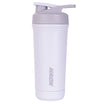
Aim for steady intake through the day leading up to training, with a modest top-up in the one to two hours beforehand using a Hack Athletics Hydra Water Bottle or similar marked bottle to track volume.
During training
Small, regular sips between sets, rather than large infrequent gulps, keep fluid levels steadier without causing the stomach discomfort that can come from drinking a large volume quickly during rest periods.
After training
Rehydration in the two hours following training is when much of the real recovery work happens. Pairing your fluid intake with your usual post-workout shake is a convenient way to build the habit without adding an extra step to your routine.
Stay on Top of Training Hydration
Shop insulated shaker bottles and water bottles built to make daily hydration tracking simple.
Shop Water Bottles5. Water vs Electrolytes: What You Actually Need
For most strength training sessions under roughly 60 to 90 minutes in moderate conditions, plain water covers hydration needs adequately. Longer sessions, higher sweat rates, or training in hot and humid conditions increase the case for adding sodium and electrolytes, since sweat carries meaningful sodium loss alongside water.
Electrolyte needs scale with sweat rate and session length, not simply with training intensity. A short, intense session may need less electrolyte replacement than a long, moderate one in a hot gym.
Using a Pro Blend Shaker Bottle makes it straightforward to mix an electrolyte solution when longer or hotter sessions call for it, without needing to carry two separate bottles.
6. How to Build Your Own Hydration Plan
Work through this process:
- Establish your baseline. Use general adequate intake figures as a starting point, then adjust upward for training volume and climate.
- Weigh yourself before and after a typical session. The difference, largely water weight, gives a rough estimate of your personal sweat rate.
- Rehydrate at roughly 150 percent of body mass lost. This accounts for ongoing fluid losses after training ends, not just what was lost during the session itself.
- Adjust for session length and heat. Longer or hotter sessions call for more frequent intake and, often, added electrolytes.
- Build in checkpoints. Set specific times of day, such as before your first meal, mid-morning and pre-training, to check your intake against a target rather than relying on end-of-day recall.
A hydration plan does not need to be complicated to be effective. Most lifters find that a consistent morning-to-evening routine, built around a single marked bottle and a set number of refills, beats an elaborate tracking system they eventually abandon.
7. Common Hydration Mistakes Lifters Make
The most common mistake is relying purely on thirst as a signal during a heavy training session, when thirst often lags behind actual fluid need, particularly once a lifter is already mildly dehydrated.
Chugging a large volume of water immediately before a heavy set can cause genuine gastrointestinal discomfort mid-lift. Spread intake throughout the session instead of loading it all at once.
Another frequent mistake is ignoring hydration entirely on rest days, assuming it only matters on training days, when consistent daily intake supports recovery and readiness for the next session just as much.
8. Tracking and Adjusting Over Time
The simplest reliable tracking method is a bottle with a known, marked volume and a target number of refills across the day. Reviewing urine color as a rough daily check, aiming for a pale straw color rather than dark yellow, is a widely used practical proxy.
Body weight tracking before and after training, done consistently over a few weeks rather than a single session, gives a more personalized and reliable picture of your actual sweat rate than any generic guideline alone.
Adjust your plan seasonally as well. Training through hotter months, or in a poorly ventilated gym, typically increases sweat rate meaningfully compared to cooler, air-conditioned conditions, even when the workout itself is identical. A hydration target set once and never revisited tends to underperform compared to one reviewed every few months alongside broader training changes.
9. Expert Tips on Practical Hydration
A common observation among coaches is that lifters who set a specific, concrete hydration target, such as a set number of bottle refills by certain points in the day, stick to it far more consistently than those relying on vague intentions to "drink more water."
Research note: A peer-reviewed analysis of total water intake guidelines and hydration status in United States adults found that current adequate intake guidelines are generally sufficient for optimal hydration in the general population, reinforcing that most people do not need extreme intake targets, just consistency.
The National Academies' work on dietary reference intakes for water and electrolytes remains the foundational source behind most modern sports hydration guidance, and the NSCA's practical hydration guidance for trainers translates that research into concrete before, during and after training recommendations.
For lifters who also train with a weightlifting belt or during longer accessory circuits, keeping a bottle within reach between sets, rather than at the far end of the gym, removes one of the most common practical barriers to consistent intake. Something as simple as bottle placement affects behavior more than most people expect once training gets busy.
10. Who Needs to Pay Closer Attention to Hydration?
Hydration needs are not identical across every lifter. A few groups benefit from paying extra attention.
- Adequate intake guidance sits around 3.7L daily for men and 2.7L for women, before adjusting for training.
- Roughly 2 percent body mass loss from sweat is a common threshold for noticeable performance decline.
- Hydrate before, during and after training, not just after a session ends.
- Plain water covers most sessions under 60 to 90 minutes; add electrolytes for longer or hotter training.
- Rehydrate post-session at roughly 150 percent of measured body mass lost.
- Thirst lags behind actual fluid need once mild dehydration sets in.
- Weighing in before and after sessions over a few weeks reveals your personal sweat rate.
11. Related Reading
12. Frequently Asked Questions
How much water should a lifter drink daily?
General adequate intake guidance from the National Academies is approximately 3.7 liters of total water per day for men and 2.7 liters for women, from all beverages and food combined. Lifters training regularly and sweating heavily typically need more than this baseline, adjusted for training volume, body size and climate.
Does dehydration actually hurt lifting performance?
Yes. Even mild dehydration, in the range of 2 percent of body mass lost through sweat, has been linked to measurable declines in strength, power output and cognitive focus during training. This is one of the more consistent findings in exercise hydration research.
Should I drink water during a lifting session or only before and after?
Drink at all three points. Guidelines from the NSCA recommend fluid intake in the hours before training, small regular amounts during training to offset sweat losses, and full rehydration afterward based on how much body weight was lost during the session.
Do I need electrolytes, or is plain water enough?
For most strength training sessions under 60 to 90 minutes in moderate conditions, plain water is generally sufficient. Longer sessions, high sweat rates, or hot and humid training environments increase the case for adding sodium and electrolytes to support fluid retention.
How can I tell if I am dehydrated during training?
Common signs include unusually dark urine color, persistent thirst, headache, reduced strength output compared to normal, and unexplained fatigue partway through a session. Weighing yourself before and after a session is a more precise way to estimate fluid loss over time.
Can drinking too much water be a problem?
Yes, in rare cases. Consuming extremely large volumes of water in a short period, well beyond typical training needs, can dilute blood sodium levels. This is uncommon in normal strength training but worth knowing about if you are following an aggressive water intake plan without any sodium intake.
Does coffee or tea count toward daily water intake?
Yes. Research summarized by the National Academies indicates that caffeinated beverages contribute to total water intake similarly to other fluids for most regular consumers, contrary to the older belief that caffeine causes significant net fluid loss.
What is the easiest way to track hydration during a training block?
Using a marked water bottle with a known volume, like the Hack Athletics Hydra Water Bottle, and setting a target number of refills across the day, is one of the simplest reliable methods. Tracking body weight change before and after training sessions over a few weeks also helps estimate your personal sweat rate.