






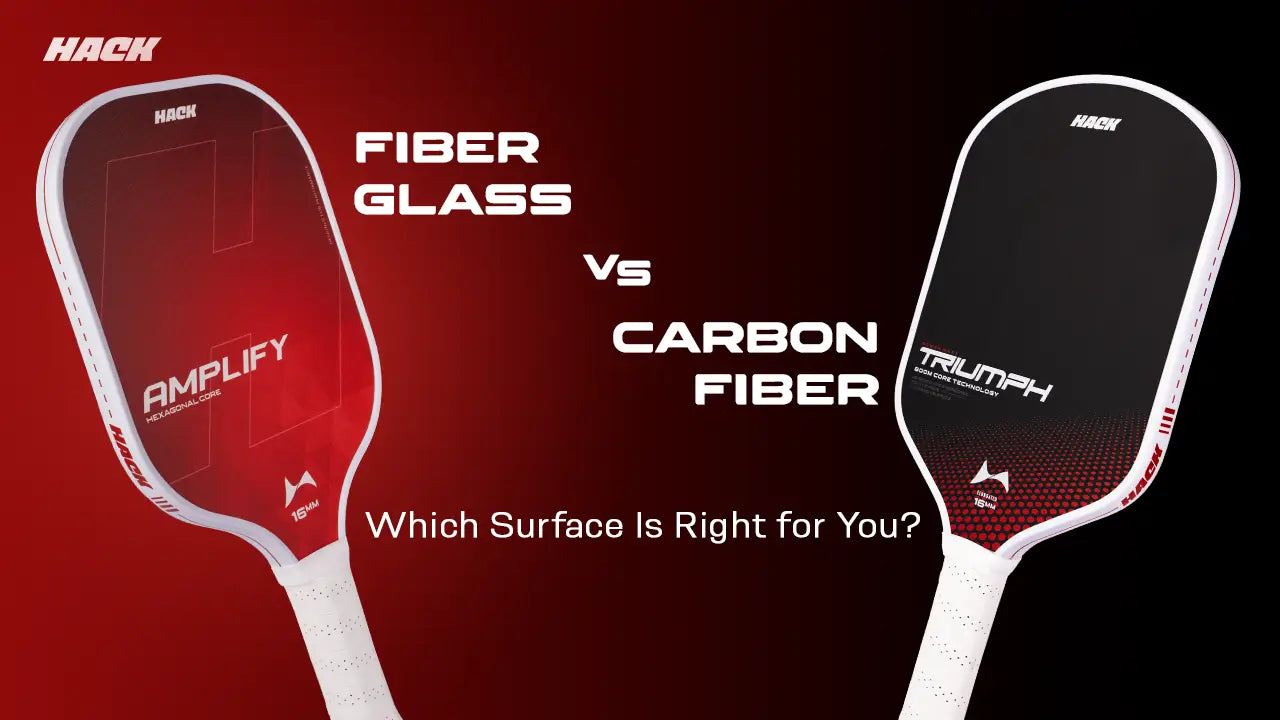
- Carbon fiber is significantly stiffer than fiberglass, which changes how energy transfers into the ball on every shot.
- Fiberglass flexes on contact for a springy, forgiving power response, while carbon fiber grips the ball for stronger spin and control.
- USA Pickleball's Equipment Standards Manual governs surface roughness and deflection, not face material directly, so both materials can be tournament legal.
- Carbon fiber faces typically hold their texture and performance longer under regular play than fiberglass faces.
- Hybrid paddles that layer fiberglass beneath carbon fiber aim to blend power with spin and control.
- Beginners generally do better on fiberglass; intermediate to advanced players chasing spin generally prefer carbon fiber.
- 1. What Are Carbon Fiber and Fiberglass Paddle Faces?
- 2. How Each Material Actually Performs on Contact
- 3. Spin, Power and Durability, Compared
- 4. Best Use Cases for Each Paddle Surface
- 5. Core Thickness and Other Performance Factors
- 6. How to Choose the Right Paddle Surface
- 7. Common Mistakes When Buying a Paddle
- 8. Care and Maintenance for Both Surfaces
- 9. Expert Tips on Surface Selection
- 10. Who Uses Carbon Fiber vs Fiberglass Paddles?
- 11. Related Reading
- 12. Frequently Asked Questions
Standing in front of a wall of pickleball paddles, the carbon fiber vs fiberglass pickleball paddle question is usually the first real decision a player has to make, and it genuinely changes how the paddle plays, not just how it looks.
Hack Athletics builds paddles for players moving from casual games into serious, regular play, and getting the face material right matters more than most other spec on the paddle. You can read more about our approach on the about us page.
This guide breaks down how each material actually performs, what the rules say, and which surface fits your game, so you are not guessing based on marketing copy alone.
Last reviewed: July 2026
1. What Are Carbon Fiber and Fiberglass Paddle Faces?
The face is the outer layer of a paddle that actually contacts the ball. Carbon fiber faces are woven from extremely thin carbon filaments bonded with resin, producing a stiff, lightweight and textured surface. Fiberglass faces are woven from fine glass filaments, also bonded with resin, producing a lighter-feeling, more flexible surface.
Material fact: Carbon fiber's tensile modulus, its resistance to bending, runs roughly four times higher than typical fiberglass, according to composite material data published by Zoltek's carbon fiber technical resources. This single property explains most of the performance gap between the two materials.
Why stiffness is the key variable
Stiffness determines how much the face deforms on ball contact. A stiffer face deforms less and transfers more of your swing energy directly into the ball, while a more flexible face deforms more and returns stored energy back into the ball on release, similar to a trampoline.
It is worth noting that neither material is inherently "better" in an absolute sense. Aerospace and automotive industries, where carbon fiber dominates, value stiffness and weight savings above almost everything else. Pickleball is different: the sport specifically wants a mix of skill expression and accessible power, which is exactly why both materials remain common on the market rather than one displacing the other entirely.
2. How Each Material Actually Performs on Contact
In practice, players report that a carbon fiber paddle feels crisper and more precise on contact, since the stiff face grips the ball briefly before releasing it, imparting more spin. A fiberglass paddle feels springier, with the ball seeming to leave the face faster and with more raw pace, even on a shorter or less committed swing.
If you consistently mishit toward the edges of the paddle, fiberglass's larger effective sweet spot and forgiving flex can reduce how much those mishits cost you in the point.
This difference is grounded in material science. Comparative studies on carbon and glass fiber composites, published in a peer-reviewed materials engineering study on carbon and glass fiber hybrid composites, confirm that tensile modulus increases substantially with carbon fiber content, which is the underlying material property responsible for the stiffer, more controlled feel players describe on a carbon paddle face.
3. Spin, Power and Durability, Compared
The table below summarizes how the two materials compare across the attributes that matter most day to day on the court.
| Attribute | Carbon Fiber | Fiberglass |
|---|---|---|
| Stiffness | High, roughly 4x fiberglass modulus | Lower, more flexible on contact |
| Spin potential | Higher, textured surface grips the ball | Lower, smoother surface releases faster |
| Power feel | Controlled, player-generated power | Springy, more free pop on contact |
| Sweet spot forgiveness | Smaller, more precision required | Larger, more forgiving off-center |
| Typical durability | Longer texture retention over time | Faces tend to smooth out sooner |
| Typical price range | Higher end of the market | Lower, more budget friendly |
Beyond the paddle itself, ball choice affects how surface differences feel in play. A slightly softer indoor ball dampens some of fiberglass's extra pop, while a harder outdoor ball tends to amplify the difference between the two face materials, since it compresses less on contact regardless of which surface it strikes.
4. Best Use Cases for Each Paddle Surface
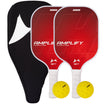
Fiberglass paddles, such as those in the Hack Athletics Amplify Pro range, suit players who want reliable power with a straightforward swing, including newer players and doubles-focused bangers who lean on drives.
When carbon fiber is the better fit
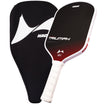
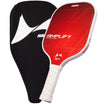
Carbon fiber paddles, such as the Hack Athletics Raptor Pro Carbon Pickleball Paddle, suit intermediate to advanced players who already generate their own power and want the paddle to add spin, feel and shot precision, particularly at the kitchen line during dinks and resets.
Field observation: Dedicated dinkers and all-court players skew toward carbon fiber, while power-first baseline drivers and true beginners more often prefer fiberglass or a hybrid build.
Doubles vs singles play
Doubles play, which dominates recreational pickleball, tends to reward the control and spin of carbon fiber at the non-volley zone line, where dinks, resets and touch shots decide most points. Singles play, with more open court to cover and more baseline exchanges, gives fiberglass's raw power more room to matter. If your games lean heavily toward one format, weight that when choosing between a carbon fiber paddle and a fiberglass paddle.
5. Core Thickness and Other Performance Factors
Face material is only half the performance picture. Core thickness, typically 13 to 16mm of polymer honeycomb, also shapes how a paddle feels regardless of face material. Thicker cores around 16mm favor control and touch, while thinner cores around 13mm favor pop and power.
Weight and balance point matter just as much in daily play. A head-heavy paddle amplifies power on drives but slows reaction time at the net, while a handle-heavy paddle speeds up hands for blocking and resets at the cost of some raw pop on drives. Neither carbon fiber nor fiberglass fixes a poor weight match on its own, so it is worth checking overall paddle weight alongside face material rather than treating the material choice in isolation.
Compare Paddle Surfaces Side by Side
Shop carbon fiber and fiberglass paddles built for every level of play.
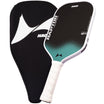
Shop Pickleball PaddlesSome paddles, including hybrid builds, layer fiberglass beneath a carbon fiber top face specifically to combine the power of fiberglass with the spin and control of carbon fiber. The Hack Athletics Triumph Power Core Paddle is built around this kind of balanced approach rather than maximizing one attribute at the expense of the other.
Do not judge a paddle purely on face material. Two carbon fiber paddles with different core thickness and weight can feel completely different in hand.
6. How to Choose the Right Paddle Surface
Once you have narrowed down face material, checking a full pickleball collection side by side rather than buying the first paddle you see helps confirm the weight and core feel actually match your swing, not just the surface. Work through these questions:
- What is your skill level? Beginners generally do better on fiberglass or a hybrid; intermediate and advanced players chasing spin generally prefer carbon fiber.
- What is your playing style? Power-first drivers lean fiberglass. Dinkers and all-court control players lean carbon fiber.
- How often do you play? Frequent players benefit from carbon fiber's longer texture retention over time.
- What is your budget? Fiberglass paddles are generally more affordable entry points into serious play.
7. Common Mistakes When Buying a Paddle
The most common mistake is buying the most expensive carbon fiber paddle available before building the swing mechanics to actually benefit from it, rather than starting with a forgiving fiberglass or hybrid paddle and upgrading as technique develops.
Always confirm a paddle appears on the current USA Pickleball approved list before using it in sanctioned play. Approval depends on the full construction, including surface roughness and deflection testing, not on face material alone.
Another frequent mistake is ignoring core thickness and weight entirely and choosing a paddle based on face material alone, when both factors meaningfully change how the paddle plays in your hand.
8. Care and Maintenance for Both Surfaces
Wipe both carbon fiber and fiberglass faces down after play to remove dust, sweat and court debris, which helps preserve surface texture and grip over time. Store paddles away from direct heat and sunlight, particularly in a car trunk during warmer months, since prolonged heat exposure can affect face and core materials.
Carbon fiber faces generally tolerate a slightly firmer cleaning approach than fiberglass, though a soft cloth with water is the safest option for either material to avoid degrading the surface texture that produces spin. A dedicated gym bag with a padded compartment also helps prevent paddles from knocking against other gear in transit, which over time can chip edge guards and dull face texture faster than normal court wear alone.
9. Expert Tips on Surface Selection
A common observation among coaches is that players tend to overvalue power and undervalue control when picking a first serious paddle, and that a slightly more forgiving fiberglass or hybrid paddle often accelerates improvement faster than jumping straight to a demanding carbon fiber face.
Regulatory note: USA Pickleball's Equipment Standards Manual caps surface roughness and prohibits any material or feature that creates a trampoline-style spring effect, which keeps paddle performance grounded in player skill rather than equipment alone.
The full USA Pickleball Official Rulebook confirms that paddle approval depends on passing size, surface and deflection testing as a complete unit, which is why checking the official approved paddle list before a sanctioned event matters more than checking face material alone. Composite material data from Goodwinds Composites' technical comparison of carbon and fiberglass further confirms the underlying stiffness gap between the two materials that drives everything discussed in this guide. For court-side context on how paddle performance interacts with court dimensions and scoring, see our pickleball court dimensions and scoring guide.
10. Who Uses Carbon Fiber vs Fiberglass Paddles?
Paddle choice tends to track playing style and experience level.
- Carbon fiber is stiffer, offering more spin and controlled power; fiberglass flexes more, offering easier pop.
- Face texture, not just thickness, is what drives spin differences between the two materials.
- Carbon fiber faces generally hold their performance longer than fiberglass under regular play.
- Both materials can be USA Pickleball approved when built to full equipment standards.
- Hybrid paddles blend fiberglass power with carbon fiber spin and control.
- Beginners generally do better starting on fiberglass or hybrid paddles.
- Core thickness and paddle weight matter as much as face material for overall feel.
11. Related Reading
12. Frequently Asked Questions
What is the main difference between carbon fiber and fiberglass pickleball paddles?
Carbon fiber is significantly stiffer than fiberglass, which means it transfers swing energy more directly into the ball, producing more controlled power and stronger spin. Fiberglass flexes more on contact, creating a springy trampoline effect that returns extra pop with less swing effort, at the cost of some spin and precision.
Is carbon fiber or fiberglass better for beginners?
Fiberglass is generally more beginner friendly because its flexible face is more forgiving on off-center hits and provides easier power without requiring a fully developed swing. Carbon fiber rewards more advanced technique, since its stiffer face requires the player to generate more of the power themselves.
Does carbon fiber really generate more spin than fiberglass?
Yes. Carbon fiber's textured, gritty surface grips the ball longer on contact than the smoother fiberglass surface, which translates directly into more spin potential on drives, dinks and serves. This is one of the most consistent findings across independent paddle testing and manufacturer technical data.
Which paddle surface lasts longer, carbon fiber or fiberglass?
Carbon fiber faces typically hold their texture and performance for longer under regular play than fiberglass faces, which tend to smooth out and lose grip sooner with heavy use. Lifespan still depends heavily on build quality and how often the paddle is played.
Are carbon fiber and fiberglass paddles both USA Pickleball approved?
Yes, both materials are approved when paired with a compliant core and built within USA Pickleball's equipment standards for size, surface roughness and deflection. Approval depends on the full paddle construction meeting the standard, not on face material alone.
Can a hybrid paddle combine carbon fiber and fiberglass?
Yes. Some paddles, like the Hack Athletics Triumph Power Core Paddle, layer fiberglass beneath a carbon fiber top layer to blend fiberglass's power and forgiveness with carbon fiber's spin and control. This construction is a genuine middle ground rather than simply splitting the difference on every attribute.
Does paddle surface material affect arm fatigue or tennis elbow?
Face stiffness plays a role in how much vibration transfers to your arm on contact. Fiberglass generally absorbs slightly more shock due to its flex, while a stiffer carbon fiber face can transmit more vibration, though core material and paddle weight typically have a larger effect on arm comfort than face material alone.
Should intermediate players upgrade from fiberglass to carbon fiber?
Many intermediate players do upgrade to carbon fiber once they want more spin and shot precision than a fiberglass paddle offers. The right time to switch is when you can consistently generate your own power and want the paddle to add control and spin rather than free pop.