



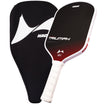
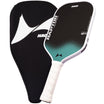
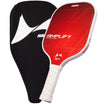



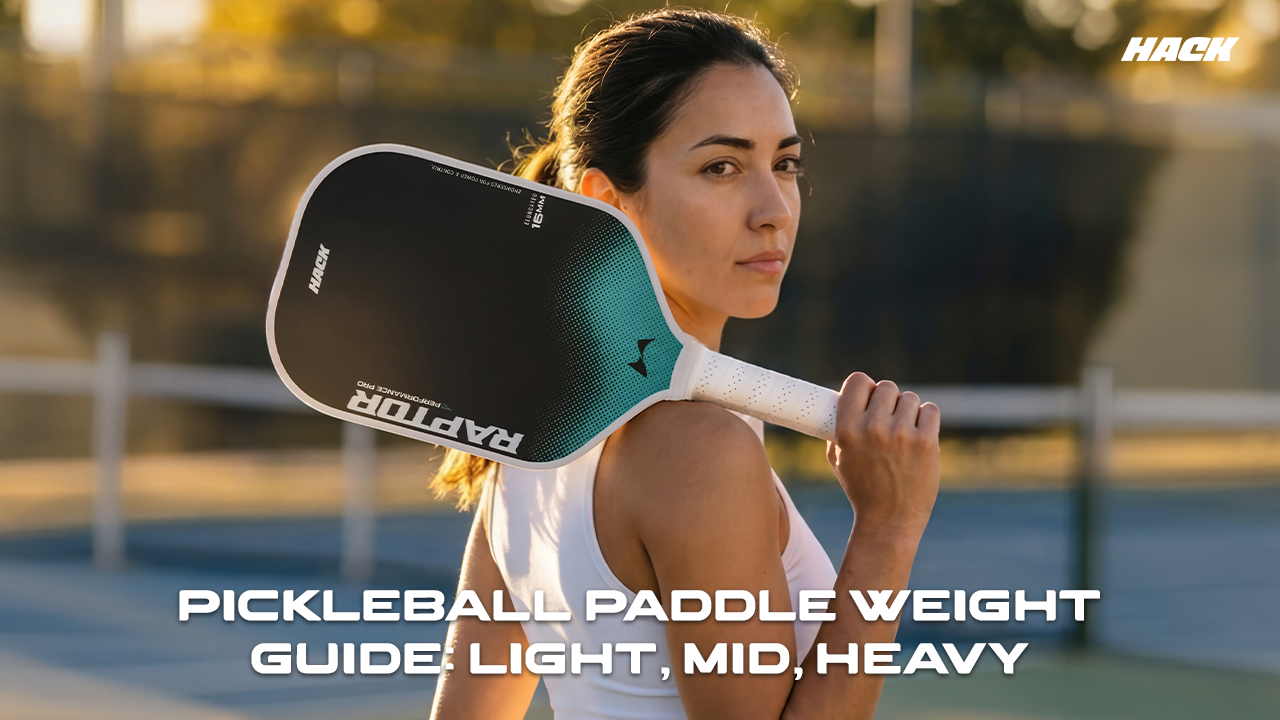
- Pickleball paddles fall into three practical weight bands: light (under 7.6 oz), mid (7.6 to 8.0 oz), and heavy (8.0 oz and above).
- Mid-weight paddles in the 7.6 to 8.0 ounce range suit the majority of recreational and intermediate players.
- Heavy paddles produce more power and stability but reduce hand speed at the kitchen line.
- Light paddles favour quick hands, drop shots, and players with elbow concerns or shorter rally tolerance.
- Swing weight matters more than static weight. Two paddles of the same scale weight can feel completely different in play.
- Most players should test for two to three sessions in a weight class before adding lead tape or changing paddles.
- What Paddle Weight Actually Measures
- How Weight Changes the Shot
- Light, Mid, and Heavy Paddles Compared
- Picking the Right Class for Your Style
- Materials, Cores, and Why They Affect Weight Feel
- How to Choose Your Paddle Weight Step by Step
- Common Mistakes Players Make Buying by Weight
- Customising Weight with Lead Tape
- Expert Tips on Weight, Balance, and Swing Speed
- Who Uses Each Paddle Weight Class
- Related Reading
- Frequently Asked Questions
Walk into any pickleball club from Bandra to Bengaluru and ask five players what weight paddle they use, and you will hear five different answers, all defended with conviction. The truth is that paddle weight is the single most important specification on the paddle, more important than face material, more important than handle length, more important than price. Get the weight right and an inexpensive paddle plays well. Get the weight wrong and a premium paddle feels off all night. This guide breaks down what each weight class actually does, who it suits, and how to test before you buy. For the full range of paddles tested against these criteria, browse the Hack Athletics pickleball collection.
Hack Athletics has built its pickleball line specifically for the Indian player base: humidity-tolerant grip materials, swing weights calibrated to the strokes Indian players actually use, and pricing that respects the difference between recreational and competitive needs. The brand's company story explains the design philosophy that runs through every paddle in the range.
Last reviewed: May 2026
1. What Paddle Weight Actually Measures
A pickleball paddle's listed weight is its static weight, measured on a calibrated scale before any grip overwrap or lead tape is applied. The number you see on a product page is almost always the manufacturer's specification, with a tolerance of plus or minus 0.2 ounces. Two paddles from the same model can vary by that margin and still be considered matching units.
Static weight versus swing weight
Static weight tells you nothing about how the paddle feels when swung. Swing weight, sometimes called moment of inertia, measures how heavy the paddle feels in motion based on where its mass is distributed. A paddle with most of its mass in the head feels heavier when swinging even if the static weight matches a more balanced paddle. The USA Pickleball Association equipment standard recognises this distinction and regulates only the static weight bounds, leaving balance entirely to the manufacturer.
The published weight is a starting point, not the final number
Most players add an overgrip, which adds 7 to 12 grams (roughly 0.25 to 0.42 oz). Some add lead tape for tuning. The paddle you swing in a match is usually 0.3 to 0.6 ounces heavier than the box weight. Knowing this matters because a paddle listed at 7.9 ounces with overgrip can finish at 8.2 ounces in the hand, putting it into a different functional weight class.
Useful baseline: The USA Pickleball Association does not impose a maximum weight on competition paddles. Any weight is technically legal. The practical range used by competitive players sits between 7.3 and 8.5 ounces.
2. How Weight Changes the Shot
Weight changes what the paddle can do to the ball, and what the ball can do to your arm. Both effects scale linearly with mass, but in opposite directions for different shot types. Heavier paddles favour shots where you have time to set up and where ball speed matters. Lighter paddles favour shots where reaction time and finesse matter.
Drives and serves
On any shot with a full backswing, more paddle mass translates to more energy transferred to the ball at the same swing speed. The trade-off is that heavier paddles slow down the swing in the late phase, so players who already have fast hands often hit harder with a paddle 0.3 ounces lighter than they think they need.
Volleys and dinks at the kitchen line
At the non-volley zone, the entire game changes. Reaction time is measured in fractions of a second and the paddle is often held above the wrist for long periods. Heavy paddles fatigue the forearm during 20-minute kitchen exchanges and lose hand-battle points where the lighter paddle wins simply by being there first.
Touch and dinks
Counterintuitively, slightly heavier paddles dink with more consistency for many players because the additional mass damps the bounce and keeps the ball low. Players coming from tennis often find this easier to adapt to than the whippier feel of an ultra-light paddle.
Test paddles in actual match play, not warm-up rallies. Many paddles feel great for ten minutes and reveal their weight problems only after 45 minutes of competitive doubles.
3. Light, Mid, and Heavy Paddles Compared
The three weight classes used by serious players in India and globally line up consistently. Knowing which one you are buying matters more than the brand printed on the face.
| Specification | Light (under 7.6 oz) | Mid (7.6 to 8.0 oz) | Heavy (8.0 oz and above) |
|---|---|---|---|
| Best for | Quick hands, doubles specialists, elbow concerns | All-court play, beginners, recreational players | Power baseliners, singles, hard hitters |
| Power | Low to moderate | Moderate to high | High |
| Reaction speed | Fastest | Balanced | Slowest |
| Arm fatigue over a 90-min session | Minimal | Low | Noticeable for many players |
| Sweet spot stability | Smaller | Wide | Widest |
| Typical session-length suitability | Long sessions, multiple games | Standard 1 to 2 hour play | Shorter intense sessions |
What players notice in the first week
Light paddle users typically report sharper backhand counters and better hand speed within two or three sessions. Heavy paddle users report easier deep drives but more shoulder soreness initially. Mid-weight users notice the least dramatic change but usually settle into a comfortable groove fastest, which is why mid is the safest starting point for new buyers. The Amplify Pro pickleball paddle sits squarely in the mid-weight band and is built for exactly this profile.
4. Picking the Right Class for Your Style
Match the weight class to your actual playing style, not to your aspirations. A player who wants to hit power drives but spends 80 percent of game time at the kitchen line is better served by a mid-weight paddle than a heavy one. The numbers always defer to what you actually do on court.
If you play primarily doubles
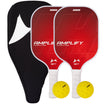
Doubles is a hands game. Roughly 70 percent of shots in competitive doubles happen within four feet of the non-volley line. Paddle speed and recovery between shots dominate. The Amplify Pro paddle set with two paddles and balls is a popular doubles-team starting point because both paddles are matched in the mid-weight range.
If you play primarily singles
Singles is a baseline game more often than not, with bigger swings, more lateral movement, and longer rallies. Slightly heavier paddles around 8.0 to 8.3 ounces help generate the depth that singles strategy demands. The Raptor Pro carbon paddle is engineered for this profile with a stiffer face and weight distribution that favours deep drives.
If you play tournament-level competitive pickleball
Most competitive players in India use mid-to-heavy paddles tuned individually with lead tape rather than relying on stock weight. The Triumph Power Core paddle is designed for this kind of personalisation, with a stable platform that accepts customisation without losing its baseline feel.
Practical guideline: If you play recreationally three or fewer times a week, stay within 7.6 to 8.0 ounces. The difference between strong-recreational and tournament-level paddles is usually in the player, not the gear.
5. Materials, Cores, and Why They Affect Weight Feel
Two paddles of the same listed weight can feel completely different in play because of how that weight is built into the paddle. The core, the face, and the edge guard each contribute differently to the swing.
Core type
Polypropylene honeycomb is the dominant core material across modern paddles. Variations in cell size and wall thickness allow manufacturers to tune feel without changing static weight. A 13mm thermoformed core feels noticeably more solid than an 11mm standard core at the same scale weight because the mass is distributed more uniformly across the contact zone.
Face material
Carbon fibre faces have higher friction and produce more spin per stroke, especially on slices and topspin drives. Fibreglass faces feel softer at contact and are more forgiving of off-centre hits. Both can be made to the same static weight. The choice is feel and shot preference, not power.
Edge guard and handle
Edge guards add weight at the perimeter of the paddle, where it most affects swing weight. Edgeless paddles feel lighter to swing even at identical scale weight. Handle weight, by contrast, increases manoeuvrability without slowing the swing.
If you want to compare two paddles fairly, swap your usual grip onto both before testing. Stock grips vary by 5 to 15 grams between brands, which can mask the actual paddle feel.
Find the weight class that suits your hands
Hack Athletics pickleball paddles cover light, mid, and heavy categories. Each model is calibrated for the Indian playing environment with humidity-resistant grips and balanced swing weights.
Shop Pickleball Paddles6. How to Choose Your Paddle Weight Step by Step
Choosing a paddle weight is not guesswork once you work through it in the right order. Skip steps and you end up with a paddle that fits a category but does not fit you.
Step one: assess your current arm condition
If you have any history of tennis elbow, wrist tendinitis, or rotator cuff issues, start at the lower end of mid-weight (7.6 to 7.8 oz). Players with healthy arms and resistance training experience can confidently begin in the middle of the band (7.8 to 8.0 oz).
Step two: identify where your weakness lies
Honest self-assessment matters. If your hands at the kitchen are slow, lighter paddles help. If your drives lack depth, heavier paddles help. If neither is a clear weakness, choose the middle.
Step three: factor in your match length
Players in regular 90-minute doubles sessions should not buy at the top of the heavy class unless they have actively trained for it. Cumulative fatigue across the back half of a session is where heavy paddles hurt more than they help.
Step four: account for added grip and lead
Subtract 0.3 to 0.5 ounces from your target stock weight to allow for grip and any future customisation. A target of 8.0 ounces in hand means buying a paddle listed at 7.6 to 7.7 ounces. The Hack Athletics size and spec reference gives the as-shipped weight for each model.
7. Common Mistakes Players Make Buying by Weight
The same buying mistakes show up across club ladders and beginner programmes everywhere. Most of them are correctable with one or two minor adjustments.
Buying the same weight as a stronger friend
The most common mistake is choosing a paddle weight based on what a stronger or more experienced player uses. Their paddle is tuned to their hand speed, grip strength, and stroke style. Yours should match yours, not theirs.
Choosing heavy for power and never adapting
Beginners often equate heavy paddles with power. The result is usually slower hand speed, less wrist control, and lower-quality drives because the player cannot swing the paddle fast enough to generate the power the mass promised.
Ignoring grip size when comparing weight
A paddle with a thicker grip feels heavier in hand even at identical static weight. If you compare two paddles and one feels noticeably heavier, check the grip circumference before blaming weight. Standard grips in India run 4 1/4 to 4 3/8 inches. For consistent measurement, weigh paddles on a calibrated kitchen scale rather than the bathroom BMI body weighing scale used for body mass.
Never buy a paddle online without checking the actual shipped weight. Manufacturer tolerances of plus or minus 0.2 ounces are normal but can push your paddle into the next weight class. Reputable sellers list individual paddle weights when available.
8. Customising Weight with Lead Tape
Lead tape is the standard way to fine-tune a paddle without replacing it. Most stock paddles can be tuned within a 5 to 10 gram range without compromising structure. Tungsten tape achieves the same result with less perimeter visibility.
Where to add weight, and what it does
Tape placed at the 3 and 9 o'clock positions on the paddle head increases stability and the size of the sweet spot without dramatically changing swing weight. Tape at the 12 o'clock position (top of the paddle) increases power and swing weight at the same time. Tape at the throat (just above the handle) increases overall mass with minimal swing-weight increase, suiting players who want a more solid feel without slower hands.
How much to add
Start with 3 to 5 grams total split across two symmetric positions. Play three sessions before adding more. The most common mistake is over-tuning in a single session and ending up unsure which adjustment caused which effect.
When customisation is the wrong answer
If you find yourself adding more than 10 grams of tape, the paddle is the wrong weight class for you. Buy a heavier base paddle instead. Aggressive customisation can also void manufacturer warranty on some models. Once tuned, keep customised paddles in a protective compartment of your Hack Athletics 30L duffle gym bag to prevent tape edges peeling against other gear in transit.
9. Expert Tips on Weight, Balance, and Swing Speed
Beyond the basics, a few habits and observations from competitive pickleball coaches make the difference between picking a serviceable paddle and picking the right one for you.
Test in match conditions, not warm-ups
Weight problems surface in the back half of competitive matches, not in 10-minute warm-up rallies. If a club offers a demo paddle, take it through at least two complete games before forming an opinion.
Track wrist position at contact
A paddle that is too heavy causes the wrist to lag at contact, particularly on backhand volleys. Recording a few rallies on a phone camera and reviewing them slowly is the fastest way to see this.
Watch how the pros use weight
Resources published by leading pickleball coaching publications consistently show that elite players use weight to match their preferred court position rather than as a power amplifier. Power is built from technique. Weight stabilises that technique.
Don't chase pro setups
Professional paddle setups are tuned for hands that play 25 to 40 hours a week. Recreational players who copy these setups usually end up with paddles that feel difficult to swing because their arm conditioning does not match. Research on grip and racquet ergonomics published by the American College of Sports Medicine reinforces that equipment should match the user's conditioning, not the inverse. Reviews from the United States Tennis Association on similar racquet-sport ergonomics carry over directly to paddle selection, and broader injury-prevention principles from the National Strength and Conditioning Association emphasise the same point.
Common pro setting: Many pro paddles in the 8.2 oz range have 4 to 6 grams of lead tape distributed at the 3 and 9 o'clock positions, raising the effective swing weight while maintaining a quick handle response.
10. Who Uses Each Paddle Weight Class
Paddle weight choice patterns by player type and situation, more than by skill level. The right class depends on the role you play on court.
- Recreational doubles players prioritising quick hands
- Players returning from elbow or wrist injury
- Senior players with reduced grip strength
- Specialists who play primarily at the kitchen line
- Beginners and intermediate players
- All-court doubles teams
- Players transitioning from tennis or badminton
- Most coaches recommend this band for new buyers
- Singles specialists and power baseliners
- Tournament-level competitive players
- Players with strength training experience and healthy arms
- Big-serve players who want deeper drives
- Mid-weight paddles in the 7.6 to 8.0 ounce range suit most players. Start here unless you have a specific reason not to.
- Heavier paddles add power and stability but slow hand speed at the kitchen line. They suit singles and power baseliners.
- Lighter paddles favour quick hands and reduce arm fatigue. They suit doubles specialists and players with elbow concerns.
- Swing weight matters more than static weight. Two paddles of identical scale weight can play very differently.
- Buying lighter and adding lead tape is the most flexible approach. Aim for 0.3 to 0.5 ounces below your target to leave room for grip and customisation.
- Test paddles in real match play, not warm-up rallies. Weight problems appear in the second half of a session.
11. Related Reading
12. Frequently Asked Questions
What is the best paddle weight for a beginner?
Most beginners are best served by a mid-weight paddle in the 7.6 to 8.0 ounce range. This range offers enough mass to push the ball forward without exhausting the arm and a wide enough sweet spot to forgive off-centre contact. Going too light costs power and creates timing inconsistency. Going too heavy fatigues new players quickly and slows hand speed at the kitchen line. The Amplify Pro paddle is a typical recommendation for this profile.
Does a heavier paddle hit harder in pickleball?
All else being equal, a heavier paddle transfers more momentum to the ball and produces more raw power. However, heavier paddles are slower to swing, which can reduce racquet head speed enough to neutralise the power advantage. The real-world hardest hitters use mid-to-heavy paddles around 8.0 to 8.4 ounces because that range balances mass with swing speed.
Can a heavier paddle cause tennis elbow?
Paddle weight alone does not cause tennis elbow, but a paddle that is too heavy for your strength level and technique significantly increases the risk. Lateral epicondylitis from racquet sports is associated with repeated high-stress contact through a weak forearm. Players with elbow pain should typically drop to a lighter paddle, improve their grip technique, and keep the wrist firm at contact.
How do I know if my paddle is too heavy for me?
Signs of a too-heavy paddle include slower reactions at the non-volley zone, a dropping paddle tip during long rallies, sore wrist or forearm the morning after play, and difficulty getting the paddle up for backhand counters. If two or more of these apply, drop down by 0.3 to 0.5 ounces and retest over three sessions.
What weight do professional pickleball players use?
Professional players use a wide range, but most fall between 7.8 and 8.4 ounces. Power-oriented baseliners trend toward 8.2 to 8.4 ounces with heavier head weight. Quick-hands kitchen players trend toward 7.8 to 8.0 ounces with more handle weight. Doubles specialists generally use lighter paddles than singles specialists because hand speed at the line wins doubles.
What is the difference between static weight and swing weight?
Static weight is what the paddle weighs on a kitchen scale. Swing weight measures how heavy the paddle feels when swung, factoring in where the mass is distributed. Two paddles of identical static weight can feel very different in play if one is head-heavy and the other is handle-heavy. Swing weight is the better predictor of fatigue and reaction speed.
Are carbon fibre paddles heavier than fibreglass paddles?
Not necessarily. Modern carbon fibre paddles often weigh the same as fibreglass paddles in their weight class. The difference is stiffness and surface friction, not weight. Carbon faces tend to produce more controlled spin while fibreglass faces feel more powerful. Within Hack Athletics paddles, the carbon and standard composite options sit within the same weight bands and the choice is feel-driven.
Can I add weight to a lighter paddle?
Yes. Lead or tungsten tape applied to the edge guard is the standard customisation method. Adding mass at the head increases power and stability. Adding mass at the handle increases manoeuvrability without slowing the swing. Start with 3 to 5 grams total and play three sessions before adding more. Going beyond 10 grams of added weight risks unbalancing the paddle and voiding warranty on some models.
How often should I replace my pickleball paddle?
Recreational players typically replace paddles every 18 to 24 months. Competitive players who play four or more sessions a week may need replacement at 8 to 12 months. The core deadens before the surface looks worn. Signs of a dead paddle include a flat, hollow sound on contact, loss of pop on drives, and the ball sitting up instead of biting on touch shots.