





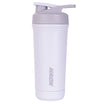
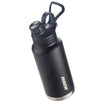


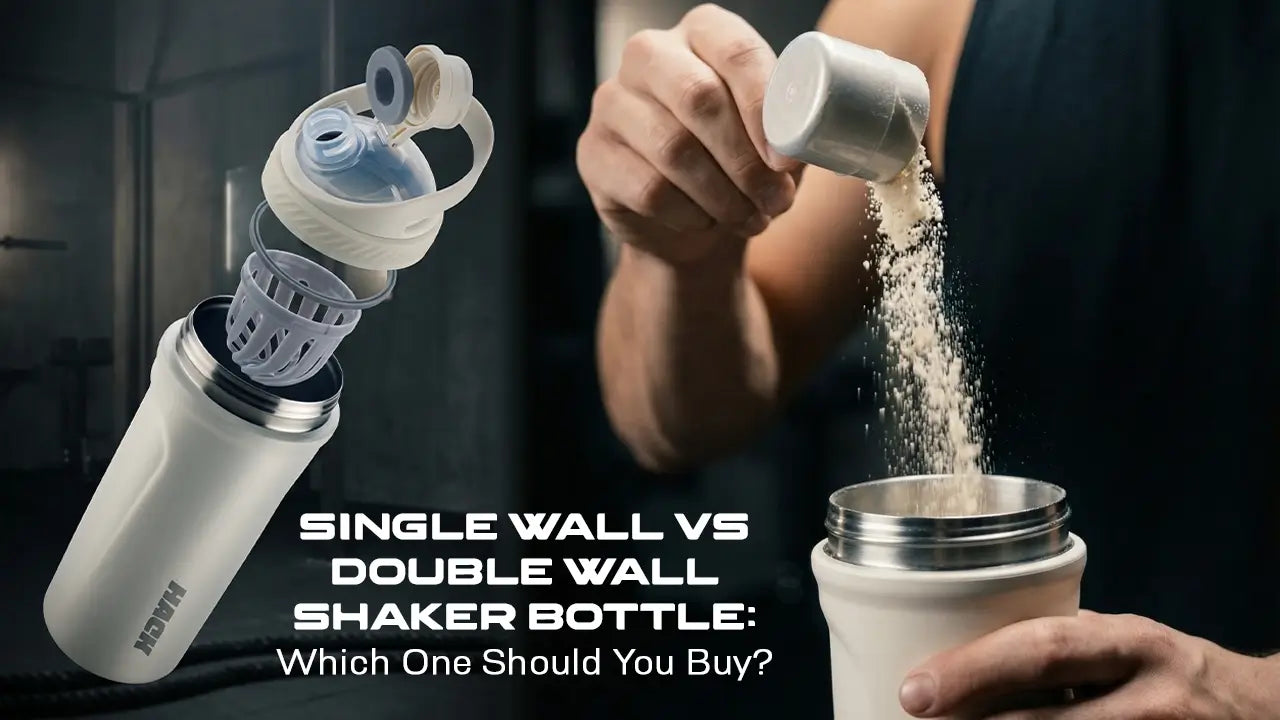
- Double wall shakers use two layers of stainless steel with a vacuum seal between them, which blocks heat transfer almost entirely.
- Single wall shakers, whether plastic or steel, have one layer of material and offer little meaningful insulation against ambient temperature.
- Stainless steel being "steel" does not automatically mean a shaker is insulated. Always check the listing for double-wall or vacuum-insulated language specifically.
- Food-grade 304 stainless steel is inert and does not require BPA to achieve durability, unlike many plastics.
- A peer-reviewed comparison of PET and stainless steel bottles found stainless steel accumulates less microbial buildup over daily use.
- Mixing quality depends on agitator design and base shape, not wall construction, so insulation has no bearing on how well a shaker blends powder.
- 1. What "Single Wall" and "Double Wall" Actually Mean
- 2. How Double Wall Vacuum Insulation Works
- 3. Full Specification Comparison
- 4. Why Insulation Matters More Than People Expect
- 5. Material Safety: Stainless Steel vs Plastic
- 6. Hygiene and Bacterial Buildup Over Time
- 7. How to Check What You're Actually Buying
- 8. Common Mistakes When Buying a Shaker
- 9. Care and Cleaning
- 10. Why Hack Athletics Only Stocks Double Wall Shakers
- 11. Related Reading
- 12. Frequently Asked Questions
Scroll through shaker bottles on any fitness site and you will see "single wall" and "double wall" used almost as often as the color options. The single wall vs double wall shaker bottle question comes down to one core mechanism, insulation, but it has knock-on effects for hygiene, durability and price that are worth understanding before you buy anywhere.
Hack Athletics builds its shaker range around double wall stainless steel specifically, because of how that construction performs against the criteria below. You can read more about how we think about gear on the about us page.
This guide breaks down how each wall type actually performs, what the material science says about safety and hygiene, and how to check what you are actually buying before you commit.
Last reviewed: July 2026
1. What "Single Wall" and "Double Wall" Actually Mean
A single wall shaker bottle has one continuous layer of material, plastic or steel, between your drink and the outside air. A double wall shaker uses two separate layers of stainless steel with a sealed vacuum gap between them, which is the same basic principle behind an insulated flask.
Core distinction: Single wall equals one layer, minimal insulation. Double wall equals two layers plus a vacuum gap, strong insulation.
Why "stainless steel" alone does not tell you which one you're getting
A common assumption is that any stainless steel bottle is automatically insulated. It is not. Plenty of single wall stainless steel shakers exist on the market, and they resist odor and staining the way steel does, but they offer close to zero temperature retention, since there is no vacuum gap doing the insulating work. The only way to know for certain is to check whether a specific listing explicitly states double wall or vacuum insulated construction.
2. How Double Wall Vacuum Insulation Works
Heat transfers primarily through conduction, which requires a physical medium to travel through. A vacuum contains no medium, so heat from the outside air has almost nothing to conduct through to reach your drink, which is why double wall construction is dramatically more effective than simply using a slightly thicker single layer of material.
A genuinely double wall bottle should never sweat or form condensation on the outside, even when filled with ice water. If a "steel" bottle you own does form condensation, it is very likely single wall.
This is the same reason a thermos flask outperforms a simple metal cup by such a wide margin, even though both are technically made of similar materials. The insulating power comes almost entirely from the vacuum gap itself, not from the thickness of either individual wall.
3. Full Specification Comparison
The table below lines up the two construction types on the factors that matter most in daily use, as a general category comparison rather than a comparison of any two specific products.
| Spec | Single Wall | Double Wall |
|---|---|---|
| Insulation | Minimal, near ambient temperature quickly | Strong, cold retention 24+ hours |
| Exterior condensation | Can occur with cold contents | None, outer wall stays room temperature |
| Weight | Lighter | Heavier |
| Typical price | Lower | Higher |
| Odor resistance (if steel) | Good, steel resists absorption either way | Excellent, same steel benefit plus insulation |
| Best for | Quick mixes drunk immediately, minimal carry weight | All-day cold retention, gym bag durability |
4. Why Insulation Matters More Than People Expect
If you mix a shake right before drinking it, in the few minutes it takes to finish, insulation genuinely matters less. But most people's actual routine involves more delay than they think: mixing at home before a commute, prepping a shake before a long training block, or leaving a bottle in a bag through a full workday.
Where double wall insulation earns its keep
Once there is any real gap between mixing and drinking, a double wall shaker keeps that drink meaningfully colder for meaningfully longer than a single wall alternative, whether that single wall bottle is plastic or steel.
Field observation: Lifters who prep shakes in advance or train in hot climates consistently prefer double wall insulation, while those mixing on the spot rarely notice a difference either way.
Traveling and commuting with a shaker
If your shaker spends significant time in a bag between mixing and drinking, whether commuting to the gym or traveling, double wall insulation also protects the drink from ambient heat inside a warm car or bag, not just from cooling too quickly. This is a separate benefit from simple cold retention and is worth considering if your routine involves any meaningful gap between mixing and drinking, and it pairs naturally with the rest of your gym bag setup for an office-to-gym day.
5. Material Safety: Stainless Steel vs Plastic
Food-grade 304 stainless steel is chemically inert, meaning it does not leach compounds into your drink under normal use. According to the FDA's current position on BPA in food contact applications, BPA remains approved for currently authorized uses in food containers, but stainless steel sidesteps the question entirely since no BPA-containing plastic touches the drink at all.
Shop Double Wall Stainless Steel Shakers
Hack Athletics stocks double-wall insulated shakers across the Pro Blend and Signature lines.
Shop Shaker BottlesA peer-reviewed assessment of bisphenol A released from reusable plastic, aluminium and stainless steel bottles found measurable BPA migration from some plastic and epoxy-lined bottles, while stainless steel bottles avoided this pathway entirely, since there is no BPA-containing material in contact with the beverage.
A separate concern with plastic over time is physical degradation. A peer-reviewed review of nano- and microplastics in bottled water found that scratches and wear on plastic surfaces accelerate particle shedding, a pathway that does not apply to a stainless steel shaker's drinking surface.
None of this means plastic shakers are inherently unsafe when they are genuinely BPA-free and well maintained. It means that stainless steel removes an entire category of long-term material concern from the equation, which is one reason many lifters eventually migrate to steel even if they started with plastic.
6. Hygiene and Bacterial Buildup Over Time
Material choice also affects how a bottle handles repeated daily use before cleaning. A peer-reviewed comparative study on PET plastic versus stainless steel water bottles and microbial buildup found that stainless steel accumulated less microbial load than PET plastic over daily use, with a proper washing routine reducing buildup further in both materials.
This does not mean a single wall shaker is unhygienic if cleaned properly, but it does mean stainless steel gives you a wider margin for error on days you cannot wash a bottle immediately after use. For anyone who trains daily and does not always get to a sink right after a session, that margin adds up meaningfully over months of regular use.
7. How to Check What You're Actually Buying
Before buying any shaker marketed as steel, confirm the wall construction directly rather than assuming from the material alone:
- Look for the words "double wall" or "vacuum insulated" explicitly in the listing. If neither appears, assume single wall.
- Check for a stated cold-retention time. Genuine double wall products almost always advertise a specific number of hours.
- Ask about exterior condensation. A true double wall bottle should not sweat with cold contents inside.
- Compare weight against similar-sized bottles. Double wall construction adds real weight from the second layer of steel.
8. Common Mistakes When Buying a Shaker
The most common mistake is assuming any bottle labeled "stainless steel" is automatically insulated, when steel only guarantees odor and stain resistance, not temperature retention, unless the listing specifically confirms double wall or vacuum insulated construction.
Avoid microwaving or adding boiling liquid to a double wall shaker unless the specific product explicitly supports it. Vacuum-sealed bottles are not designed for direct stovetop or microwave heat.
Another frequent mistake is assuming a heavier, more expensive bottle automatically mixes powder better. Mixing performance comes from the agitator and base shape, not from wall construction.
9. Care and Cleaning
Rinse a shaker immediately after use, then wash with warm soapy water using the removable agitator to reach the base thoroughly. Stainless steel tolerates a fairly thorough cleaning approach, including an occasional baking-soda soak for stubborn odor.
Let the shaker air dry fully with the lid off between uses. Sealing a damp shaker closed is one of the most common causes of lingering odor regardless of wall construction. If you also carry a water bottle alongside your shaker, the same air-dry principle applies, since trapped moisture is the root cause of most bottle odor complaints regardless of material.
Practical hydration guidance from the NSCA's trainer tips on hydration also points out that having a bottle you actually enjoy using is one of the simplest ways to build a consistent daily hydration habit, which is as much a reason to get the construction right as any technical spec.
10. Why Hack Athletics Only Stocks Double Wall Shakers
Every shaker Hack Athletics carries, across both the Pro Blend Shaker and Signature Shaker lines, uses double wall, vacuum-insulated 304 stainless steel construction. Given the insulation, hygiene and material-safety advantages covered above, we have not found a good reason to offer a genuine single wall option.
What actually differs between our two shaker lines: pricing and finish tier, not wall construction. Both the Pro Blend Shaker and the Signature Insulated Shaker keep drinks cold for 24+ hours using the same core double wall approach.
If you are comparing colorways rather than construction, the Pro Blend line is available in Black, White and Green, while the Signature line adds Blue to the same three colors, so the decision between them can come down to finish and budget rather than any functional trade-off.
- Double wall uses a vacuum gap between two steel layers to block heat transfer; single wall has one layer and minimal insulation.
- "Stainless steel" alone does not guarantee insulation. Confirm double wall or vacuum insulated language specifically.
- Double wall shakers avoid exterior condensation entirely, since the outer wall stays at room temperature.
- Stainless steel is chemically inert and carries no microplastic-shedding risk, unlike plastic over time.
- Peer-reviewed research shows stainless steel accumulates less microbial buildup than PET plastic over daily use.
- Every Hack Athletics shaker, in either line, uses double wall construction.
11. Related Reading
12. Frequently Asked Questions
What is the main difference between a single wall and double wall shaker bottle?
A single wall shaker has one layer of material between your drink and the outside air, so it offers little to no temperature retention. A double wall shaker uses two layers of stainless steel with a vacuum sealed between them, which blocks heat transfer and keeps drinks cold for many hours.
Is a double wall shaker bottle worth the extra cost over a single wall one?
For most regular gym-goers, yes. A double wall stainless steel shaker, like the Hack Athletics Signature Shaker, keeps pre-workout or protein shakes cold through a full session, resists odor absorption over years of use, and generally outlasts a single wall plastic shaker many times over, offsetting the higher upfront price.
Does a single wall shaker keep drinks cold at all?
A single wall shaker offers minimal insulation, since there is only one layer of material separating your drink from the surrounding air temperature. It will feel close to ambient temperature within a short period, unlike a double wall bottle which can hold cold for 24 hours or more.
Are double wall stainless steel shakers safe for protein powder?
Yes. Food-grade 304 stainless steel is inert and does not leach chemicals into your shake, and it does not require BPA to achieve durability the way some plastics do. It is a widely recommended material for daily food and beverage contact.
Does every stainless steel shaker use double wall construction?
No. Some stainless steel shakers on the market are single wall, meaning the steel resists odor and staining but does not meaningfully insulate. Always check a product's specific listing for double-wall or vacuum-insulated language rather than assuming steel automatically means insulated. Every Hack Athletics shaker, across both the Pro Blend and Signature lines, is double wall.
Which shaker is easier to clean, single wall or double wall?
Both require regular cleaning to prevent bacterial buildup, but stainless steel resists odor and residue absorption better than plastic over repeated use regardless of wall construction. A removable, rounded-bottom agitator makes reaching every surface easier in either case.
Does wall construction affect how well a shaker mixes protein powder?
No. Mixing quality depends on the internal agitator design and the rounded shape of the bottle's base, not on whether the wall is single or double.
Is plastic or stainless steel better for long-term microplastic and chemical exposure?
Stainless steel carries no risk of shedding microplastics into your drink, since there is no plastic in contact with the liquid. Plastic bottles are generally food-safe when BPA-free, but repeated wear, scratching and heat exposure over time can increase particle shedding, which stainless steel avoids entirely.