
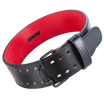






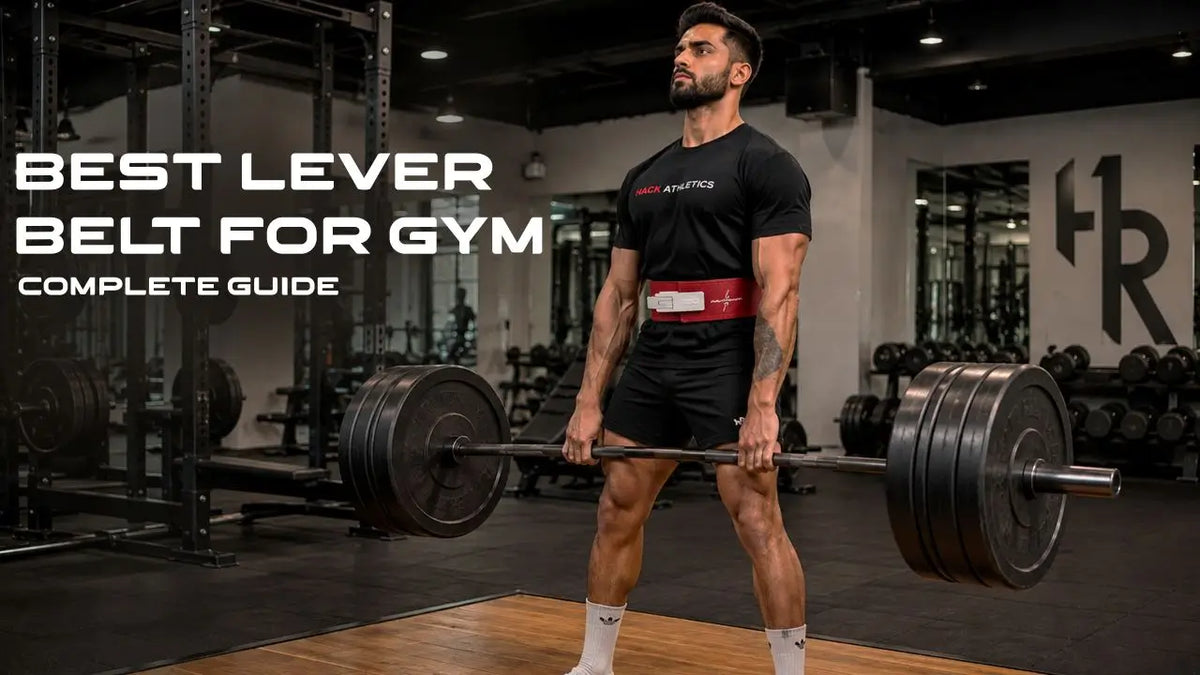
- A lever belt fastens with a metal lever locked to one fixed setting, giving the same firm brace every rep and a fast release between lifts.
- For most gym-goers the best choice is a 10mm, 4-inch leather lever belt: stiff, versatile and quick to break in.
- A 13mm lever belt is stiffer and suits advanced powerlifters chasing maximal squat and deadlift loads.
- 2-claw levers are lighter and lower profile, while 4-claw levers give a heavy-duty, ultra-secure hold.
- The best belts use a uniform 4-inch (10cm) width, the powerlifting standard and the maximum most federations allow.
- Hack Athletics lever belts come in 10mm and 13mm, 2-claw and 4-claw, and multiple finishes to match your training.
- What Is a Lever Belt and Why Use One?
- How a Lever Belt Works
- Lever vs Prong vs Quick Locking
- Key Features of the Best Lever Belts
- The Best Lever Belts from Hack Athletics
- 10mm vs 13mm: Choosing Your Thickness
- 2-Claw vs 4-Claw Levers Explained
- Best Lever Belt by Use Case
- How to Size and Set Up Your Lever Belt
- Who Should Use a Lever Belt?
- Related Reading
- Frequently Asked Questions
If you are ready to move serious weight, a lever belt is one of the highest-value upgrades you can make. It gives your core something rigid to brace against, locks to the exact same tightness every set, and pops open in a second between your squat and deadlift. But with different thicknesses, claw counts, finishes and closures on the market, choosing the best lever belt for the gym can feel confusing.
This complete guide breaks down everything that matters: how a lever belt works, the features that separate a great belt from an average one, and how to choose between 10mm and 13mm and between 2-claw and 4-claw. Then we round up the best lever belts from Hack Athletics for every kind of lifter. You can also read more about us and how we build our gear.
1. What Is a Lever Belt and Why Use One?
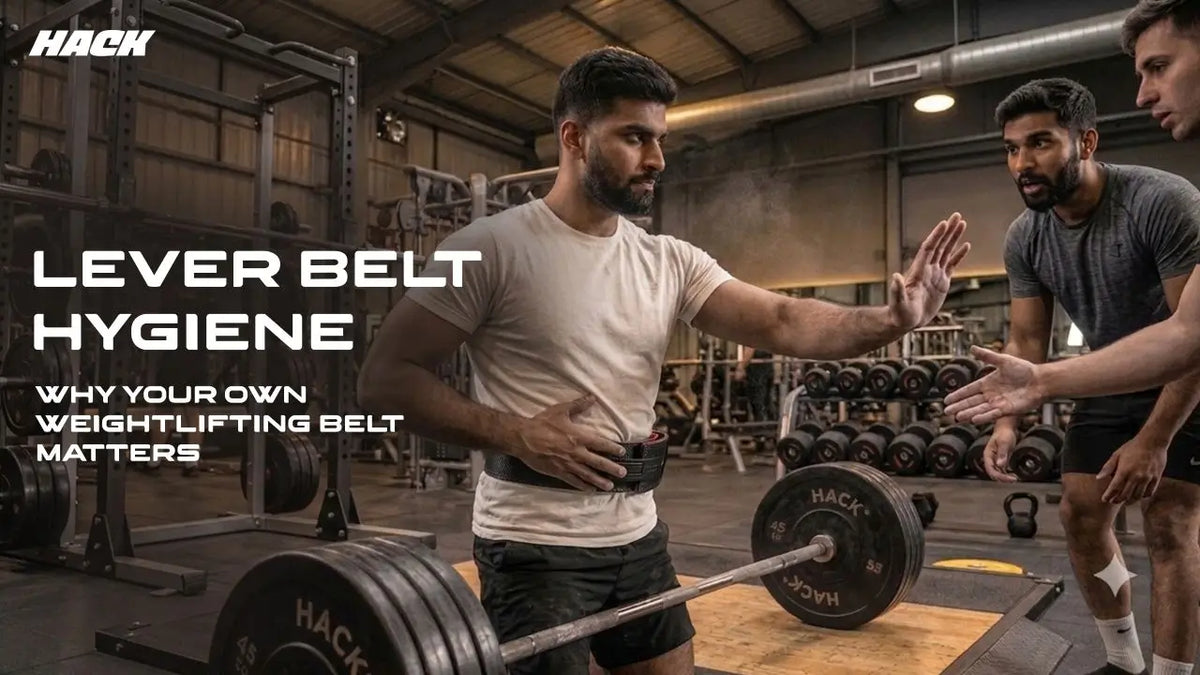
A lever belt is a thick leather weightlifting belt that fastens with a metal lever mechanism instead of a prong-and-hole buckle or a nylon closure. You set the lever to your waist once, and from then on it clamps to that exact position with a quick flick, and releases just as fast.
That fixed, repeatable tightness is the lever belt's superpower. It delivers the same firm brace every single rep, with no threading or guesswork, which is why it is the go-to belt for heavy squats and deadlifts. The overwhelming majority of competitive powerlifters use a belt, because at maximal loads the performance benefit from correct belt use is significant enough that training without one puts you at a disadvantage (Genghis Fitness).
Quick definition: a lever belt is a stiff leather belt with a lever closure locked to one setting, built to give a consistent, powerful brace for heavy lifting.
2. How a Lever Belt Works
A belt does not act like a back brace holding your spine in place. It gives your abdominal wall something solid to push against.
When you take a big breath and brace against the belt, you raise your intra-abdominal pressure, and your body responds by making your trunk measurably stiffer, which helps you transfer force from your legs and hips through your torso under load (Barbell Rehab). Research reviews report that belts raise intra-abdominal pressure by roughly 25 to 40 percent and that belted squats are performed significantly faster, particularly under fatigue (Mountain Tactical Institute). The lever's job is to hold that brace at the same tightness every rep so you get those benefits consistently. Our guide on how to use a weightlifting belt covers the bracing technique in full.
Key point: the belt only helps if you actively brace into it. A lever belt's fixed setting makes that brace repeatable, which is exactly what heavy, consistent training rewards.
3. Lever vs Prong vs Quick Locking
Before you buy, it helps to know how a lever belt compares with the other two main closures.
Lever
A lever locks to one fixed notch for a firm, identical fit every rep and a fast release. The trade-off is that changing the setting means unscrewing and repositioning the lever plate. Best for heavy, repeatable powerlifting sets.
Prong
A prong belt threads through holes like a normal belt, making it easy to fine-tune across notches session to session. It is versatile and beginner-friendly. The 7mm leather prong belt is a great all-rounder if you like adjusting tightness often.
Quick locking
A quick locking belt adjusts on the fly without tools, ideal for general training and variable tightness. The quick locking weightlifting belt and the wider quick locking belt collection suit lifters who want flexibility. For a deeper comparison, see our powerlifting vs bodybuilding belt guide.
4. Key Features of the Best Lever Belts
Not all lever belts are equal. These are the features that separate the best from the rest.
Thickness: 10mm or 13mm
Thickness sets how stiff and supportive the belt feels. A 10mm belt is more flexible and breaks in faster, while a 13mm belt is stiffer and delivers maximum support at the cost of some mobility and a longer break-in. Both are competition-relevant thicknesses.
Width: a uniform 4 inches
The best lever belts use a uniform 4-inch (10cm) width all the way around, so you get equal support front and back for squats and deadlifts. That width is also the maximum permitted by most federations, so it is both effective and competition-legal in dimension (Kit Authority).
Genuine leather construction
Quality single-layer leather is durable, moulds to your body over time and outlasts nylon or neoprene belts by years with basic care. Leather and suede are also the materials permitted under most federation rules.
A secure lever and claw count
The lever should be solid steel with a secure attachment. The number of claws, the anchor points fixing the lever plate to the belt, affects how heavy-duty that hold feels, which we cover in detail below. Under current federation rules, belts must not exceed 10cm in width or 13mm in thickness, and lever, single-prong and double-prong buckles are all permitted (Katamu, IPF rules summary).
Find Your Lever Belt
From versatile 10mm daily drivers to ultra-stiff 13mm powerlifting belts, explore the full lever belt range built to competition dimensions.
Shop Lever Belts5. The Best Lever Belts from Hack Athletics
Here are the top lever belts to match every training style, all built to meet most IPF dimension standards with a 4-inch width and precision construction.
Best all-round: 10mm Lever Belt
The Premium 10mm Lever Belt is the best pick for most gym-goers. It is firm enough to brace against hard, breaks in relatively quickly, and handles squats, deadlifts and general strength work with ease. This is the default recommendation for anyone buying their first serious lever belt.
Best for maximal support: 13mm Lever Belt
The Premium 13mm Lever Belt (4 Claw) is the stiffest option, built for advanced lifters who want a near-immovable wall around the midsection for maximal squats and deadlifts. The trade-off is a longer break-in and a little less mobility, which serious powerlifters happily accept.
Best for style: signature and carbon finishes
If you want your belt to stand out, the finish options deliver. Choose the 13mm Signature Red or 13mm Carbon Fibre for a bold 4-claw statement, or the 10mm Signature Red, 10mm Signature Green and 10mm Carbon Fibre for a lighter 2-claw feel with the same eye-catching look.
Best 2-claw 13mm options
Want 13mm stiffness in a lower-profile 2-claw build? The 13mm Signature Red (2 Claw), 13mm Carbon Fiber (2 Claw) and 13mm Signature Green (2 Claw) pair maximum thickness with a sleeker lever plate. Browse everything in the weightlifting and lever belts range.
6. 10mm vs 13mm: Choosing Your Thickness
This is the single most common question when buying a lever belt, and the answer comes down to your training level and goals.
Choose 10mm if
You want a versatile daily belt that breaks in faster, roughly four to six weeks, and works across squats, deadlifts and general strength training. A 10mm belt is stiff enough to brace against effectively and is the sweet spot for the majority of lifters, from beginners to intermediates and bodybuilding-style trainees (Genghis Fitness).
Choose 13mm if
You are an advanced powerlifter chasing maximal squat and deadlift loads and want the stiffest possible brace. The extra 3mm of leather creates a more rigid wall, though it takes longer to break in, often two to three months, and reduces mobility in movements where your torso changes angle quickly. For a full breakdown, read our dedicated 13mm vs 10mm lever belt comparison.
Simple rule: if it is your first serious belt or you train a variety of lifts, get 10mm. If you are an experienced powerlifter maxing heavy squats and deadlifts, 13mm is worth the stiffer feel.
7. 2-Claw vs 4-Claw Levers Explained
The claw count describes how many anchor points fix the lever plate to the belt. It affects the security and feel of the closure.
4-claw levers
A 4-claw lever is attached with more anchor points, giving a very secure, heavy-duty hold that inspires confidence under the heaviest loads. It is the choice for lifters who want maximum robustness from the mechanism.
2-claw levers
A 2-claw lever is a little lighter and lower profile while still locking securely. For most gym and strength training it offers all the hold you need in a sleeker package. To dig deeper into the differences, see our 2 claw vs 4 claw lever belt guide.
Bottom line: both hold securely. Pick 4-claw for the most heavy-duty feel, or 2-claw for a lighter, lower-profile lever that suits the majority of training.
8. Best Lever Belt by Use Case
Use this quick reference to match a belt to how you train.
| Your Profile | Recommended Thickness | Recommended Lever | Why |
|---|---|---|---|
| First serious belt | 10mm | 2-claw | Versatile, quick break-in, lower profile |
| General strength and hypertrophy | 10mm | 2-claw | Handles all lifts with easy mobility |
| Intermediate powerlifter | 10mm or 13mm | 2 or 4-claw | Balance of stiffness and comfort |
| Advanced powerlifter, max loads | 13mm | 4-claw | Maximum rigidity and secure hold |
| Style-focused lifter | 10mm or 13mm | 2 or 4-claw | Signature and carbon finishes |
Whichever you choose, pair it with the right support gear for heavy lower-body work. Knee sleeves add warmth and compression for squats, and knee wraps suit heavier, low-rep work. Explore the full knee support range to complete your setup.
9. How to Size and Set Up Your Lever Belt
Because a lever locks to one position, getting the size right matters more than with a prong belt. Here is how to do it.
Measure your torso, not your trousers
Wrap a tape measure around your torso at the height you will wear the belt, roughly at the navel, and match that measurement to the size chart rather than using your trouser size. A belt sized to your waist is the foundation of a good brace. Our how to size a weightlifting belt guide walks through this in detail.
Set the lever and break it in
Position the lever with the included screwdriver so the belt is snug but lets you expand your belly into it when you brace. Then break it in by wearing it for your warm-ups and lighter sets over the first few weeks. A 10mm belt softens faster than a 13mm, but both mould to your body with use.
Adjust as your body changes
If your waist changes with a bulk or cut, simply unscrew the lever and reposition it. This one-time adjustment keeps the belt fitting perfectly for years. Keep it, and the rest of your kit, organised in a 30L duffle gym bag, and see our gym bag essentials guide for what else to pack.
- The best lever belt for most gym-goers is a 10mm, 4-inch leather belt: stiff, versatile and quick to break in.
- Choose 13mm only if you are an advanced powerlifter wanting maximum rigidity for near-maximal squats and deadlifts.
- 4-claw levers give the most heavy-duty hold, while 2-claw levers are lighter and lower profile for most training.
- Look for a uniform 4-inch width and genuine leather, the competition-standard build.
- Size to your torso measurement, set the lever, and break the belt in gradually for the best fit.
10. Who Should Use a Lever Belt?
A lever belt suits any lifter who trains the big lifts heavy and wants a consistent brace. Here is how different lifters should choose, with the gear that fits.
11. Related Reading
Keep dialling in your belt and your bracing with these guides and gear from Hack Athletics.
12. Frequently Asked Questions
What is the best lever belt for the gym?
For most gym-goers the best lever belt is a 10mm, 4-inch-wide leather lever belt. It is stiff enough to brace against hard, breaks in faster than a 13mm, and suits squats, deadlifts and general strength work. Serious powerlifters chasing maximal loads often prefer a 13mm for extra rigidity.
Is a lever belt better than a prong belt?
For consistency, yes. A lever locks to one fixed setting, so you get the exact same tightness every rep and can release it fast between lifts. A prong belt is more versatile to fine-tune across holes. Lever belts are the popular choice for heavy, repeatable powerlifting sets, while prong belts suit lifters who adjust tightness often.
Should I get a 10mm or 13mm lever belt?
Choose 10mm if you want a versatile daily belt that breaks in quickly and works across squats, deadlifts and general training. Choose 13mm if you are an advanced powerlifter chasing maximal squat and deadlift loads and want the stiffest possible brace, accepting a longer break-in and less mobility.
What does 2-claw vs 4-claw mean on a lever belt?
The claws are the prongs that fix the lever plate to the belt. A 4-claw lever is attached with more anchor points, giving a very secure, heavy-duty hold favoured for the heaviest lifting. A 2-claw lever is a little lighter and lower profile while still secure, and is a great fit for most gym and strength training.
How wide should a lever belt be?
A uniform 4-inch (10cm) width is the powerlifting standard, giving equal support front and back for squats and deadlifts. That width is also the maximum allowed under most federation rules, so a 4-inch belt is both effective and competition-legal in dimension.
Are Hack Athletics lever belts competition legal?
Hack Athletics lever belts are built to meet most IPF dimension standards, with a 4-inch width and thicknesses up to 13mm, the same physical specifications used in competitive powerlifting. Note that sanctioned meets also require a federation-approved brand, so always check your federation's current approved equipment list before competing.
How do I size a lever belt?
Measure around your torso at the level where you will wear the belt, roughly at the navel, not your trouser size, and match that to the brand's size chart. Because a lever locks to one position, correct sizing matters, though the lever plate can be repositioned with a screwdriver as your waist changes.
Do I need a lever belt as a beginner?
Learn to brace without a belt first on lighter loads. Once your working sets reach roughly 80 percent of your max on the big lifts, a belt is worthwhile. When you reach that point, a 10mm lever belt is a great first belt because it is versatile, breaks in quickly and gives a consistent, repeatable fit.