






- 7mm is the IPF-maximum thickness and the standard for competitive powerlifting worldwide
- 5mm sleeves offer better mobility and breathability for dynamic and mixed-activity training
- 7mm neoprene provides a stronger elastic rebound from the bottom of a squat than 5mm
- For heavy squats above 80 percent intensity, 7mm is the clear performance choice
- Both thicknesses protect the knee through warmth, compression, and proprioceptive feedback
- If you plan to compete in powerlifting, train with the same thickness you will use on meet day
- 1. How Knee Sleeve Thickness Actually Works
- 2. 7mm Knee Sleeves: What They Offer
- 3. 5mm Knee Sleeves: What They Offer
- 4. Head-to-Head Comparison Table
- 5. Which Thickness for Powerlifting Squats?
- 6. Which Thickness for Olympic Weightlifting?
- 7. Which Thickness for CrossFit and Mixed Training?
- 8. Competition Legality: What the Rules Actually Say
- 9. Sizing Your Knee Sleeves Correctly
- 10. Who Should Choose Which Thickness
- 11. Related Reading
- 12. Frequently Asked Questions
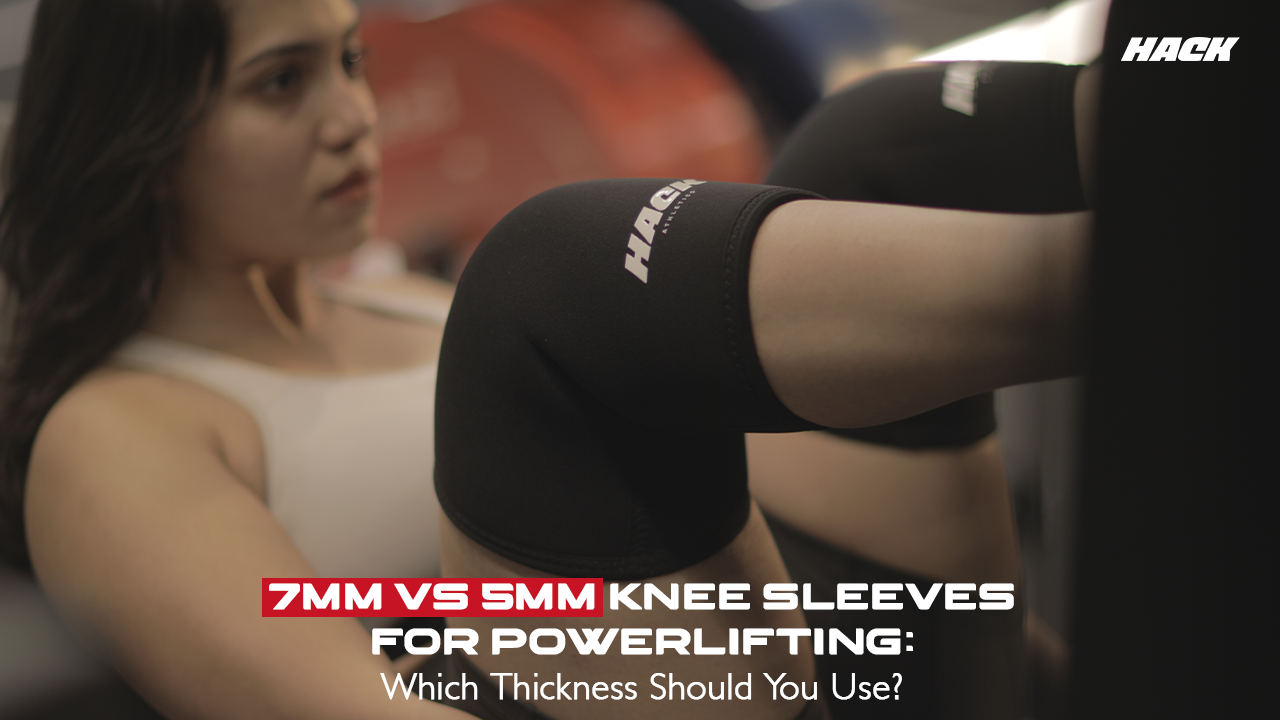
The question of 7mm versus 5mm knee sleeves comes up constantly among lifters who are moving beyond their first purchase and trying to understand whether sleeve thickness is a meaningful performance variable or marketing noise. The short answer is that thickness matters, and the right choice depends almost entirely on what you are training for. For powerlifting specifically, 7mm is the near-universal choice at intermediate and advanced levels, and for good reason that goes beyond convention. This guide explains the biomechanics of sleeve thickness, the practical differences you will feel under the bar, and the competition rules that make this choice consequential for anyone who plans to compete.
The Hack Athletics knee sleeve range is built at 7mm across all performance models because this reflects the consensus of powerlifting practice and the IPF equipment standard. If you are training seriously for strength sports in India, this guide will tell you exactly what to expect from 7mm and whether a thinner option would better serve your specific training goals. The team at Hack Athletics has put these sleeves through training sessions ranging from high-rep hypertrophy blocks to single-attempt maximal squats.
Last reviewed: April 2026
1. How Knee Sleeve Thickness Actually Works
Knee sleeves are made from neoprene, the same material used in wetsuits, which is selected for its combination of thermal insulation, elasticity, and compression properties. When you put on a knee sleeve, it works through three distinct mechanisms: thermal retention, mechanical compression, and proprioceptive feedback.
Thermal retention means the neoprene traps heat around the knee joint, increasing local tissue temperature and promoting synovial fluid distribution within the joint. Warmer joints are more lubricated and move with less friction and discomfort, particularly during the early sets of a session before the body has fully warmed up.
Mechanical compression means the sleeve applies circumferential pressure to the knee, which has two effects. First, it reduces swelling and the accumulation of fluid in and around the joint during training. Second, and more relevant to performance, the compressed neoprene behind the knee during deep flexion stores elastic potential energy that is released as the lifter begins to ascend from the bottom of a squat. This is the "bounce" or "rebound" effect that powerlifters discuss, and it is a genuine, measurable phenomenon rather than a placebo effect.
Proprioceptive feedback means the sleeve provides tactile information to the nervous system about knee position and loading, which helps the brain maintain better movement control. Research from the Journal of Athletic Training on knee sleeve effects and proprioception has demonstrated improved joint position sense in lifters wearing compression sleeves compared to no sleeve.
The thickness variable: More neoprene means more of all three mechanisms: greater warmth, stronger compression and rebound, and more pronounced proprioceptive input. The trade-off is reduced flexibility as the joint tries to fold the thicker material during deep flexion.
2. 7mm Knee Sleeves: What They Offer
Maximum Compression and Support
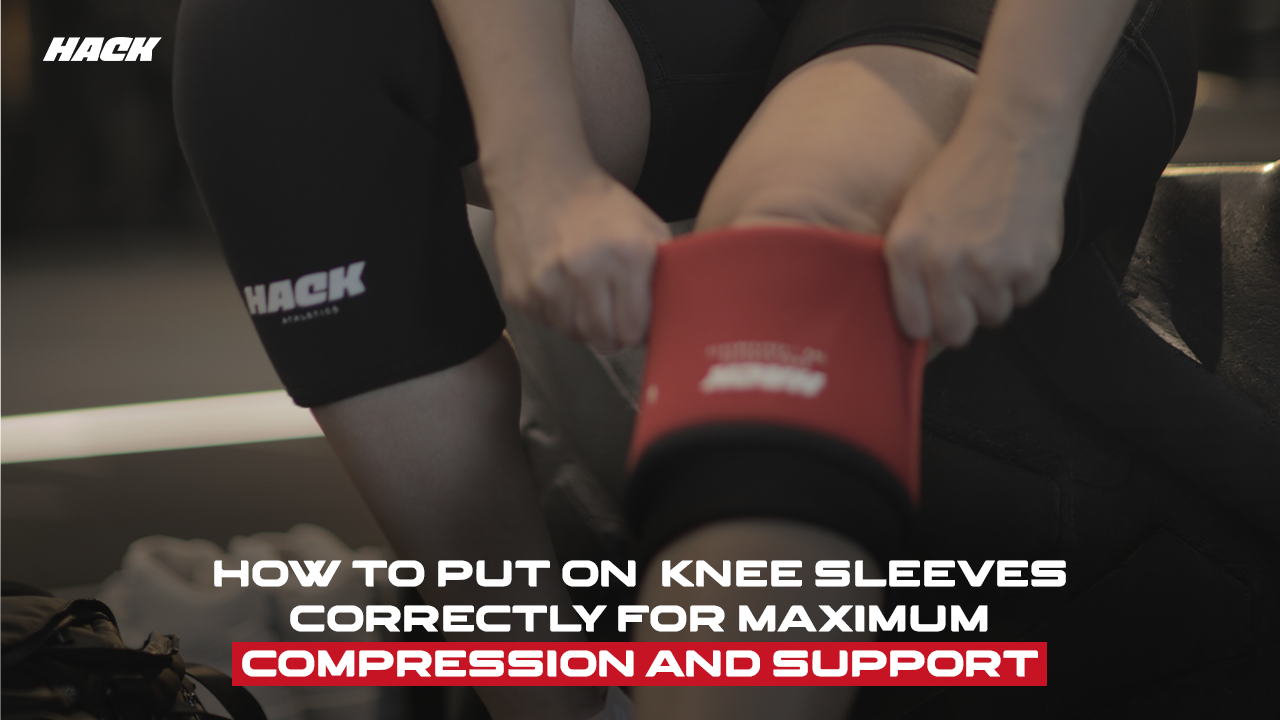
At 7mm, a knee sleeve provides the strongest compression and warmth available in a sleeve-style product (as distinct from knee wraps, which are a separate category). When correctly sized, a 7mm sleeve requires genuine effort to pull on: it should feel very tight when first worn, particularly if you have sized down for a powerlifting fit. Once on, the compression is immediately noticeable as a firm, even pressure around the entire joint.
The Rebound Effect
The elastic rebound from the bottom of a squat in a 7mm sleeve is the feature most discussed among powerlifters. As the knee flexes deeply during a squat descent, the neoprene behind the knee is compressed against the posterior chain tissues. The sleeve accumulates elastic potential energy through this compression. When the lifter begins the ascent, this stored energy is released and contributes to the upward movement. Estimates of the performance carryover range from 5 to 15 kg on a maximum squat attempt, depending on body size, flexibility, and sleeve tightness.
Durability
Thicker neoprene is more resistant to tearing, abrasion, and loss of elasticity over time. A well-maintained pair of 7mm sleeves will outlast equivalent 5mm sleeves in terms of compression retention, which is the property most important to performance. The Hack Athletics 7mm Competition Knee Sleeves feature dual-reinforced seams and high-density neoprene construction specifically for this reason.
If you find your 7mm sleeves difficult to pull on, use a thin plastic bag over the foot to reduce friction when threading your foot through. Remove the bag once the sleeve is in position. This is a standard technique used at powerlifting competitions worldwide.
3. 5mm Knee Sleeves: What They Offer
Balanced Support and Mobility
A 5mm sleeve provides meaningful compression and warmth benefits without the mobility restriction of a 7mm option. For athletes who need to perform deep knee flexion at speed, such as during Olympic lifts, box jumps, or running movements, the extra range of motion available in a 5mm sleeve is a practical advantage. The sleeve still warms the joint and provides compression, but the thinner material creates less resistance against full flexion.
Breathability
Less neoprene means less heat retention. During high-intensity conditioning work or long training sessions in warm gyms, the reduced thermal buildup of a 5mm sleeve is more comfortable than a 7mm option. Indian gym conditions specifically, where ambient temperatures can be high and air conditioning inconsistent, make this a relevant consideration for athletes who spend extended periods training at moderate intensity.
First-Time Users
For lifters wearing knee sleeves for the first time, the 5mm thickness offers a gentler introduction to the sensation of compression. The 7mm sleeve feels dramatically different to an unaccustomed knee, and some lifters find the initial tightness distracting during their first several sessions. This is not a reason to avoid 7mm permanently, but it explains why 5mm is sometimes recommended as a starting point for lifters new to knee support.
4. Head-to-Head Comparison Table
| Variable | 7mm Knee Sleeve | 5mm Knee Sleeve |
|---|---|---|
| Compression level | Maximum | Moderate |
| Squat rebound effect | Strong (5-15 kg carryover estimated) | Mild (2-5 kg carryover estimated) |
| Joint warmth retention | High | Moderate |
| Range of motion restriction | Noticeable above 90 degrees flexion | Minimal |
| Best for | Powerlifting, heavy squats, max effort | Olympic lifting, CrossFit, mixed training |
| Ease of putting on | Difficult (requires effort) | Moderate |
| Breathability | Lower | Higher |
| Durability | Higher (thicker neoprene lasts longer) | Moderate |
| Indian lifter recommendation | Powerlifting and strength training | Mixed sport and general fitness |
Competition-Grade 7mm Knee Sleeves, Built for Indian Lifters
Hack Athletics 7mm Competition Knee Sleeves are available in cone and hourglass shapes, sized for Indian body proportions
Shop Knee Sleeves5. Which Thickness for Powerlifting Squats?
For powerlifting squats, 7mm is the clear answer and has been the consensus of the strength sports community for more than a decade. The combination of maximum joint warmth, stronger compression, and the elastic rebound from the bottom of the lift all favour 7mm in this context. Competition powerlifters specifically train in 7mm sleeves throughout their preparation so the feel of the compression is fully familiar on meet day.
The rebound effect at the bottom of a heavy squat is particularly relevant in powerlifting because the IPF mandates a squat that reaches depth (hip crease below the top of the knee), meaning every competition squat descends into the range where neoprene compression behind the knee is at its maximum. The stored elastic energy is released at exactly the point where many lifters struggle: the initial ascent from below parallel.
Research covered in the Journal of Strength and Conditioning Research on knee compression and squat performance supports the existence of a meaningful performance effect from knee compression during squatting movements, particularly at maximal loads. While most research focuses on knee wraps rather than sleeves, the elastic rebound mechanism is the same in principle, with sleeves producing a smaller but still meaningful effect.
Competition observation: At IPF-affiliated meets in India and internationally, the overwhelming majority of equipped and raw lifters using knee sleeves choose 7mm. The 5mm option is rarely seen on the competition platform in a powerlifting context.
6. Which Thickness for Olympic Weightlifting?
Olympic weightlifting involves snatches and clean and jerks, both of which require the lifter to receive the bar in a deep squat position at maximal speed. The catch phase of a snatch or clean happens too quickly for the elastic rebound of a 7mm sleeve to contribute meaningfully, and the priority in Olympic lifting is maintaining a full, unobstructed range of motion through high-speed movement patterns.
For this reason, most Olympic weightlifting athletes who use knee sleeves prefer the 5mm thickness. The International Weightlifting Federation rules permit knee sleeves in competition, and 5mm options are the standard at international Olympic weightlifting events.
7. Which Thickness for CrossFit and Mixed Training?
CrossFit and functional fitness training involves transitions between heavy barbell work (front squats, thrusters, deadlifts) and dynamic conditioning movements (box jumps, running, burpees). No single sleeve thickness is ideal for every movement in this context, which leads many CrossFit athletes to either use 5mm for its versatility or to own both thicknesses and select based on the day's programming.
In practice, most CrossFit athletes who need knee support settle on 5mm as their primary sleeve because the conditioning-heavy nature of the sport means mobility and breathability are prioritised over maximum compression. Those who compete in powerlifting alongside CrossFit often own both thicknesses and use 7mm specifically on heavy squat days.
8. Sizing Your Knee Sleeves Correctly
Sizing is critically important for knee sleeves, particularly at 7mm where an oversized sleeve loses most of its compression benefit and an undersized sleeve can restrict circulation. The correct measurement is the circumference of the knee joint itself, measured with the leg straight and extended, at the centre of the kneecap.
For powerlifting use, the general recommendation is to size down from the measured size chart value. A sleeve that feels very tight when first put on will compress the neoprene behind the knee more effectively during squatting and provide a stronger rebound effect. For general training and injury prevention use, true-to-size is the more comfortable choice.
Hack Athletics includes both a primary measurement (knee circumference) and secondary measurements (quad and calf circumference) on its size chart because body proportions vary: some lifters have large quads relative to their knee circumference, which can make the sleeve difficult to pull past the thigh even when the knee measurement is correct. In these cases, the secondary measurements help identify the best size.
Sizing reality check: If your 7mm knee sleeve slides on easily and feels only mildly tight, it is likely one size too large and will not provide meaningful compression or rebound during squatting. A correctly sized 7mm sleeve for powerlifting should require real effort to pull on and feel very tight initially.
9. Who Should Choose Which Thickness
- Training for powerlifting competition at any level
- Regularly squatting above 80 percent of your one-rep max
- Experiencing knee discomfort during heavy squats and deadlifts
- Looking for maximum joint warmth in a cooler training environment
- A larger lifter with heavier absolute loads on the bar
- Hack Athletics 7mm Performance Knee Sleeves
- Primarily training Olympic weightlifting movements
- Doing CrossFit or high-intensity conditioning that includes running and jumping
- A new knee sleeve user who prefers to start with less restriction
- Training in a hot environment where heat buildup is a comfort issue
- Looking for knee support during lighter, higher-rep training phases
- 7mm Performance Knee Sleeves 1.0 — entry to the 7mm range
- 7mm Performance Knee Sleeves 2.0 — updated compression profile
- View All Knee Support Products
- 7mm is the IPF competition maximum and the standard for competitive powerlifting globally
- 7mm provides stronger elastic rebound from the bottom of a squat, contributing 5 to 15 kg of carryover at maximal loads
- 5mm suits Olympic lifting and CrossFit because it preserves range of motion and breathability
- Size down from your measured size for powerlifting use; use true-to-size for general training
- A correctly fitted 7mm sleeve should require real effort to put on and feel very tight initially
- Both thicknesses protect the knee through warmth, compression, and proprioceptive feedback; 7mm simply does more of all three
10. Related Reading
11. Frequently Asked Questions
Are 7mm knee sleeves allowed in IPF powerlifting competitions?
Yes. IPF technical rules permit knee sleeves up to 7mm in thickness for competition use. The 7mm is the maximum allowed thickness under IPF rules, which is why competition-grade knee sleeves are almost universally manufactured at exactly 7mm. Always verify the specific equipment list for the federation and meet you are competing in, as affiliated federations may apply additional local specifications.
Do knee sleeves actually add weight to your squat?
Yes, 7mm knee sleeves can contribute a small carryover to squat performance through the elastic rebound effect at the bottom of the lift. The compressed neoprene stores potential energy as it is squashed behind the knee during descent and releases it as the lifter begins to ascend. Estimates of this carryover range from 5 to 15 kg depending on the lifter's body size, squat depth, and sleeve tightness. This effect is meaningfully stronger in 7mm sleeves than in 5mm options due to the greater neoprene density.
How do I know what size knee sleeves to order?
Measure the circumference of your knee joint with your leg straight and fully extended. Take the measurement at the centre of the kneecap. Compare this measurement to the size chart on the product page. For a tighter fit suitable for powerlifting and heavy squatting, size down from your measured size. For a standard supportive fit suitable for general training, use your measured size. Never use thigh circumference alone to size knee sleeves.
Can I use 7mm knee sleeves for CrossFit or Olympic weightlifting?
You can use 7mm knee sleeves for Olympic weightlifting and CrossFit, but most athletes in these disciplines prefer 5mm sleeves because the reduced thickness allows greater knee flexion range of motion during dynamic movements like snatches, cleans, and box jumps. For sessions that mix heavy barbell work with conditioning movements, 5mm is generally the more comfortable and practical choice.
How long do 7mm knee sleeves last?
High-quality 7mm neoprene knee sleeves typically last one to three years of regular training use before the neoprene loses its elasticity and compression effectiveness. The degradation is gradual: sleeves that feel extremely tight when new will feel noticeably looser after 12 to 18 months of heavy use. Washing sleeves by hand in cold water and air-drying them after each session significantly extends their lifespan compared to machine washing or leaving them damp.
Should I wear knee sleeves on both legs or just one?
Knee sleeves should always be worn on both legs simultaneously, even if only one knee is the primary concern. Wearing a sleeve on only one side creates an asymmetry in warmth, compression, and proprioception between legs, which can affect movement mechanics and potentially create new imbalances over time. If knee pain is the reason for using sleeves, address the underlying cause with appropriate rehabilitation rather than compensating with single-sided sleeve use.
Do knee sleeves help with knee pain during squats?
Knee sleeves can reduce knee discomfort during training through several mechanisms: increased joint warmth accelerates synovial fluid distribution, compression reduces swelling and inflammation, and enhanced proprioception helps the lifter maintain better knee tracking. However, knee sleeves are a supportive tool, not a treatment. Persistent or acute knee pain during squats should be evaluated by a sports medicine professional or physiotherapist before continuing to train through it.