






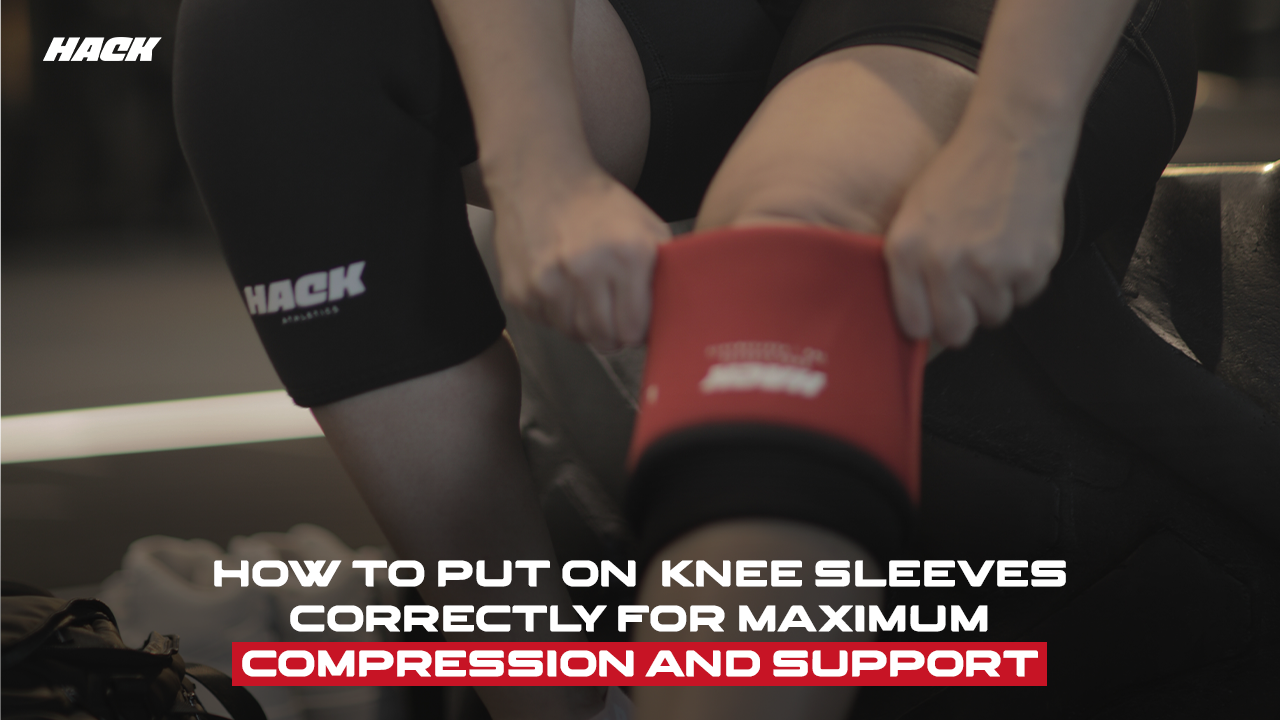
- The fold method is the most reliable technique for applying tight 7mm knee sleeves unassisted
- The plastic bag trick is essential when applying sleeves over sweaty skin after warm-up sets
- The centre of the sleeve should sit directly over the kneecap with equal coverage above and below
- A sleeve that slides during squats is almost always one size too large
- The IPF mandates that competitive lifters apply their knee sleeves without assistance
- Hand wash in cold water and air dry after every session to preserve neoprene elasticity
- 1. Why Correct Application Matters
- 2. Sizing Check Before You Start
- 3. Method 1: The Fold Technique (Primary Method)
- 4. Method 2: The Roll-Down Technique
- 5. Method 3: The Plastic Bag Trick
- 6. Putting Sleeves On Over Tights or Leggings
- 7. How to Position the Sleeve Correctly
- 8. Common Positioning Mistakes
- 9. When to Put Sleeves On During Your Session
- 10. Who Benefits From Each Technique
- 11. Related Reading
- 12. Frequently Asked Questions
If you have just opened a pair of 7mm knee sleeves for the first time and tried to pull them onto your leg, you already know the problem. Getting tight neoprene over a human leg, particularly one with developed quadriceps and calves, requires a technique. Yanking them on by brute force from the top stretches the neoprene unevenly, wears out the seams faster than necessary, and often results in the sleeve sitting in the wrong position. The techniques in this guide are used by competitive powerlifters at every level, from club athletes through to international competitors, because the application method directly affects both how long the sleeves last and how much support they provide once on. The Hack Athletics knee sleeve range is built for the demands of serious training and competition; getting them on correctly is the first step in getting value from that investment.
The Hack Athletics team has put these methods into practice across hundreds of training sessions and competition warm-up rooms. The fold technique, roll-down technique, and plastic bag method described here cover every scenario: dry skin, sweaty post-warm-up skin, bare legs, and compression tights.
Last reviewed: April 2026
1. Why Correct Application Matters
Knee sleeves work through compression and warmth applied evenly around the knee joint. A sleeve applied in a twisted, bunched, or off-centre position applies uneven pressure that can feel uncomfortable during deep flexion and may actually restrict movement rather than support it. Worse, a sleeve pulled on incorrectly tends to sit slightly above or below the knee joint, which means the maximum neoprene density is not centred over the kneecap where it does the most work during the bottom of a squat.
Research from the Journal of Athletic Training on proprioception and knee compression demonstrates that knee sleeves improve joint position sense, an effect that depends on even circumferential compression. A sleeve applied incorrectly with uneven tension negates much of this proprioceptive benefit. Beyond performance, repeated incorrect application stresses the neoprene seams asymmetrically, which shortens the functional lifespan of the sleeve.
Competition rule note: The IPF mandates that competitive lifters must apply their own knee sleeves without assistance from coaches or handlers. Developing reliable self-application technique in training is therefore a competition skill, not just a convenience.
2. Sizing Check Before You Start
Before practising any application technique, confirm that your sleeve size is correct. A correctly sized 7mm powerlifting sleeve should require genuine effort to pull on when your legs are dry. It should feel very tight once applied but not cut off circulation or cause immediate discomfort at the edges. A sleeve that slides on easily and feels only mildly snug is almost certainly one size too large and will slide during squatting regardless of how well it is applied.
For Hack Athletics 7mm Performance Knee Sleeves, measure the circumference of your knee joint with your leg straight and extended, at the centre of the kneecap. Compare this to the size chart on the product page. For powerlifting use, size down from the chart value. Use the quad and calf measurements as secondary references if your proportions are significantly different from the standard.
New neoprene sleeves are at their tightest straight from the packaging. After several sessions of training, the neoprene will soften slightly and the application will become easier while the compression in use remains effective. Do not judge sizing entirely from the first session.
3. Method 1: The Fold Technique (Primary Method)
The fold technique is the most widely used method for applying tight knee sleeves and works best on dry skin before warming up. It requires no additional tools and can be performed anywhere.
Step-by-Step
Sit on a bench or chair with the target leg extended straight in front of you. Hold the sleeve with both hands, one at the top edge and one at the bottom edge. Fold the sleeve in half so that the top edge touches the bottom edge and the sleeve is now a compressed disc approximately half its original height. Slide the folded sleeve over your foot and pull it up the shin until the fold sits just below the knee joint, at the top of the lower leg.
At this point the sleeve is sitting on the lower leg with the fold line just below the knee. Grip the top folded portion of the sleeve with both hands and unroll it upward over the knee in one controlled motion. As the sleeve unrolls upward over the kneecap, check that it is tracking straight without twisting. The seam on the inside of the sleeve should run down the inside of the leg, not around the back or front. Once the sleeve is fully unrolled, adjust the position so the centre of the sleeve sits directly over the kneecap.
Apply the sleeve slightly higher than its intended final position during the unrolling step. As the sleeve settles and you move through the first few bodyweight squats, it will naturally find its correct anatomical position. Starting slightly high prevents it from ending up too low after settling.
4. Method 2: The Roll-Down Technique
The roll-down technique is an alternative to the fold method and works well for longer sleeves or lifters who find the fold method awkward with their particular leg proportions. It is the approach most commonly seen at international powerlifting competitions.
Step-by-Step
Hold the sleeve upright and roll the top third or half of the sleeve downward so you have a thick, grippable cuff at what will become the bottom of the rolled section. Slide your foot through the sleeve from the rolled-down end, with the rolled cuff facing downward toward the ankle. Pull the sleeve up the leg until the bottom edge (the unrolled section) sits on your shin at the correct starting height below the knee.
Once the bottom of the sleeve is in position, grip the rolled cuff firmly with both hands and roll it upward over the knee. The rolling motion moves the sleeve smoothly upward without the yanking force that causes seam stress. Straighten and adjust the sleeve once fully unrolled. This technique gives you excellent grip on the sleeve material throughout the application, which is particularly useful when wearing the sleeve a size down for maximum powerlifting compression.
5. Method 3: The Plastic Bag Trick
The plastic bag method is the solution for one of the most common real-world problems with knee sleeve application: putting them on after you have already broken a sweat during warm-up sets. Sweaty skin creates adhesion between the neoprene and the leg that makes pulling the sleeve upward nearly impossible. This technique was popularised in competitive powerlifting circles and is used at meets worldwide.
Step-by-Step
Take a standard plastic shopping bag and tear or cut it open so it lies flat as a single sheet of plastic. Wrap this flat piece of plastic around your shin, covering the area of leg that the sleeve will need to travel over during application. The plastic sits between your skin and the neoprene, eliminating the friction and adhesion that sweaty skin creates.
Apply the sleeve using either the fold or roll-down method over the plastic-covered leg. Because the neoprene now slides against the smooth plastic surface instead of adhering to damp skin, the sleeve moves into position with a fraction of the effort required on bare skin. Once the sleeve is correctly positioned on the knee, grip the edge of the plastic sheet and pull it out from underneath the sleeve. The sleeve closes around the leg in its correct position as the plastic is removed.
Competition application: At powerlifting competitions, athletes often keep a piece of plastic in their kit bag specifically for this purpose. The technique allows you to apply 7mm sleeves quickly and correctly in a warm competition environment without assistance, which is essential given the IPF's self-application rule.
7mm Knee Sleeves Built to Handle What You Put Them Through
Dual-reinforced seams, high-density neoprene, and IPF-approved thickness. Available in Performance, Competition Cone, and Competition Hourglass profiles.
Shop Knee Sleeves6. Putting Sleeves On Over Tights or Leggings
Many lifters, particularly those training in air-conditioned gyms or cooler weather, wear compression tights or leggings under their shorts. Applying knee sleeves over leggings creates a specific challenge: as the sleeve is pulled upward, it drags the legging fabric with it, causing the legging to bunch at the back of the knee. This bunching is uncomfortable and creates a pressure point behind the knee during deep squatting.
The Correct Approach
Before applying the knee sleeve, pull the legging down and over your foot entirely on the target leg. This means the legging fabric is bunched down around your ankle rather than on the shin. Apply the knee sleeve using the fold or roll-down method to bare (or thin-sock-covered) shin, as you normally would. Once the sleeve is correctly positioned on the knee, you can either leave the legging bunched below the sleeve or pull it back up inside the sleeve if you prefer it tucked in. Both options prevent the bunching-behind-the-knee problem.
Wear knee-high socks under your sleeves on competition day. The sock fabric provides a smooth, consistent surface for sleeve application that is much easier to manage than bare skin, regardless of whether you are sweating. This is a standard practice among experienced competitors.
7. How to Position the Sleeve Correctly
Correct application technique delivers the sleeve in roughly the right position, but a final adjustment check should always precede your working sets. The correctly positioned knee sleeve has these characteristics.
| Check Point | Correct Position | Indicates a Problem |
|---|---|---|
| Centre alignment | Sleeve centre sits over the centre of the kneecap | Kneecap feels compressed from above or below rather than from all sides equally |
| Above-knee coverage | Top edge reaches mid-lower-quad | Too much thigh exposed above sleeve or sleeve cuts into the crease above the knee |
| Below-knee coverage | Bottom edge reaches mid-upper-calf | Sleeve ends immediately below the knee joint rather than covering upper calf |
| Seam alignment | Inside seam runs down inside of leg, back seam along the back | Sleeve is twisted, seam visible running diagonally across leg |
| Compression feel | Even compression on all sides with no pinching or gap | One side feels significantly tighter or looser than the other |
| Movement test | Sleeve remains centred after two bodyweight squats | Sleeve slides upward or downward during movement |
8. Common Positioning Mistakes
Too High: Above the Knee Joint
When a sleeve sits predominantly above the kneecap, the densest neoprene material is over the lower quadriceps rather than the knee joint itself. The elastic rebound effect is lost because the maximum compression zone is not behind the knee where it stores and releases energy during squatting. The lower portion of the sleeve also tends to fold and bunch at the back of the knee in this position, creating an uncomfortable pressure point at depth.
Too Low: Below the Knee Joint
A sleeve sitting too low compresses the upper calf and shin rather than the knee joint. The kneecap feels unsupported, the sleeve provides little joint warmth where it is needed, and the top edge can dig into the back of the knee during flexion. This is the most common positioning error among first-time knee sleeve users who mistake "just below the knee" for the correct sleeve centre rather than the correct sleeve bottom edge.
Twisted Application
A sleeve pulled on without attention to seam alignment often ends up twisted around the leg. The inside and outside seams should run straight down the inside and outside of the leg respectively. A twisted sleeve applies uneven pressure, feels uncomfortable at depth, and stresses the seam construction asymmetrically. If you notice the sleeve has twisted during application, remove it fully and reapply rather than trying to untwist it while it is on the leg.
9. When to Put Sleeves On During Your Session
The timing of sleeve application affects both the warmth benefit and the practical challenge of getting them on. There are two main approaches used by serious lifters.
Approach 1: Sleeves On From the Start of the Session
Applying sleeves before your first warm-up set maximises the joint warmth benefit. The neoprene begins insulating the knee immediately, accelerating synovial fluid distribution through the joint throughout the entire session. This is the approach recommended by Eleiko, manufacturers of Olympic lifting equipment, in their official knee sleeve guidance. The trade-off is that sleeves applied over dry, cool skin are easier to position correctly than sleeves applied over warm, sweaty skin later.
Approach 2: Sleeves On for Working Sets Only
Many powerlifters prefer to train warm-up sets without sleeves to preserve full proprioceptive feedback through the knee and develop raw joint strength, then apply sleeves for sets above a given intensity threshold (typically 80 to 85 percent of one-rep maximum). This approach requires the plastic bag method to apply sleeves efficiently over sweaty skin after warm-ups. The National Strength and Conditioning Association recommends limiting sleeve use to heavier training loads specifically to prevent over-reliance on external joint support.
Practical compromise: A common approach among intermediate powerlifters is to apply sleeves from the first working set onwards (not warm-up sets), defined as any set where the load reaches 70 percent or more of the training maximum. This preserves some raw-knee warm-up work while capturing the warmth and compression benefit across the main training volume.
10. Who Benefits From Each Technique
- Use: The fold technique on dry skin before warm-up
- Suitable sleeve: 7mm Performance Knee Sleeves 1.0
- Practice applying on the bench at home before bringing to the gym
- Start with true-to-size before experimenting with sizing down
- Use: Roll-down technique or fold method, plastic bag for post-warm-up application
- Suitable sleeves: 7mm Competition Sleeves (Cone) or Performance 1.0
- Consider sizing down one size if sliding is a problem with true-to-size
- Pair with: weightlifting belt for heavy lower-body sessions
- Use: Plastic bag method mandatory for competition warm-up room conditions
- Suitable sleeves: 7mm Competition Sleeves (Hourglass) for maximum rebound
- Practice self-application in training for every session from 8 weeks out
- Keep a dedicated piece of plastic in the competition kit bag at all times
- The fold technique is the best starting method for applying knee sleeves on dry skin
- The plastic bag trick solves the sweaty-skin application problem and is essential for competition
- The sleeve centre must sit over the kneecap, not above or below the joint
- A sleeve that slides during squats is almost always one size too large
- Develop self-application technique from the beginning: IPF rules require it in competition
- Hand wash in cold water and air dry after every session to preserve neoprene elasticity and sleeve lifespan
11. Related Reading
12. Frequently Asked Questions
Why are knee sleeves so hard to put on?
Knee sleeves are difficult to put on because they are designed to be tight. The compression that makes them effective during training also creates significant friction against skin and clothing when pulling them on. The challenge is most pronounced with 7mm neoprene sleeves sized down for maximum powerlifting compression. The fold method and the plastic bag trick both reduce friction during application and make the process significantly easier.
Where exactly should the knee sleeve sit on my leg?
The centre of the knee sleeve should sit directly over the centre of the kneecap. The sleeve should extend equally above and below the knee joint, covering the lower quadriceps above and the upper calf below. There should be no gaps, folds, or bunching anywhere around the sleeve. The patella should feel evenly supported by compression from all sides rather than having the sleeve sit predominantly above or below the joint.
Should I put knee sleeves on before or after warming up?
Putting knee sleeves on before the warm-up is the recommended approach if you want maximum joint warmth benefits throughout the session. The sleeves begin warming the joint from the moment they are applied. However, if you sweat heavily during warm-up sets, the skin becomes more challenging to pull sleeves over. Some lifters use the plastic bag method after warming up specifically because sweat makes dry application almost impossible. Both approaches are valid depending on your preference.
Can I put on knee sleeves by myself or do I need help?
Yes, you can and should learn to apply knee sleeves unassisted. The IPF actually mandates that competitive lifters put their knee sleeves on without assistance during competition. The fold method described in this guide makes self-application straightforward once practiced. In training, assistance from a partner is perfectly fine, but developing the independent technique is important if you plan to compete.
How do I know if my knee sleeves are positioned correctly?
Your knee sleeve is correctly positioned when the centre of the sleeve aligns with the centre of your kneecap, the sleeve extends equally above and below the joint, the compression feels even on all sides with no area feeling significantly tighter or looser than another, and there are no visible folds or wrinkles anywhere in the material. Perform a bodyweight squat to confirm the sleeve stays centred and does not slide up or down during movement.
My knee sleeve keeps sliding down during squats. What am I doing wrong?
A knee sleeve that slides down during squatting is almost always too large. The sleeve needs to be tight enough that the neoprene grips the skin through friction. If sliding is a consistent problem, sizing down by one size typically resolves it. Applying the sleeve higher than the intended final position before beginning your set, so that it settles into the correct place during the first rep, is another practical technique used by experienced lifters.
How do I put on knee sleeves over compression tights or leggings?
When wearing knee sleeves over tights or leggings, pull the legging fabric down over the foot before threading the knee sleeve on. This prevents the legging from bunching up behind the knee as the sleeve is pulled up the leg. Once the sleeve is in position, the legging can be pulled back up inside the sleeve if preferred, or worn underneath the sleeve throughout the session.
How do I clean and care for my knee sleeves after training?
Hand wash knee sleeves in cold water with a small amount of mild detergent after every training session. Turn the sleeves inside out before washing to clean the inner surface that contacts the skin. Rinse thoroughly and allow to air dry completely before storing. Never put neoprene knee sleeves in a washing machine or tumble dryer as the heat and mechanical action accelerates the breakdown of the neoprene's elastic properties. Never leave sleeves damp and folded as this promotes odour and mould growth.