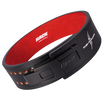

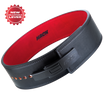
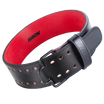







- A weightlifting belt should be snug when relaxed but loose enough to fully breathe and brace your abs outward against it.
- The finger test is the quickest check: you should fit one to two fingers between the belt and your stomach while relaxed.
- The belt works with the Valsalva maneuver, a big braced breath that raises intra-abdominal pressure and stiffens your trunk.
- Too tight stops a full breath and lowers your pressure; too loose gives nothing to brace against.
- Belt type and thickness change the feel, so lever, prong and quick-locking belts each set tension a little differently.
- Tension can shift slightly between squats and deadlifts, so dial in each lift and run looser rather than tighter when unsure.
- Why Belt Tightness Makes or Breaks Your Brace
- What a Weightlifting Belt Actually Does
- The Valsalva Maneuver Explained
- How Tight Should It Be? The Finger Test
- Signs Your Belt Is Too Tight
- Signs Your Belt Is Too Loose
- How Belt Type and Thickness Affect Tension
- Tension by Lift: Squat vs Deadlift vs Press
- Step by Step: Setting Your Belt and Bracing
- Who Should Dial In Belt Tension?
- Related Reading
- Frequently Asked Questions
Ask ten lifters how tight their belt should be and you will get ten different answers, and most of them will be a little too tight. Belt tightness is one of the most misunderstood details in strength training, yet it is the single thing that decides whether your belt actually helps you or quietly works against you. Get it right and the belt amplifies your brace. Get it wrong and it does nothing, or worse, stops you bracing at all.
This guide settles the question. You will learn exactly how tight a weightlifting belt should be, how tension connects to the Valsalva brace, the clear signs your belt is too tight or too loose, and how to set it for each lift. Whether you train with a lever, prong or quick-locking belt from Hack Athletics, the principles are the same. You can also read more about us and our gear.
1. Why Belt Tightness Makes or Breaks Your Brace
A belt does not support your back by squeezing it. It gives your abdominal wall a firm surface to push against so you can build pressure inside your torso. That means the belt only works if you can expand your abs into it. Cinch it so tight that your midsection cannot move, and you have removed the very mechanism that makes it useful.
This is why tightness is not about maximum squeeze. As one coaching resource puts it, a belt is a tool to help increase intra-abdominal pressure that you brace against, and it is not a crutch to replace your own bracing (Peck Me Out). The right tension gives you something to push into while still letting you take a full breath and brace hard.
The core idea: a belt is a surface to brace against, not a back brace that holds you rigid. Tightness should enhance your brace, never replace or block it.
2. What a Weightlifting Belt Actually Does
To set tension correctly, you need to understand the mechanism you are setting it for.
When you brace against a belt, you increase intra-abdominal pressure, the pressure inside your abdominal cavity, and your body responds by stiffening your trunk. Research shows that a belt, when properly braced against with an inhale and Valsalva maneuver, increases intra-abdominal pressure and trunk stiffness, and in one study reduced spinal compression by around 10 percent during a moderate lift (Barbell Rehab). That stiffer, more pressurised trunk helps you transfer force and protect your spine under heavy load. The belt's whole job is to make that pressure easier to build, which is why the fit has to let your abs expand. Learn the full technique in our guide on how to use a weightlifting belt.
Key fact: the belt does not create pressure on its own. You create the pressure by bracing into it. Tightness simply sets how much surface your abs have to push against.
3. The Valsalva Maneuver Explained
The brace you set your belt tension for is the Valsalva maneuver. It sounds technical, but you already do it instinctively when you lift something heavy.
How it works
You take a big breath down into your belly, not your chest, then hold that breath against a closed airway while you tense and push your abs outward in all directions. This traps air and pressurises your abdomen, which is what stiffens your torso. You hold it through the hardest part of the rep, then exhale at the top.
Why the belt amplifies it
With no belt, your abs push out into empty space. With a belt, they push out against a firm ring, so pressure builds higher and your trunk gets stiffer. That is the biofeedback loop: pushing your abdominals against the belt forces higher intra-abdominal pressure than you could reach unbelted (Team Industry).
Safety note: the Valsalva maneuver briefly raises blood pressure. If you have a cardiovascular condition, high blood pressure, glaucoma, or are pregnant, speak to a doctor before using it. This article is general information, not medical advice.
4. How Tight Should It Be? The Finger Test
Here is the direct answer. With the belt fastened and your body relaxed, you should be able to slide one to two fingers between the belt and your stomach.
As a general rule, you have the right tightness if you can fit one, but not several, fingers between the belt and your body while standing relaxed (Iron Bull Strength). That gap is not slack, it is room for your abdomen to expand into the belt when you brace. A useful confirmation is to put the belt on and take a full breath into your belly without bracing: you should feel your abdomen push against the belt on all sides, snug against your relaxed torso but not so tight that it blocks the expansion (Genghis Fitness).
The one-line rule: tight enough to feel resistance the instant you brace, loose enough to take a full belly breath. One to two fingers of gap when relaxed is your target.
Get a Belt You Can Actually Set
Consistent tension starts with a quality belt. Explore lever, prong and quick-locking belts sized to your waist and easy to dial in.
Shop Weightlifting Belts5. Signs Your Belt Is Too Tight
A too-tight belt is the more common mistake, and it silently robs you of the support you are chasing. Watch for these signs.
You cannot take a full breath
If you cannot draw a deep breath into your belly, the belt is too tight. Without that breath there is no big brace, and without the brace there is no pressure. Too tight is worse than too loose here.
You cannot push your abs out
The expansion is the point. If the belt squeezes your abs when you are relaxed and stops them moving outward, you cannot build pressure correctly. A belt that is too tight makes it difficult or impossible to create intra-abdominal pressure because you cannot inhale properly, which is counterproductive to your lift (Gymreapers).
Discomfort and digestive issues
An overly tight belt can be genuinely uncomfortable and may aggravate acid reflux during hard sets. If you feel that, loosen a notch. Comfort that allows a full brace beats a punishing squeeze every time.
6. Signs Your Belt Is Too Loose
The opposite error is less common but still costs you support. A belt that is too loose fails to give your abs anything solid to brace into.
No resistance when you brace
If you brace and feel no additional support, the belt is too loose. You should feel firm contact and compression the moment you push out. If your abs never reach the belt, tighten a notch.
The belt shifts or rides up
A loose belt slides around during the lift instead of staying put, so it cannot provide a stable, rigid surface. It should stay in place through the whole rep. If it moves, it is too loose or positioned wrong, which our belt placement guide can help fix.
7. How Belt Type and Thickness Affect Tension
The right tension also depends on the belt you use, because closures and thickness change how the belt feels and how you set it.
Lever belts
A lever locks to one fixed setting, so once you dial in your tension it is identical every rep and releases fast between sets. The trade-off is that changing the setting means repositioning the lever plate. The 10mm lever belt and stiffer 13mm lever belt are popular for exactly this repeatability, available in finishes like the 13mm signature red, 13mm carbon fibre, 10mm signature red and 10mm carbon fibre.
Prong and quick-locking belts
A prong belt lets you fine-tune tension across holes, which suits lifters who adjust often. A quick-locking belt, in white or black, adjusts on the fly without tools. Browse the full weightlifting and lever belts range and the quick locking belt collection to compare.
Thickness: 10mm vs 13mm
A 13mm belt is stiffer and creates a more rigid wall to brace against, while a 10mm is a touch more forgiving and breaks in faster. Neither changes the finger test, but a stiffer belt can feel tighter at the same setting. See our 13mm vs 10mm lever belt and powerlifting vs bodybuilding belt guides for the details, plus the 2 claw vs 4 claw lever breakdown.
8. Tension by Lift: Squat vs Deadlift vs Press
Belt tension is not always identical across lifts. The start position and torso angle of each lift change how the belt sits, so many lifters adjust by a notch. This table is a starting point, not a rule.
| Lift | Typical Tension | Why | Belt Position |
|---|---|---|---|
| Back Squat | Snug (one finger) | Upright torso allows a full 360-degree brace | Around the navel, level |
| Deadlift | Slightly looser (one to two fingers) | Hip hinge and forward lean can dig the belt in | Slightly higher or angled to taste |
| Overhead Press | Moderate | Needs a strong brace without blocking the breath | Around the navel |
| Bench Press | Optional, moderate | Used mainly for leg drive and trunk stability | Comfortable mid-torso |
The theme across all lifts is the same: set tension so you can brace maximally in that lift's start position. If a setting stops your breath at the bottom of a squat or the start of a deadlift, loosen a notch.
9. Step by Step: Setting Your Belt and Bracing
Put it all together with this simple routine every heavy set.
Set the tension
Fasten the belt so that, relaxed, you can slip one to two fingers between it and your stomach. Take a test breath into your belly and feel it press the belt on all sides. Adjust a notch if the breath feels blocked or if you feel no contact.
Brace before you lift
Before each heavy rep, take a big breath into your belly, hold it, and push your abs out hard against the belt. Keep that brace through the hardest part of the rep, then exhale at the top and reset for the next rep.
Use it on the right sets
Train the lighter sets beltless so your core still works, and put the belt on for your heavy working sets. A common guideline is to belt up once you reach roughly 80 percent of your working weight, putting it on a set or two before your heaviest set to dial in the feel (Genghis Fitness). Loosen or release between sets, and keep your gear together in a gym bag (see our gym bag essentials guide). Pair the belt with wrist wraps for pressing and knee sleeves for squats.
- A weightlifting belt should be snug when relaxed but loose enough for a full breath, roughly one to two fingers of gap.
- You build support by bracing your abs outward against the belt using the Valsalva maneuver, not by cinching it tight.
- Too tight blocks your breath and lowers pressure; too loose gives nothing to brace against.
- Belt type and thickness change the feel, and tension can shift a notch between squats and deadlifts.
- Belt up on heavy sets around 80 percent and above, brace before each rep, and loosen between sets.
10. Who Should Dial In Belt Tension?
Anyone who lifts with a belt should get tension right, but the priority differs by lifter. Here is how different groups should approach it, with the gear that helps.
11. Related Reading
Keep refining your belt setup with these guides and gear from Hack Athletics.
12. Frequently Asked Questions
How tight should a weightlifting belt be?
Snug when you are relaxed, but loose enough to fully breathe into your belly and push your abs out against it. A common check is that you can fit one to two fingers between the belt and your stomach while standing relaxed. If you cannot take a deep breath or brace hard, it is too tight.
What is the finger test for belt tightness?
With the belt fastened and your body relaxed, you should be able to slide one to two fingers between the belt and your stomach. That gap lets you take a full diaphragmatic breath and expand your midsection into the belt when you brace, which is what builds intra-abdominal pressure.
Should a lifting belt be tight or loose?
Neither extreme. It should be snug enough that you feel resistance the moment you brace, but not so tight that it squeezes your abs when relaxed or stops a full breath. The belt is a surface to brace against, not a corset. If in doubt, run it one notch looser rather than tighter.
What is the Valsalva maneuver in lifting?
The Valsalva maneuver is taking a big breath into your belly and holding it against a closed airway while you brace, then pushing your abs outward. This raises intra-abdominal pressure and stiffens your trunk to support the spine under heavy load. A belt gives your abs a firm surface to push against during the brace.
Can a weightlifting belt be too tight?
Yes. A belt that is too tight stops you from taking a full breath and expanding your abs into it, which lowers your intra-abdominal pressure and reduces support, the opposite of what you want. An overly tight belt can also be uncomfortable and aggravate reflux, so prioritise a full brace over maximum squeeze.
Does belt tightness change between squats and deadlifts?
Many lifters run the belt slightly looser for deadlifts than for squats, because the deadlift setup involves more hip hinge and forward torso lean that the belt can dig into. The finger test still applies. Adjust by a notch to find a setting that lets you brace hard in each lift's start position.
Is the Valsalva maneuver safe?
For healthy lifters, a brief Valsalva brace during a heavy rep is a normal part of lifting. It does raise blood pressure transiently, so anyone with cardiovascular conditions, high blood pressure, glaucoma or who is pregnant should consult a doctor before using it. This article is general information, not medical advice.
Do I need to loosen my belt between sets?
Yes, most lifters loosen or release the belt between sets so they can breathe and recover comfortably, then re-tighten for the next working set. A lever or quick-locking belt makes this fast, which is one reason those closures are popular for heavy training.