
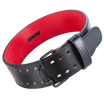






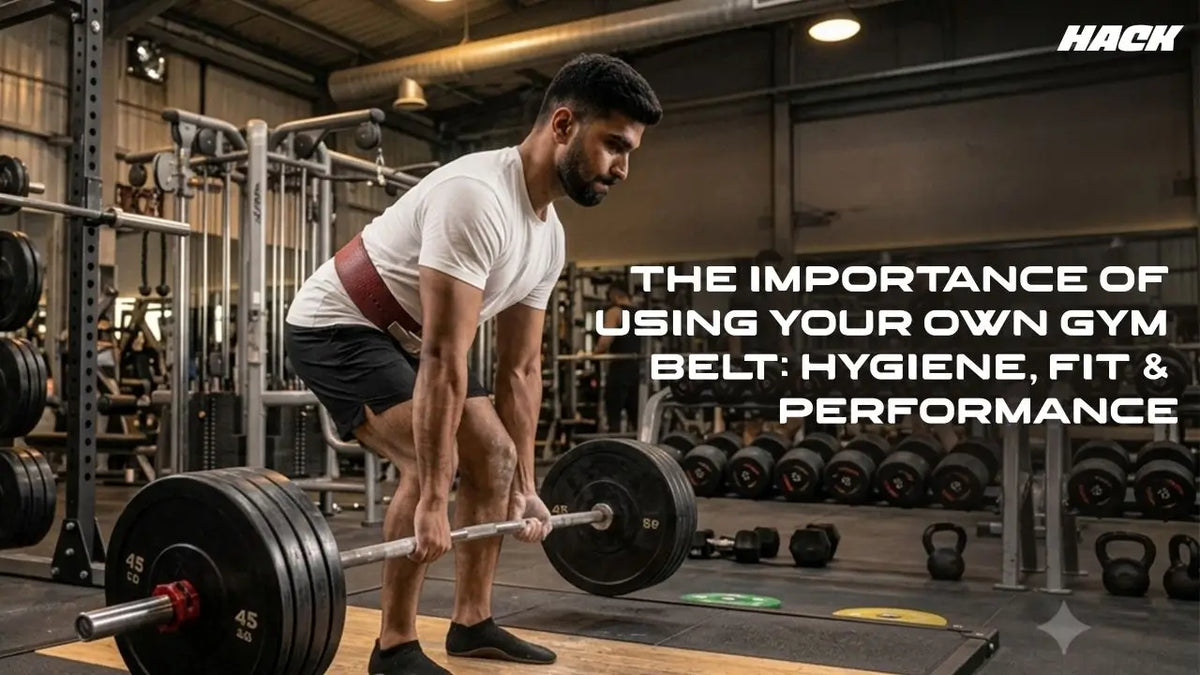
- Using your own gym belt beats the shared one on three fronts: hygiene, fit and performance.
- A belt works by giving your abs something to push against, raising intra-abdominal pressure and trunk stiffness.
- Studies show belts increase intra-abdominal pressure by roughly 25 to 40 percent and can speed up squats under load.
- Those benefits only appear with a belt that fits you and is set consistently, which a shared belt cannot offer.
- Hygiene matters too, since a belt absorbs sweat and shared gear spreads skin bacteria.
- A quality personal belt is a one-time buy that fits, stays clean and performs for years.
- Why Your Gym Belt Should Be Yours Alone
- What a Gym Belt Actually Does
- The Hygiene Case: Your Skin, Your Sweat, Your Belt
- The Fit Case: A Belt Tuned to Your Body
- The Performance Case: Consistency, Bracing and Confidence
- Belt Types and Choosing Your Own
- Shared Belt vs Your Own Belt
- How to Care for Your Own Belt
- Do You Really Need Your Own Belt?
- Who Should Own Their Own Belt?
- Related Reading
- Frequently Asked Questions
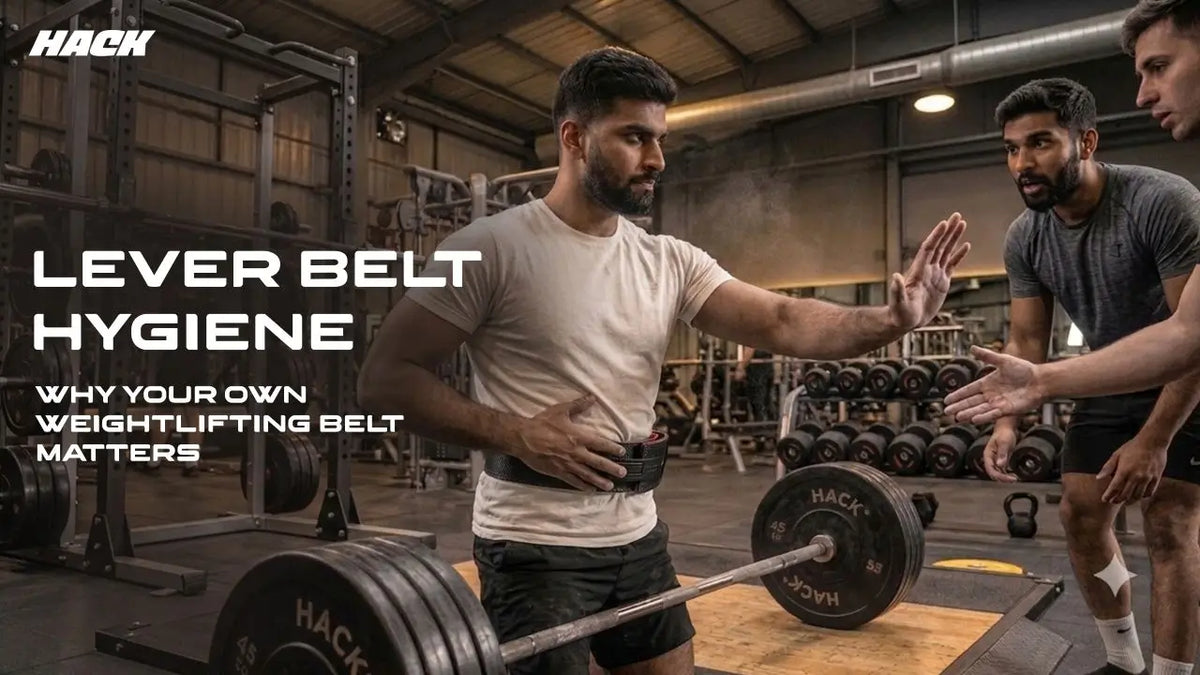
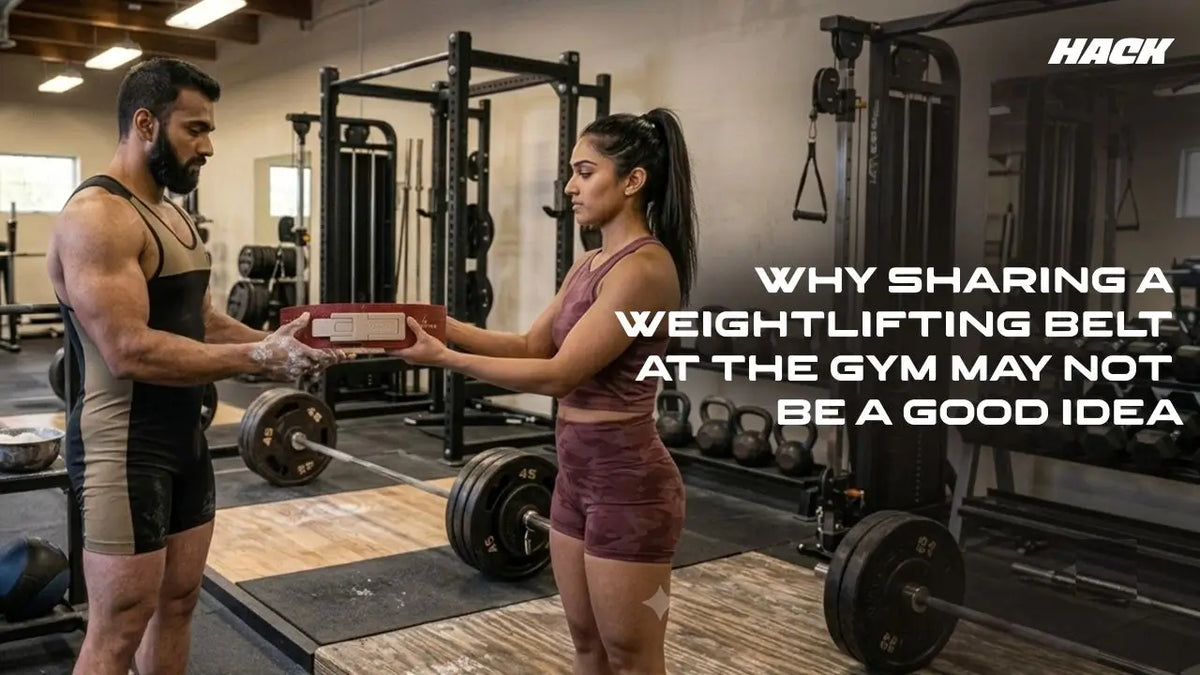
A weightlifting belt is one of the highest-value tools a lifter can own, yet many people never buy their own. They grab the communal belt off the rack, cinch it up and lift. It seems practical, but that shared belt quietly costs you on the three things a belt is supposed to deliver: cleanliness, a proper fit, and reliable support. Owning your own solves all three at once.
This guide makes the complete case for using your own gym belt, across hygiene, fit and performance, and then helps you choose the right one. Hack Athletics builds belts sized, finished and built for individual lifters, from lever to prong to quick locking. You can read more about us and our approach to quality gear if you are new here.
1. Why Your Gym Belt Should Be Yours Alone
Think about what a belt does mechanically: it wraps tight around your midsection, against your skin, and stays there under heat and pressure for every heavy set. That intimate, prolonged contact is why a belt is unlike a dumbbell or a bench. It is closer to a piece of personal apparel than a shared machine.
That single fact drives everything in this article. Because a belt touches your skin and absorbs your sweat, hygiene demands it be personal. Because it must match your waist and bracing, fit demands it be personal. And because bracing works best when it is consistent, performance demands it be personal. Three separate arguments, one conclusion: your belt should be yours.
The through-line: a belt is a personal tool held against your body under load. Hygiene, fit and performance all point to owning your own rather than borrowing.
2. What a Gym Belt Actually Does
To understand why fit and consistency matter so much, you need to know how a belt helps you lift. It does not act like a back brace holding your spine. Instead, it gives your abdominal wall something solid to push against.
When you brace against a belt using a breath and a Valsalva-style hold, you increase intra-abdominal pressure, the pressure inside your abdominal cavity. Your body responds by making your trunk measurably stiffer, which helps you transfer force from your legs and hips through your torso and maintain a more neutral spine under load (Barbell Rehab). The key phrase is that you must actively press your abs into the belt; the belt is a target to brace against, not a passive support. Our guide on how to use a weightlifting belt walks through the bracing technique in detail.
Key point: a belt only helps if you brace into it. That bracing skill is learned and repeated, which is exactly why a consistent, well-fitted personal belt matters so much.
3. The Hygiene Case: Your Skin, Your Sweat, Your Belt
The first argument for owning your belt is hygiene, and it is a strong one. A belt sits against sweaty skin and, especially if it is leather or nylon, absorbs sweat, oils and skin cells into a porous material.
Sweat is a rich mixture of salts, amino acids and lipids, which makes it an excellent nutrient source for bacteria and fungi even after it dries (The Conversation). A shared belt collects that from every user and is almost never cleaned between them. Since shared gym gear is a documented route for skin issues, the simplest fix is a belt that only ever touches your skin. When it is yours, you also control how it is cleaned, dried and stored, which is the whole game with hygiene.
Note: this is general hygiene information, not medical advice. If contact with any gear causes a persistent rash or irritation, see a healthcare professional.
4. The Fit Case: A Belt Tuned to Your Body
The second argument is fit. A belt is a precision tool, and its support depends entirely on matching your waist and your preferred tightness.
The right size gives real support
A belt supports your brace by giving your abs a firm surface to push into. Set for someone with a different waist, it will be too loose to brace against or too tight to expand your belly into. A common check is that once you brace and create pressure, you should not be able to slide a finger between the belt and your core (Verro Training). You can only reliably achieve that on a belt that is yours. Learning to size a weightlifting belt correctly is a step you take once, on your own belt.
A belt breaks in to one body
Quality belts, especially leather, soften and mould to the wearer over time. A shared belt is broken in by dozens of bodies and fits none of them well. Choosing a thickness and feel, like our comparison of 13mm vs 10mm lever belts, only pays off when the belt is yours to break in. The right belt placement also becomes second nature once you always use the same belt.
A Belt That Fits You, Not the Last Person
Sized to your waist, set to your bracing, broken in to your body. Explore belts built for one lifter: you.
Shop Weightlifting Belts5. The Performance Case: Consistency, Bracing and Confidence
The third argument is performance, and this is where a personal belt truly earns its place. The research on belts is clear that they help, but only when used consistently and braced against correctly.
Belts measurably boost pressure and speed
Classic biomechanics research examined belts during the parallel squat and measured their effect on intra-abdominal pressure and trunk muscle activity (PubMed, Lander et al.). Reviews of that work report that belts raise intra-abdominal pressure by roughly 25 to 40 percent and that belted squats are performed significantly faster, by around 6 to 8 percent, particularly under fatigue (Mountain Tactical Institute). That is a real, measurable performance edge on your heaviest sets.
Consistency is the hidden multiplier
Those benefits depend on bracing the same way every rep, and that is where a personal belt shines. With your own belt, set to your marks, you brace identically set after set and never waste focus fiddling with a stranger's buckle. A shared belt introduces a variable, different size, different setting, every session, that quietly undermines the consistency heavy lifting rewards.
Confidence under the bar
There is a psychological edge too. Reaching for a familiar belt that fits perfectly and is unmistakably yours builds confidence going into a heavy attempt. That matters when you are chasing a personal best. Whether you prefer a stiffer or more flexible feel, the same logic applies to your other gear, like the choice between flexible and stiff wrist wraps.
6. Belt Types and Choosing Your Own
Once you commit to owning a belt, the next step is choosing the right one. The main decisions are fastener type and thickness.
Lever belts
A lever belt clamps to one fixed notch, giving a firm, repeatable fit that is ideal for heavy powerlifting. The 10mm lever belt offers a firm, versatile feel, while the 13mm lever belt gives maximum rigidity. Finishes like the 13mm signature red, 10mm signature red and 10mm carbon fibre let you make it your own.
Prong belts
A prong belt threads through holes, making it versatile and easy to fine-tune across notches. The 7mm leather prong belt is a reliable all-rounder. To compare styles, see our powerlifting vs bodybuilding belt guide and the 2 claw vs 4 claw lever breakdown.
Quick locking belts
A quick locking belt adjusts on the fly without tools, great for general training and variable tightness. Choose the quick locking belt in white or black, or browse the full quick locking belt collection. Explore everything in the weightlifting and lever belts range.
7. Shared Belt vs Your Own Belt
Here is the whole case in one view, across the three pillars that matter.
| Pillar | Shared Gym Belt | Your Own Belt |
|---|---|---|
| Hygiene | Absorbs many users' sweat, rarely cleaned | Only your skin, cleaned on your schedule |
| Fit | Sized and set for someone else | Matched to your waist and bracing |
| Break-in | Moulded by many bodies | Softens and fits to you over time |
| Bracing consistency | Re-adjust every session | Same setting, every rep |
| Performance edge | Undermined by inconsistency | Reliable pressure and support |
| Confidence | Unfamiliar, variable | Familiar and trusted |
| Long-term value | Free but shared and worn | One-time buy, lasts years |
8. How to Care for Your Own Belt
Owning a belt only pays off if you look after it, and a personal belt is easy to maintain with a few habits.
Clean and dry after use
Wipe the belt down after each session to remove sweat and chalk, then let it air dry fully before storing. Sealing a damp belt in a bag is how odour and bacteria build up, so dry first, store second.
Store with airflow, condition leather
Keep the belt in a ventilated part of your bag rather than crushed at the bottom while wet. A structured 30L duffle gym bag or a work and gym backpack from the bags collection keeps gear separated. For leather belts, apply a conditioner every one to two months to prevent cracking and keep the belt supple.
Extend the care to all your gear
Your belt is not the only item that presses against sweaty skin. Wrist wraps and knee sleeves also absorb sweat and should stay personal, aired and clean. Browse the wrist support and knee support ranges to build a full personal kit.
9. Do You Really Need Your Own Belt?
A few honest questions come up whenever people consider buying a belt. Here are straight answers.
When should I start using one?
Learn to brace without a belt first. A good rule is to start using a belt when your working loads reach roughly 80 percent of your one-rep max on the big lifts, and to keep some beltless work in your program. Before that point your core benefits from handling the load unassisted.
Is it worth the cost?
A quality belt is a one-time purchase that lasts years. Spread across hundreds of sessions, the cost per use is tiny, and you get consistent fit, reliable bracing and hygiene you control. Compared with borrowing a worn, ill-fitting communal belt, it is easily worth it.
What if my gym provides belts?
Provided belts solve availability, not fit or hygiene. They are still sized for the average user and shared by everyone. Bringing your own removes both compromises. If you train across multiple gyms, a belt in your bag means you always have the right one. Our gym bag essentials guide covers packing it alongside your other gear.
- Using your own gym belt wins on hygiene, fit and performance, the three things a belt exists to deliver.
- A belt works by raising intra-abdominal pressure when you brace into it, and research shows real pressure and speed gains.
- Those gains depend on a consistent, well-fitted belt, which a shared one cannot provide.
- Choose your fastener and thickness, lever, prong or quick locking, to match your training.
- Care for your belt with a simple wipe, dry, store and condition routine and it lasts for years.
10. Who Should Own Their Own Belt?
Almost every lifter who uses a belt benefits from owning one. Here is how different groups should approach it, with the gear that fits.
11. Related Reading
Dial in your belt and your bracing with these guides and gear from Hack Athletics.
12. Frequently Asked Questions
Why should I use my own gym belt instead of the shared one?
Your own belt wins on three fronts. Hygiene, because it only ever touches your skin instead of soaking up other people's sweat. Fit, because it is sized and set to your waist. And performance, because a consistent, well-fitted belt lets you brace the same way every rep. A shared belt compromises all three.
Does a weightlifting belt actually improve performance?
Yes, when used correctly. A belt gives your abs something to push against, increasing intra-abdominal pressure and trunk stiffness so you transfer force better. Studies have found belts raise intra-abdominal pressure by roughly 25 to 40 percent and let lifters perform squats faster, especially under fatigue.
Do beginners need their own belt?
Beginners should first learn to brace without a belt on lighter loads. Once training loads reach roughly 80 percent of your max on squats, deadlifts or presses, a belt becomes worthwhile. When you reach that point, owning your own is better than borrowing, for both hygiene and consistent fit.
Is buying your own gym belt worth the cost?
Yes. A quality belt is a one-time purchase that lasts years, and it fits you, stays hygienic and gives consistent bracing every session. Spread across hundreds of workouts, the cost per use is tiny, and you avoid the hygiene and fit compromises of the communal belt.
How tight should my own belt be?
Snug enough that you can brace against it, but loose enough to expand your belly into it. A common check is that once you brace and create pressure, you should not be able to slide a finger between the belt and your core. This is far easier to dial in on a belt that is yours and stays at your setting.
Which belt should I choose as my own?
It depends on your training. A lever belt gives a firm, repeatable fit and suits heavy powerlifting. A prong belt is versatile and easy to fine-tune. A quick locking belt adjusts on the fly for general training. Thickness, usually 10mm or 13mm, sets how stiff and supportive the belt feels.
Can a shared belt hurt my lifting?
It can. A shared belt is usually the wrong size or set for someone else, so you waste time adjusting it and brace inconsistently. Inconsistent bracing means less reliable trunk stiffness under heavy loads. Your own belt, set to your marks, removes that variable so you can focus on the lift.
How do I keep my own belt clean and lasting?
Wipe it after each session, let it air dry fully before storing, keep it in a ventilated part of your bag rather than sealed while damp, and condition leather every one to two months. Because it is only ever yours, a simple routine keeps it hygienic and rigid for years.